
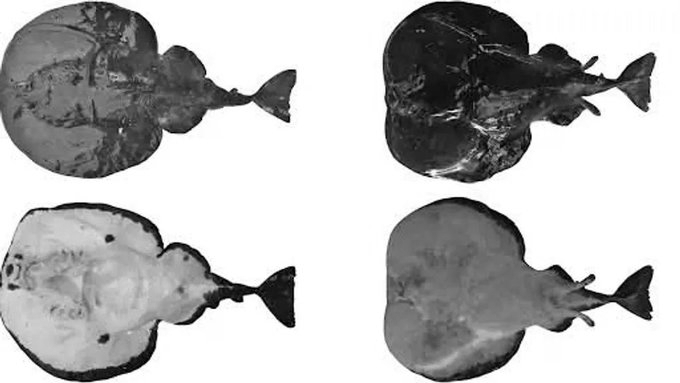
ZSI Scientists Discover Arabian Black Electric Ray in Indian Ocean
Scientists from the Zoological Survey of India (ZSI) have discovered a new species of electric ray in the deep waters of the southeastern Arabian Sea, marking the first confirmed record of the genus Tetronarce in the northern Indian Ocean.
The discovery highlights the rich but largely unexplored biodiversity of India's deep-sea ecosystems, according to a ZSI statement issued on Tuesday. The newly identified species, commonly known as the Arabian Black Electric Ray, was collected off India's southwestern coast. It has been distinguished from related species through a combination of unique physical characteristics and genetic traits.
The research was conducted under the Deep Ocean Mission of the Ministry of Earth Sciences, which focuses on studying the taxonomy, distribution, biology and conservation status of deep-sea cartilaginous fishes, including sharks, rays and skates, in Indian waters. The findings have been published in Zootaxa, an international journal specialising in animal taxonomy.
The research team was led by Dr K K Bineesh, a scientist, and Anil Kasinath, a junior research fellow, from ZSI's Marine Biology Regional Centre in Chennai. They collaborated with Dr David A Ebert of the Pacific Shark Research Center at Moss Landing Marine Laboratories, San Jose State University, in the United States.
The species has been scientifically named Tetronarce Ramanamurthy in honour of Dr M V Ramana Murthy, Mission Director of the Deep Ocean Mission. The naming recognises his contributions to marine science, ocean engineering and marine hazard mitigation in India. The researchers said deep-sea habitats remain among the most difficult marine environments to explore, leaving several species and ecological relationships poorly understood.
They emphasised that combining traditional morphological taxonomy with modern molecular techniques can help identify previously unknown marine life, clarify evolutionary relationships and establish essential scientific baselines for ocean conservation. The discovery is expected to contribute to a better understanding of deep-sea biodiversity in Indian waters and support further research into the distribution and diversity of cartilaginous fishes in the northern Indian Ocean.