
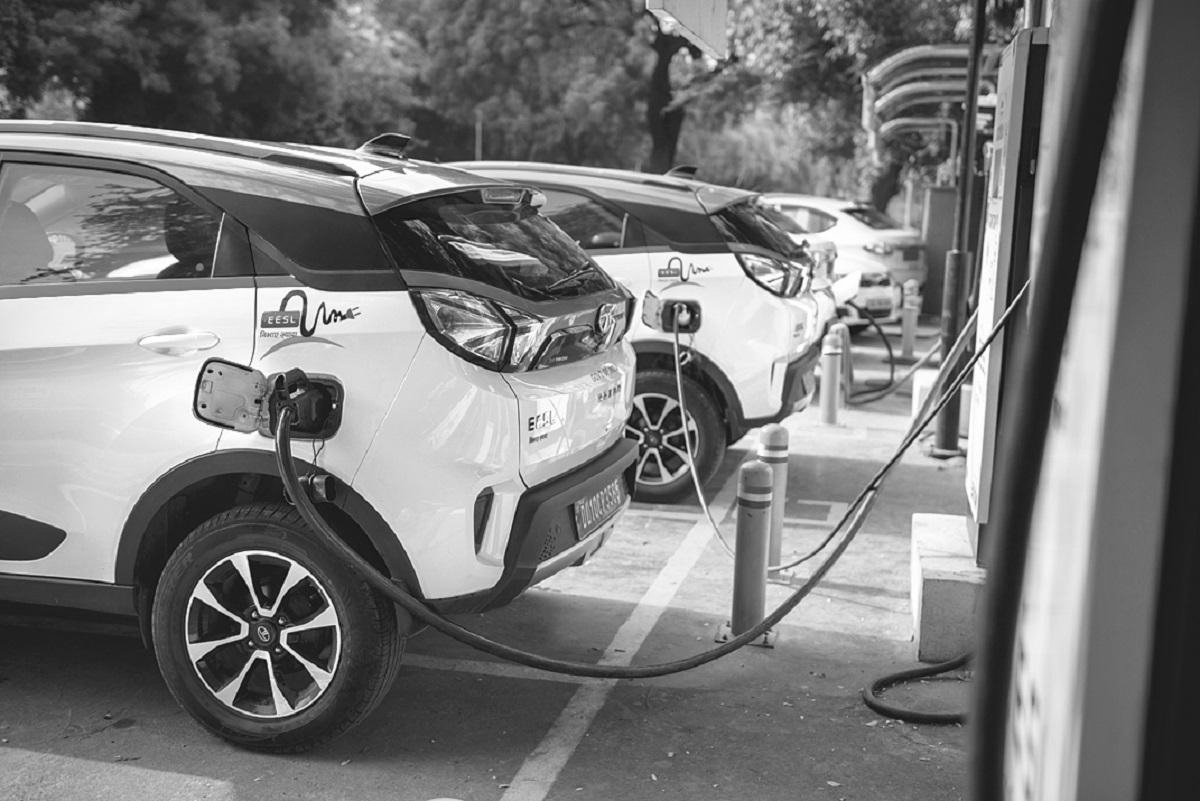
Zoomcar report flags ‘Experience Gap’ as key bottleneck in India’s EV adoption
As India pushes ahead with its electric mobility ambitions, a new report by Zoomcar Holdings, Inc. (OTCQB: ZCAR) suggests the country’s slow adoption of electric cars is driven not by lack of interest, but by limited real-world exposure to EV usage.
In its EV Experience Insight Report released on Tuesday, the self-drive car-sharing platform said India’s EV transition remains constrained by what it calls an “experience gap,” arguing that short, hands-on trials can significantly reduce consumer hesitation and accelerate adoption.
Despite steady policy support and a gradual expansion of charging infrastructure, electric cars still make up a relatively small share of India’s passenger vehicle market. EVs accounted for roughly 1.5% of new car sales in 2023 , rising to around 2.5% in 2024 , before accelerating to about 5% in the ongoing 2025-26 financial year , according to industry estimates. While the sharp year-on-year growth highlights improving momentum, India continues to lag major global markets in overall EV penetration, underscoring the structural and experiential challenges facing wider adoption.
By comparison, China leads the global EV race , with electric vehicles making up nearly 45-50% of new car sales , supported by deep manufacturing scale and widespread charging infrastructure. Europe has also made strong gains, with EVs accounting for around one-fifth of new passenger vehicle registrations across the region, while the United States has crossed the 10% mark , driven by federal incentives and growing consumer acceptance.
Zoomcar’s report identifies three persistent barriers holding back faster adoption in India: charging accessibility concerns, uncertainty around battery health and longevity, and low familiarity with day-to-day EV usage. According to the company, conventional showroom test drives are insufficient to address these concerns.
“India doesn’t have a demand problem, it has an experience gap,” said Deepankar Tiwari, CEO of Zoomcar . “Allowing people to live with an EV for two or three days can change perceptions far more effectively than large marketing campaigns.”
Zoomcar’s findings are based on EV pilot programs conducted across select metropolitan cities. The pilots recorded strong renter interest, particularly for urban commuting, airport transfers, and short-distance travel. However, operational challenges were also evident.
Key constraints included charging anxiety during longer trips, uneven availability of fast-charging stations along highways and tourist routes, limited home-charging options for apartment-dwelling vehicle owners, and increased vehicle downtime linked to charging cycles.
These factors, the report notes, continue to influence consumer confidence, especially for first-time EV users considering long-term ownership.
Looking ahead, Zoomcar sees 2026 as a practical inflection point for scaling EV access through shared mobility platforms. With further policy support under discussion, expanding public and private charging networks, and improving vehicle economics, the company believes the ecosystem will be better positioned to support wider adoption.
Zoomcar plans to collaborate with automakers, charging infrastructure providers, and policymakers to create a structured EV experience programme, enabling potential buyers to test EVs in real-life conditions before making purchase decisions.
Industry observers say experience-led initiatives could complement government incentives and infrastructure investments, helping India close the gap with global EV leaders.
As the country works toward its long-term electrification goals, the report underscores that accelerating adoption may depend as much on exposure and confidence-building as on subsidies and charging stations.