
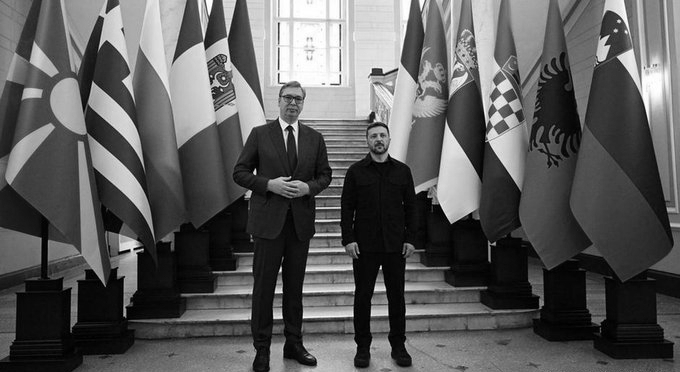
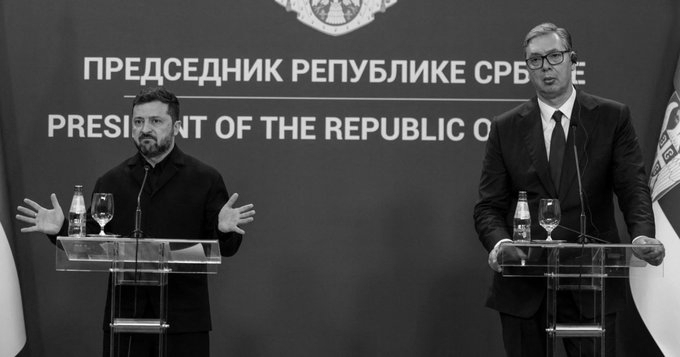
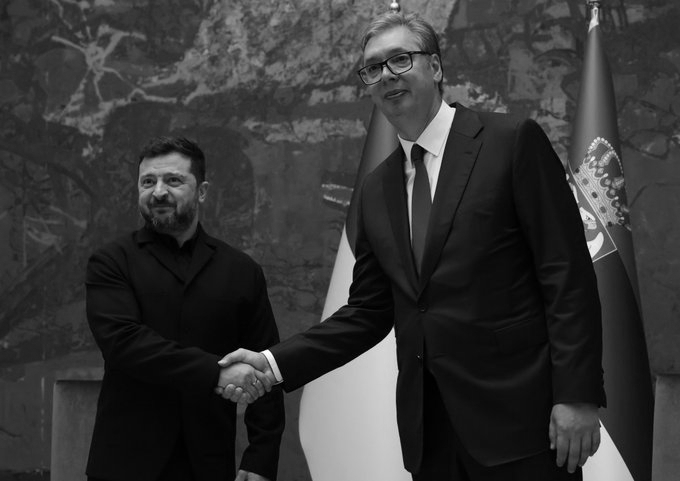
Zelenskyy In Serbia: Ukraine President’s First Visit Tests Belgrade’s Russia Balancing Act
Zelenskyy arrived in Belgrade for talks with Serbian President Aleksandar Vucic and Prime Minister Djuro Macut. The discussions covered trade, energy, infrastructure, reconstruction, food security, EU integration and security.
The visit is significant because Serbia has refused to join Western sanctions against Russia since Moscow launched its full scale invasion of Ukraine in 2022. Vucic again made clear that Belgrade's sanctions policy has not changed.
Yet Serbia has increasingly engaged with Kyiv. Vucic reaffirmed Serbia's support for Ukraine's independence and territorial integrity and described Ukraine as a friendly country. Serbia has also provided humanitarian, medical and energy assistance and is offering to take part in Ukraine's reconstruction.
A major outcome of the visit was an agreement to work towards completing a free trade deal by the end of 2026. The agreement could strengthen trade between the two countries and support Serbia's wider European ambitions. Serbia and Ukraine's trade turnover reached $321 million in the first half of 2026, showing that economic ties are already growing. The leaders also discussed ports, railways and the Danube Corridor, with the aim of improving links between Ukraine, Serbia, the Western Balkans and the EU. Zelenskyy said the projects could help create jobs and strengthen infrastructure in both countries.
The two sides are also looking at longer term business opportunities. Vucic said Serbia and Ukraine could potentially work together to enter African and Asian markets after the war ends, widening cooperation beyond their immediate region.
Energy was another major focus. Zelenskyy thanked Serbia for deciding to provide €2 million to support Ukraine's energy sector ahead of another difficult winter. He said Russian attacks have left Ukraine with virtually no intact thermal power plants and warned that Moscow is preparing to make life even harder for civilians. Serbia also announced a new package of humanitarian assistance, including support in the energy and medical sectors.
Zelenskyy and Macut discussed Ukraine's reconstruction, with Serbia expressing willingness to help rebuild one of Ukraine's damaged cities. They also discussed joint economic and logistics projects and preparations for the winter.
Ukraine and Serbia signed a memorandum on animal health and food safety cooperation, adding another practical area to their growing relationship. The two countries also share a position on Kosovo. Ukraine does not recognise Kosovo's declaration of independence, something Belgrade appreciates. Vucic thanked Kyiv for maintaining that position.
Military cooperation was not part of the main talks. Vucic denied that Serbia had supplied weapons to Ukraine, despite previous Russian accusations that Serbian-made ammunition reached Ukrainian forces through third countries. Moscow had described the alleged transfers as a “stab in the back”.
Serbia's balancing act remains difficult. Belgrade wants EU membership but has resisted pressure to align fully with Brussels over Russia. It also remains heavily dependent on Moscow for energy.
Vucic has said Serbia will not change its sanctions policy for now. At the same time, he supports Ukraine's territorial integrity and has welcomed closer economic cooperation with Kyiv. That delicate position is one reason Zelenskyy's visit is attracting so much attention.
For Zelenskyy, the Serbia visit is about more than winning diplomatic support. It is also about finding new economic routes, energy partners and reconstruction opportunities in a region where Russia has traditionally enjoyed strong influence.
For Vucic, the visit offers a way to strengthen relations with Kyiv and demonstrate engagement with Europe without abandoning Serbia's relationship with Moscow.
The two leaders have met several times since Russia's invasion. Vucic has travelled to Ukraine for regional summits and backed its territorial integrity, but has repeatedly refused to support sanctions against Russia.