
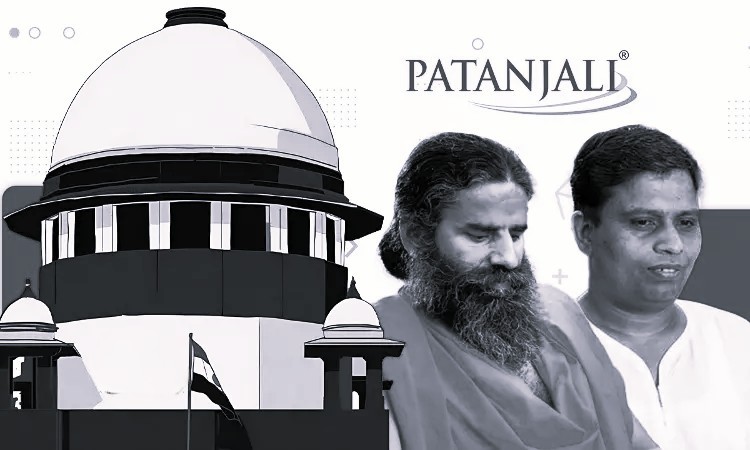
Yoga Guru Ramdev’s Camps Face Rs 4.5 Crore Service Tax Liability
The Supreme Court on Thursday dismissed the curative petition filed by the Patanjali Yogpeeth Trust , reaffirming that the trust must pay service tax on fees charged for its yoga camps, both residential and non-residential. The verdict highlights the distinction between charitable activities and commercial services under Indian tax law and carries significant implications for other trusts and non-profit organizations charging fees.
A Constitution Bench led by Chief Justice Surya Kant and comprising Justices Vikram Nath, JK Maheshwari, and Ujjal Bhuyan held that the curative petition did not meet the strict conditions for consideration under the precedent set in Rupa Ashok Hurra vs Ashok Hurra & Anr (2002) . The court also rejected the trust’s request for an open court hearing , emphasizing that curative petitions are the final judicial remedy in the Supreme Court and are meant only for rare cases of gross miscarriage of justice.
The legal battle spans several years. On October 5, 2023 , the Allahabad bench of the Customs, Excise and Service Tax Appellate Tribunal (CESTAT) ruled that Patanjali Trust ’s yoga camps, where fees were collected under the guise of donations, fall under “health and fitness services” and are therefore taxable. On April 19, 2024 , the Supreme Court upheld this ruling, dismissing the trust’s appeal. Subsequently, a review petition filed by the trust was rejected by a bench led by Justice Abhay S Oka (retired) on January 7, 2025 . The dismissal of the curative petition on February 4, 2026 , by the current Constitution Bench effectively brings the matter to a close.
The CESTAT had observed that the trust, led by yoga guru Ramdev and his associate Acharya Balkrishna , conducted group yoga and meditation sessions without providing personalized treatment for specific ailments. Participants were issued tickets of varying denominations, granting different privileges depending on the ticket type. The tribunal concluded that the fees collected constituted consideration for services , making them taxable under Section 65(52) of the Finance Act. The Commissioner of Customs and Central Excise, Meerut range , had raised a service tax demand of approximately Rs 4.5 crore , including penalties and interest, for the period October 2006 to March 2011 .
The Supreme Court ’s ruling clarifies the legal distinction between charitable and commercial activities . While the trust claimed that its yoga camps were therapeutic and aimed at curing ailments, the courts held that general group instruction without individualized treatment does not qualify as medical or charitable activity , and fees charged for such services attract tax. The case also serves as a caution for other trusts and non-profit organizations: entities that charge fees even as donations for workshops, wellness programs, or training may be subject to taxation if the services resemble commercial offerings.
The dismissal of the curative petition underscores the finality of the Supreme Court’s judgment . Curative petitions are rarely entertained, reserved only for cases involving violation of natural justice or serious legal errors , and the bench’s decision signals judicial confidence in the correctness of its earlier orders. For Patanjali Yogpeeth Trust , this marks the conclusion of a multi-year legal struggle with far-reaching implications for taxation of fee-based services provided by charitable organizations in India.