
Yemen separatists announce constitution for independent southern state
Yemen is on the brink of a new crisis as the UAE-backed Southern Transitional Council (STC) officially bid for independence on Friday, January 2, 2026 , by issuing a 30-article constitutional declaration for the State of South Arabia . The STC framed the declaration as a formal bid for independence, though its practical implementation remains uncertain amid military clashes, political maneuvering, and regional pressure.
The constitutional declaration establishes a two-year transitional period , after which a referendum on self-determination is planned. STC leader Aidarous al-Zubaidi called on northern and southern factions to engage in dialogue to guarantee the rights of southern Yemenis, warning that if other groups reject negotiations or resort to force, “all options remain open.” The constitution envisions a civil, democratic state with separation of powers, Islamic law as a main source of legislation, and governance based on popular will, rule of law, justice, and pluralism.
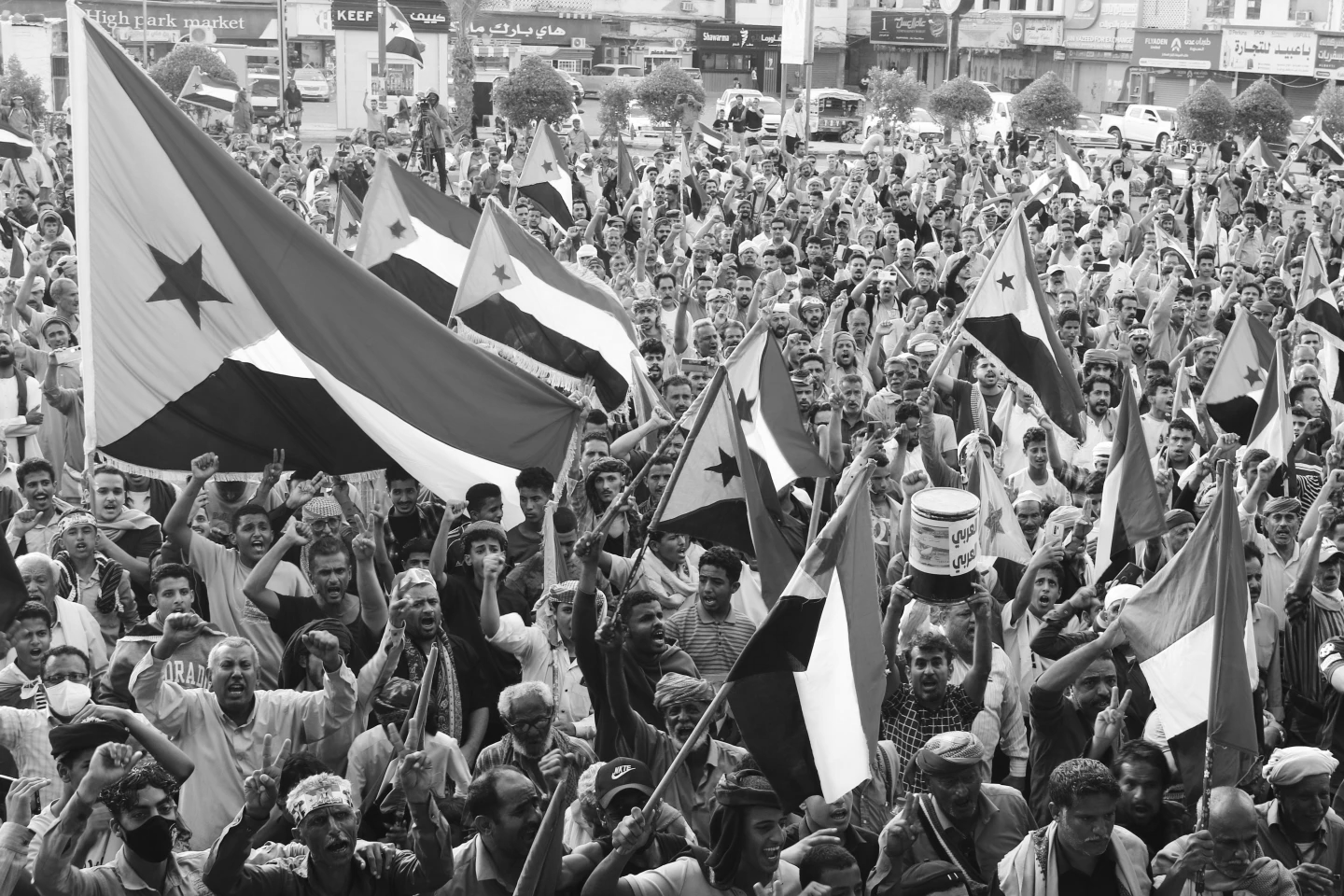
The announcement follows a major STC offensive , in which separatists seized control of almost all of southern Yemen, including key governorates, oil facilities, strategic islands, and Aden , the de facto capital of the south. Celebrations erupted on the streets, with protesters waving both the UAE flag and the South Yemen flag , signaling widespread popular support for secession. This move comes decades after South Yemen existed as an independent state from 1967 to 1990 and was the only communist country in the Arab world at the time. The union with northern Yemen in 1990 was never stable, and historical, religious, and political divisions continue to fuel conflict.
Tensions between Saudi Arabia and the UAE reached a new level when Saudi warplanes bombed the southern port of Mukala , claiming it was receiving weapon shipments from the UAE to support the STC. Riyadh said two ships had allegedly delivered arms, prompting the airstrike. Hours later, Saudi Arabia’s foreign ministry released a sharp statement, accusing the UAE of threatening Saudi national security and warning that the kingdom would take all necessary steps to confront any threat . The UAE has denied these accusations , rejecting claims it sent weapons or backed the STC offensive, and emphasized its troop withdrawal was voluntary.
The UAE, which had been a major supporter of the STC since the 2015 war against the Houthis, completed the withdrawal of its remaining forces , including counterterrorism units, citing safety and coordination with partners. The pullout followed a 24-hour Saudi ultimatum demanding that the UAE leave southern Yemen. While the withdrawal reduces direct foreign involvement, it does not end the crisis.
Yemen is effectively divided into three zones: the Houthi-controlled north , the Saudi-backed internationally recognized government , and the UAE-backed STC in the south . Although the factions were formally allied against the Houthis, the STC has become the dominant Sunni faction in the south, controlling strategic infrastructure and presenting a formidable challenge to Riyadh’s authority.
Saudi Arabia sees the conflict through a security lens, with a 1,300-kilometer border at risk from Houthi attacks, as demonstrated in 2019 and 2022 when Houthis struck Saudi oil facilities. For the UAE, the focus has been securing a loyal southern ally to protect Yemen’s oil resources and maritime trade routes. Both allies now pursue divergent goals, heightening the risk of a full-blown confrontation in Yemen.
The international community is closely watching. The United States engaged diplomatically, with Secretary of State Marco Rubio contacting Saudi and Emirati foreign ministers to urge restraint. Gulf neighbors, including Qatar, Bahrain, and Kuwait, have voiced support for the Saudi-backed government and stressed Yemen’s territorial integrity. Meanwhile, Saudi forces are reportedly amassing up to 20,000 troops at the southern border .