
Years in Jail Without Trial: SC Grants Bail in Delhi Riots Case, Flags Long UAPA Detentions
The Supreme Court on Friday reopened a major constitutional debate over the balance between personal liberty and India’s stringent anti-terror law, the Unlawful Activities (Prevention) Act (UAPA) , while granting interim bail to two accused in the 2020 Delhi riots conspiracy case.
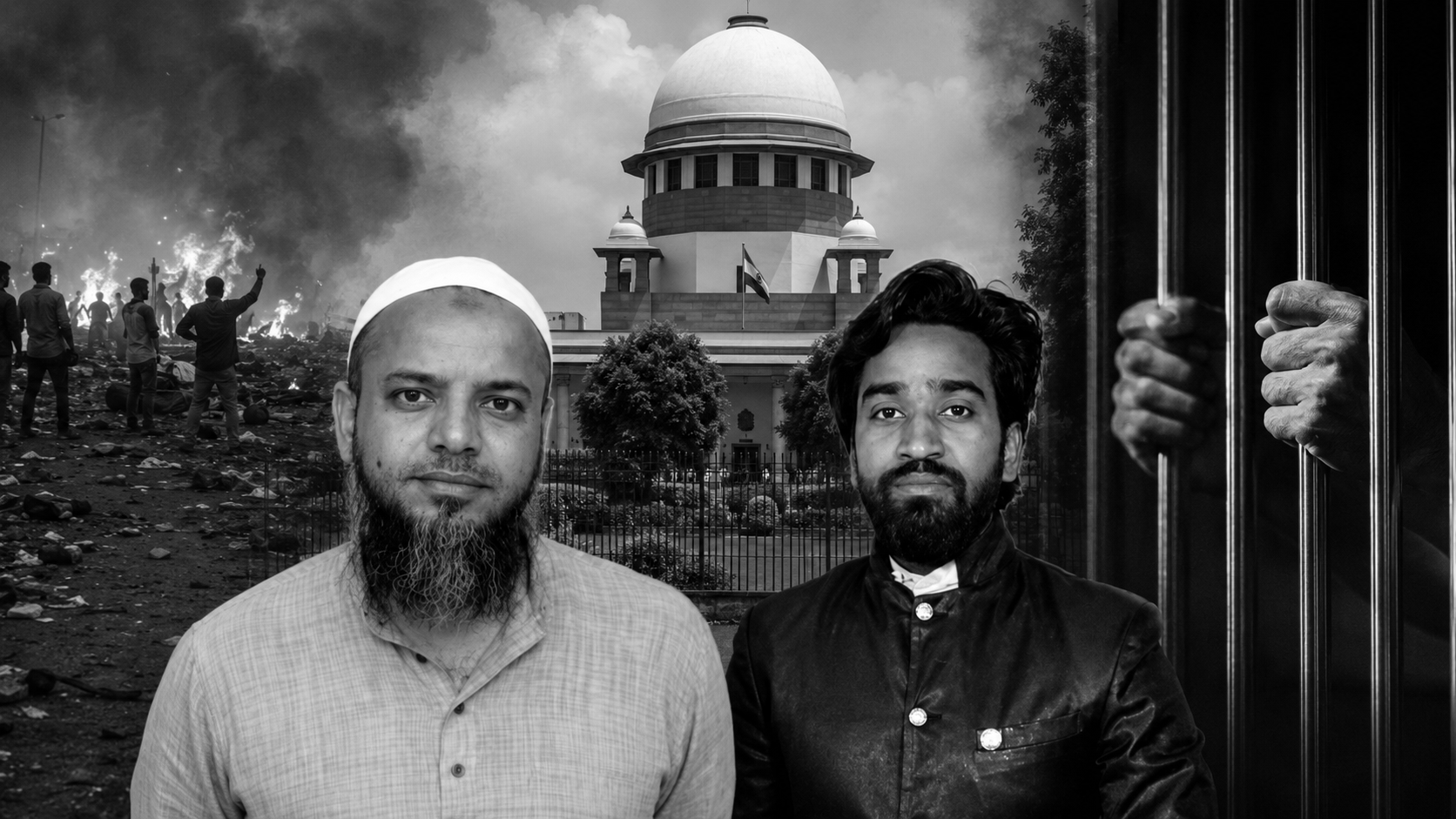
A bench of Justices Aravind Kumar and P B Varale granted six months’ interim bail to Abdul Khalid Saifi and Tasleem Ahmad , and referred to a larger bench the crucial question of whether prolonged incarceration and delays in trial can override the strict bail restrictions under UAPA.
The court directed that the matter be placed before Chief Justice of India Surya Kant for constitution of an appropriate bench, signaling the wider legal significance of the issue. The prosecution has been allowed to seek cancellation of bail if the accused violate conditions imposed by the court.
The case originates from the February 2020 northeast Delhi riots, which broke out during protests against the Citizenship Amendment Act (CAA) and the proposed National Register of Citizens (NRC) . More than 50 people were killed in the violence. Delhi Police later registered FIR 59/2020 , alleging a larger conspiracy behind the riots and invoking UAPA charges against several activists, students and protest organisers.
Among those arrested were Umar Khalid , Sharjeel Imam , Gulfisha Fatima , Meeran Haider , Natasha Narwal , Devangana Kalita and others. Investigators alleged the anti-CAA protests were used as a cover to orchestrate violence, an allegation denied by the accused.
Over the past six years, the case has witnessed repeated bail hearings, adjournments and legal challenges. In 2021, the Delhi High Court granted bail to Natasha Narwal, Devangana Kalita and Asif Iqbal Tanha, observing that the state could not blur the line between protest and terrorist activity.
A major turning point came on January 5 this year when the Supreme Court granted bail to five accused, including Gulfisha Fatima and Meeran Haider, but denied relief to Umar Khalid and Sharjeel Imam, citing their alleged central role in the conspiracy.
The recent proceedings gained importance after another Supreme Court bench questioned whether constitutional protections under Article 21 could remain subordinate to UAPA restrictions when trials remain incomplete for years. The Delhi Police subsequently sought clarity from a larger bench.
Meanwhile, Umar Khalid remains lodged in Tihar Jail after spending over five-and-a-half years in custody without trial. Though he has not been convicted, the lengthy incarceration has become central to the ongoing debate over bail, due process and civil liberties under anti-terror laws.