
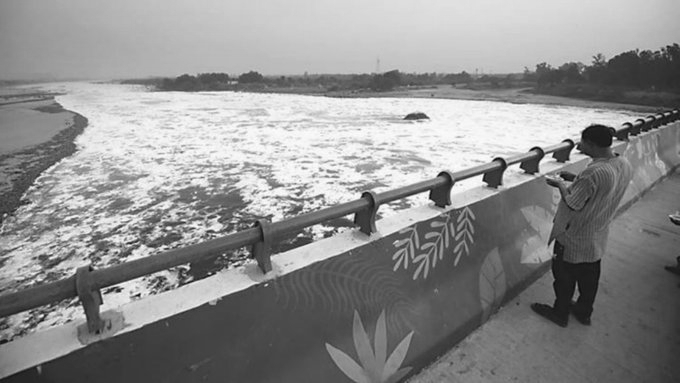
Yamuna’s toxic froth returns, highlighting failures in pollution control
A thick layer of toxic froth has once again resurfaced on the Yamuna at the Kalindi Kunj ghat in Delhi, blanketing large stretches of the river and triggering renewed concern over the capital’s persistent water pollution crisis. The froth, mixed with dust and waste, clung to boats moored along the riverbank, while plastic debris, discarded bottles, flowers, chopped human hair and even blades were scattered along the banks. A strong stench emanated from the water, underscoring the seriousness of the contamination.
Environmentalists and volunteers said the river’s condition has deteriorated sharply since the Chhath festival last year. During the festival, coordinated cleaning efforts had temporarily reduced visible pollution, but the improvement was short-lived. Pankaj Kumar, an environmentalist who leads a cleanliness drive every Sunday at the Kalindi Kunj ghat, said pollution levels in December and January were far worse than before the festival. He said sustained action could have led to a noticeable recovery of the river within months.
Official data reflect the worsening situation. The Delhi Pollution Control Committee’s latest water quality report, based on samples collected in early December 2025, showed Biological Oxygen Demand levels far above the safe limit at several monitoring points, including ITO Bridge, ISBT Bridge and Okhla Barrage. Such levels indicate that the river water is severely stressed and unable to support aquatic life. Fecal coliform bacteria, a marker of sewage contamination, was also found at levels many times higher than the permissible limit.
Experts say the recurring froth is not an isolated or seasonal phenomenon but a structural problem linked to Delhi’s waste management system. A significant number of sewage treatment plants in the city fail to meet prescribed standards, resulting in large volumes of treated, partially treated and untreated sewage flowing into the Yamuna every day. Major drains, including the Najafgarh and Shahdara drains, contribute the bulk of the pollution load in the Delhi stretch of the river.
Scientists explain that the froth forms due to a combination of factors. High concentrations of detergents, industrial effluents and organic matter reduce the water’s surface tension, while turbulence created near barrages and embankments churns the polluted water, leading to persistent foam. Emerging studies have also pointed to the presence of microplastics in the river, which may interact with pollutants and worsen water quality.
The situation has also sparked political debate, with opposition parties accusing authorities of relying on short term measures such as spraying defoaming chemicals or carrying out temporary clean ups during festivals, instead of addressing the root causes. Government agencies, however, have said long term infrastructure upgrades and pollution control projects are underway.
The National Green Tribunal has repeatedly flagged the discharge of sewage through multiple drains as the primary cause of pollution in the Yamuna, particularly between the Wazirabad Barrage and Asgharpur village. It has directed authorities to strengthen enforcement and improve liquid waste management across the city.
Volunteers working along the riverbank say public awareness remains low and enforcement on the ground is weak. Atul Kumar of the Earth Warriors group said people continue to dump waste directly into the river despite prohibitions and penalties under the polluter pays principle. He stressed the need for visible signage, stricter monitoring and sustained public engagement.