
Xiaomi CEO Lei Jun says humanoid robots will transform factories in five years
Xiaomi founder and CEO Lei Jun has outlined an ambitious vision for the future of AI and robotics, predicting that humanoid robots will become a common presence across Xiaomi’s factories within the next five years. In a recent interview, Lei emphasized that “every industry is worth rebuilding with AI,” highlighting the transformative potential of integrating artificial intelligence with traditional manufacturing.
Lei provided a concrete example from Xiaomi’s electric vehicle plant. Inspecting large die-cast components by hand is nearly impossible, but combining X-ray machines with an AI vision model has revolutionized the process. The new system completes inspections in just two seconds, ten times faster and over five times more accurate than manual methods. According to Lei, such deep integration of AI and industrial operations can unlock a new trillion-dollar market, but no single company will dominate the entire chain. Strategic collaborations with top partners will be crucial to achieving a full-stack industry upgrade.
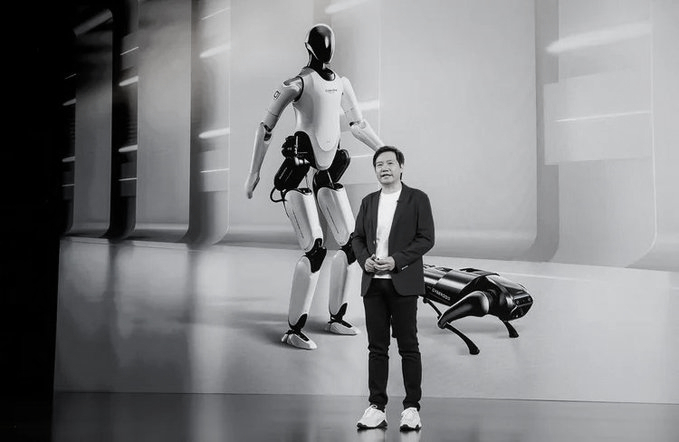
Xiaomi has been steadily advancing its robotics efforts since unveiling its first humanoid robot prototype, CyberOne, in August 2022. Standing 177 cm tall and weighing 52 kg, CyberOne is designed to perceive human emotions, navigate its environment, and perform coordinated tasks using a full-body control algorithm, 21-joint articulation, and a 3D spatial vision system. These capabilities demonstrate Xiaomi’s commitment to combining cutting-edge AI with physical robotics.
The company’s robotics ambitions received a significant boost in October with the hiring of Zach Lu Zeyu, a former Tesla Optimus senior robotics engineer specializing in dexterous manipulation and tactile sensing. Xiaomi has also expanded its robotics workforce substantially, listing over 200 new positions on its careers site, including multiple roles focused on dexterous-hand engineering.
Looking ahead, Lei envisions humanoid robots becoming a staple in Xiaomi factories within five years. Beyond industrial applications, he sees an even greater opportunity in consumer homes, signaling that Xiaomi’s next long-term frontier is the fusion of AI and humanoid robotics-an evolution poised to reshape both manufacturing and daily life.