
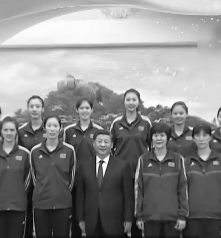
Xi Urges More Women in Leadership
Chinese President Xi Jinping on Monday urged for stronger representation of women in politics and government, stating that gender equality must be “truly internalized” within society. He made the remarks at the Global Leaders Meeting on Women 2025 , a two-day summit held in Beijing in partnership with UN Women, aimed at advancing women’s development and participation globally.
Global Summit on Women’s Leadership
The summit has brought together leaders from Iceland, Sri Lanka, Ghana, Dominica, and Mozambique , marking one of the largest gatherings on women’s leadership hosted in China. The meeting focuses on expanding women’s participation in political and social governance and fostering an environment where women can contribute fully to national development. Xi emphasized that peace and stability are essential for women’s all-round growth.
Domestic Context and Gender Equality Drive
China has made significant progress in educating women, with women accounting for roughly 50% of university students and 43% of the employed population . Yet senior political positions remain largely male-dominated. In 2022, for the first time in two decades, there were no women among the seven members of the Politburo Standing Committee and none among the 24-member Politburo .
Xi linked women’s empowerment to broader societal goals, highlighting their role in family harmony, social stability, and national progress. He also tied the push to demographic challenges, including an ageing population and falling birth rates, framing women as central to both family and national development.
Communist Party’s Role
The gender equality drive is strongly led by the Communist Party , framing women’s inclusion as part of China’s development strategy. Other political forces in China have limited influence, leaving the Party as the primary driver of policy. International observers, however, note that progress at the elite leadership level has been slow, with gender gaps widening in both politics and the workforce.
Women in Politics Across Asia
Compared with other Asian countries, China still lags in high-level female political representation. Nations like Sri Lanka and the Philippines have had women serve as heads of state, while Japan and South Korea show slower progress in parliamentary representation. Many Asian countries share the challenge of translating educational and workforce gains for women into political leadership opportunities.
Looking Ahead
The summit signals China’s intention to present itself as a global advocate for women’s leadership while addressing domestic calls for greater inclusion. Xi’s remarks underline that empowering women is not just a matter of equality but a strategic component of social cohesion and national development .