
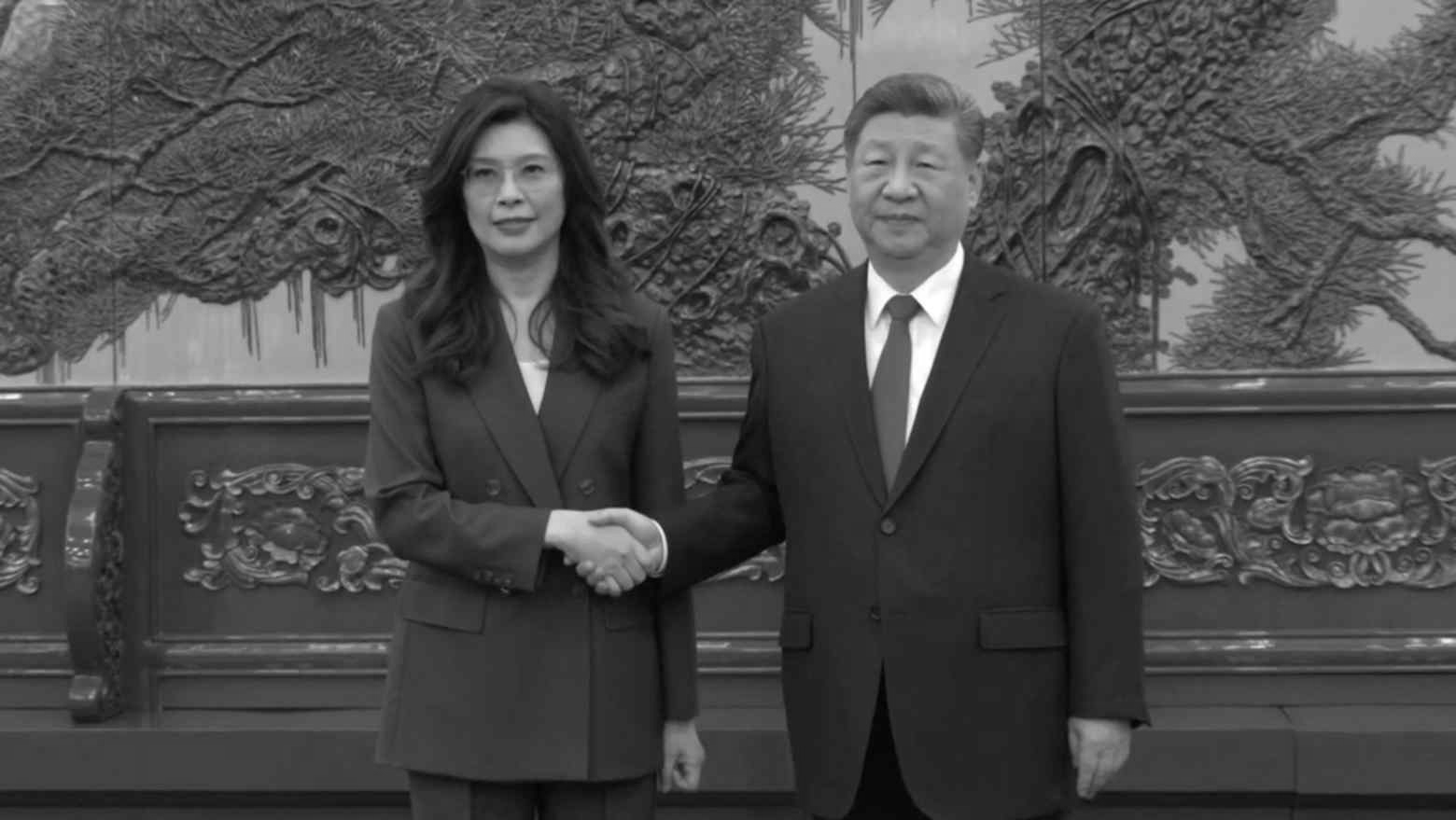
Xi Meets Taiwan Opposition Leader Ahead of Crucial Trump Visit, Signals Strategic Shift
In a significant diplomatic development, Chinese President Xi Jinping met Taiwan’s opposition leader Cheng Li-wun in Beijing on Friday, marking a rare high-level engagement amid rising cross-strait tensions. Cheng, chairperson of Taiwan’s Kuomintang (KMT) , is the first party leader in nearly a decade to lead a delegation to mainland China, signaling a renewed push for dialogue between the two sides.
The meeting comes at a sensitive geopolitical moment, just weeks before US President Donald Trump is scheduled to visit China on May 14–15. Taiwan is expected to be a key issue during Trump’s discussions with Xi, especially in light of Washington’s proposed $11 billion arms sale package to Taipei the largest of its kind so far.
China considers Taiwan a breakaway province and has consistently pursued reunification under its One-China policy , a cornerstone of Xi’s leadership since 2012. Beijing views Taiwan’s ruling Democratic Progressive Party (DPP) as pro-independence and has instead shown tacit support for the KMT, which favors closer economic and political ties with the mainland.
Cheng described her visit as a “journey of peace,” emphasizing the need for communication and dialogue to ease tensions. She warned that the global environment is increasingly volatile and stressed that stability in the Taiwan Strait is crucial for global security. “If the strait is safe, the world is safe,” she said, underlining Taiwan’s strategic importance.
Her visit also highlights internal political divisions within Taiwan. While the DPP strongly opposes reunification and seeks to preserve Taiwan’s distinct identity, the KMT continues to support the 1992 Consensus , which acknowledges the One-China principle while allowing differing interpretations.
Meanwhile, tensions have been further escalated by the US arms deal, which includes advanced systems such as HIMARS rocket launchers, anti-tank missiles, drones, and artillery. China has strongly condemned the package, viewing it as interference in its internal affairs. However, Taiwan’s government has struggled to pass the necessary defence budget due to opposition resistance in parliament.
A recent bipartisan US delegation to Taipei urged lawmakers to approve a $40 billion special defence budget , reflecting Washington’s growing concern over regional security and China’s increasing military assertiveness.
Cheng’s visit echoes earlier outreach efforts by former KMT leaders like Lien Chan and Ma Ying-jeou , who also engaged with Beijing under the same political framework. Analysts view the current engagement as both a diplomatic signal and a strategic move aimed at easing tensions ahead of crucial US-China talks.
As global attention turns to the upcoming Trump-Xi meeting, the Taiwan issue remains at the center of an increasingly complex geopolitical contest involving military, political, and ideological stakes.