
Xi Jinping Visits Egypt As China Expands Middle East Influence Amid Iran War
Chinese President Xi Jinping arrived in Egypt this week for his first visit to the country in a decade, as Beijing seeks to deepen economic, diplomatic and military ties with Cairo while expanding its influence across a rapidly changing Middle East.
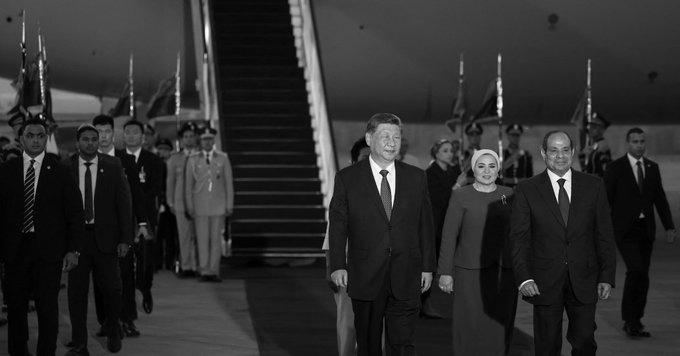
Xi arrived at Cairo International Airport on Tuesday and was welcomed by Egyptian President Abdel Fattah el Sissi with a red carpet ceremony featuring uniformed soldiers, folk dancers and young Egyptians waving Chinese and Egyptian flags. The visit comes as countries across the region reassess their security and economic relationships amid the fallout from the Iran war.
Xi's three day visit is the second leg of his second overseas trip this year, following his participation in a Shanghai Cooperation Organisation summit in Kyrgyzstan, where he met Russian President Vladimir Putin and other leaders. He is scheduled to hold talks with Sissi and visit the Grand Egyptian Museum near the pyramids of Giza.
The visit has significance beyond traditional bilateral diplomacy. Egypt is a longstanding US ally that receives around USD 1.3 billion in US military aid annually, but Cairo has increasingly sought to diversify its strategic partnerships. Analysts say uncertainty surrounding US policy and the wars in Gaza and Iran have reinforced Egypt's desire for greater strategic autonomy while maintaining ties with Washington, Beijing, Moscow and Europe.
China and Egypt are marking 70 years of diplomatic relations this year. Sissi described the two countries as partners helping strengthen the role of the Global South, while Xi said Beijing and Cairo were “close brothers” and called for a deeper partnership.
Economic ties have expanded rapidly. China has invested billions of dollars in Egypt across manufacturing, ports, solar energy, green hydrogen and satellite technology. Chinese companies are also deeply involved in projects linked to Egypt's infrastructure and the Suez Canal Economic Zone.
The strategic importance of Egypt has increased further because of the Suez Canal, a vital global trade route connecting the Mediterranean with the Red Sea. With shipping through the Strait of Hormuz heavily disrupted by the Iran war, Egypt's control over the canal gives Beijing an additional reason to strengthen relations with Cairo.
Military cooperation is also becoming more prominent. Last month, Egypt hosted joint military exercises with China involving China's J 16 fighter jets and French made Rafale fighters. The drills marked the first deployment of Chinese J 16s to Africa and represented a rare exercise involving Chinese and Western made fighter aircraft. A Chinese air force tanker was also photographed refuelling an Egyptian Rafale.
China's growing relationship with Egypt fits into a broader effort to establish itself as an influential power broker in the Middle East. Beijing brokered the restoration of diplomatic relations between Iran and Saudi Arabia in 2023 and has continued to advocate for a two state solution to the Israeli Palestinian conflict.
Egypt's location also gives China access to wider regional issues involving Israel, Palestine, Africa, the Persian Gulf, Sudan and Libya. Reuters quoted analysts describing Egypt as a strategic linchpin because of its geographical position and role in multiple regional conflicts.
The timing of Xi's visit is particularly significant as the Iran war has disrupted energy markets and raised questions about whether Middle Eastern countries can continue relying on the United States as their primary security partner. Against this backdrop, China's expanding economic and military engagement with Egypt gives Beijing a stronger platform for projecting influence across both the Arab world and Africa.
Xi is also expected to continue his diplomatic outreach after the Egypt visit, with planned travel to India and the United States later this month.