
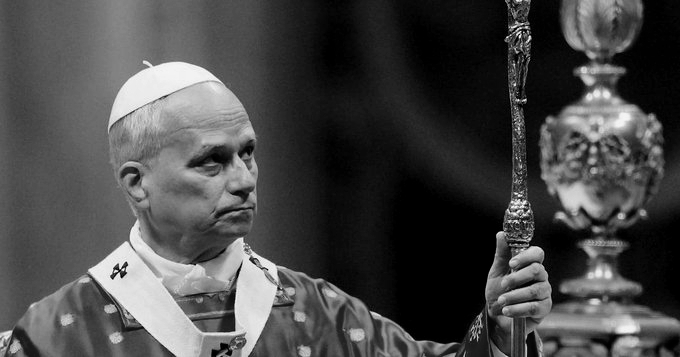
‘Wound in Christian Memory’: Pope Leo XIV Apologises for Church’s Slave Legacy
Pope Leo XIV issued a historic apology on Monday in Vatican City, formally acknowledging the Holy See’s past role in legitimising slavery and its centuries-long failure to condemn the practice. The apology was delivered as part of his first encyclical, “ Magnifica Humanitas ” (Magnificent Humanity) , released from the Vatican and focused on the moral challenges posed by artificial intelligence and the digital age.
In the document, the first US-born pope described the Church’s historical record on slavery as a “ wound in Christian memory ,” and asked forgiveness on behalf of the Catholic Church for having, in earlier centuries, regulated and at times legitimised enslavement. He said it was “impossible not to feel deep sorrow” when reflecting on the immense suffering and humiliation endured by enslaved people, and formally asked pardon in the name of the Church.
The encyclical revisits 15th-century papal decrees, including Dum Diversas (1452) and Romanus Pontifex (1455), which granted Portuguese monarchs authority to conquer, subjugate, and enslave non-Christians. These directives later influenced the Doctrine of Discovery , used to justify colonial expansion across Africa and the Americas. While later Church teachings, including Sublimis Deus (1537), opposed the enslavement of Indigenous peoples, the Vatican has long been criticised for not fully repudiating earlier bulls.
Leo acknowledged that although the Church affirmed human dignity in principle, it took nearly 18 centuries to explicitly condemn slavery. He also drew a direct connection between historical exploitation and modern-day systems, warning that unregulated digital industries and AI supply chains risk creating “ new forms of slavery ” through exploitative labour, including in mineral extraction.
The pope’s apology goes further than previous papal statements, which had condemned slavery in general but did not directly address institutional responsibility of the papacy itself . He urged the Church to take a stronger stand against modern human trafficking and labour exploitation, warning that failure to act could repeat historical moral failures.