
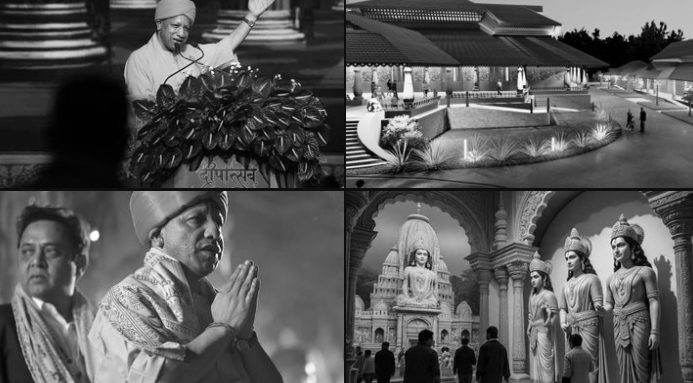
World’s first Ramayana wax museum ready in Ayodhya; CM Yogi to inaugurate during Diwali
Ayodhya, already a global spiritual landmark following the grand construction of the Ram Temple, is set to add another milestone to its cultural landscape. The city will soon host the world’s first Ramayana-themed wax museum, which Chief Minister Yogi Adityanath is slated to inaugurate during the ninth Deepotsav festival this year, according to a press release from the Chief Minister’s office.
Situated along the Chaudah Kosi Parikrama route, opposite Kashiram Colony, the museum spans 9,850 sq. ft. and has been built at a cost of Rs 6 crore. Designed in the South Indian architectural style, the two-story, fully air-conditioned museum features 50 lifelike wax statues depicting key episodes from the Ramayana, including Lord Ram, Mata Sita, Lakshman, Bharat, Hanuman, Ravana, and Vibhishan. Entry will be regulated to 100 visitors at a time to ensure a comfortable and immersive experience.
The museum’s design brings the Treta Yuga to life. The ground floor highlights Lord Ram’s childhood, Sita’s swayamvar, and other early episodes, while the first floor showcases the forest exile, the burning of Lanka, and the climactic Ram-Ravana war. Each statue is carefully sculpted with meticulous attention to attire, posture, and expression, complemented by dedicated lighting and 3D effects that enhance the visual experience. Visitors will witness scenes like Hanuman setting Lanka ablaze, recreated with realistic flame effects, making the mythology almost tangible.
The museum aims to offer not just a visual spectacle but a complete sensory journey. The halls are infused with the fragrance reminiscent of the Treta Yuga, and the chants of the ‘Ram Tarak Mantra’ and Ram bhajans provide a serene, spiritual ambiance. A grand Lord Ganesha idol greets visitors at the entrance, and a special selfie point near child Ram’s statue encourages families to capture memorable moments.
Safety and convenience are prioritized. The museum is equipped with a fire suppression system linked to four emergency exits, CCTV surveillance, and round-the-clock security. Outside, visitors will find parking facilities, a studio coffee house, snack zones, and entertainment areas, blending South and North Indian cuisines to reflect Ayodhya’s cultural diversity. The entry fee has been set at Rs 100, with 12% of revenue directed to the Municipal Corporation to aid city development.
Constructed by Kerala-based Sunil Wax Museum, which previously built celebrity wax museums in Lonavala and Thiruvananthapuram, this project is considered a pioneering effort. Sunil, the company’s head, remarked, “We have sculpted each character with such precision that visitors will feel as though they have stepped into the Treta Yuga itself.”
The Ramayana Wax Museum is poised to become a landmark that merges devotion with modern storytelling. By bringing mythology to life through lifelike sculptures, 3D effects, and immersive sensory experiences, it appeals to both traditional devotees and younger visitors seeking interactive cultural experiences. Beyond its spiritual and cultural significance, the museum also supports Ayodhya’s civic development, with a portion of revenue aiding the Municipal Corporation. As the lamps of Deepotsav illuminate the city, this museum stands not just as a tribute to the epic but as a symbol of Ayodhya’s transformation into a world-class tourist and cultural destination.