
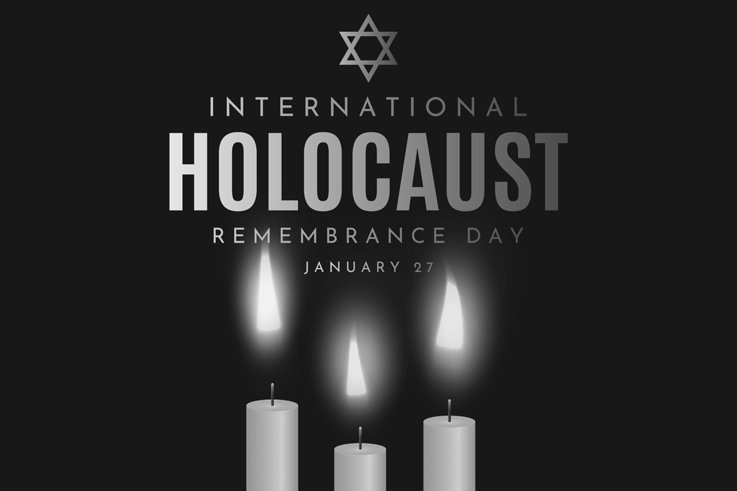
World observes International Holocaust Remembrance Day
People across the world paused on Tuesday to observe International Holocaust Remembrance Day , a day set aside to remember and honour the millions of people who were killed during the Holocaust by Nazi Germany during World War II. The day commemorates the lives of six million Jews and millions of others, including Polish people, Romani people, disabled individuals, and political dissidents, who were systematically murdered during the genocide.
The United Nations adopted a resolution in 2005 establishing January 27 as International Holocaust Remembrance Day, choosing the date to mark the liberation of Auschwitz-Birkenau , the largest and most notorious Nazi concentration and extermination camp, by Soviet forces in 1945. Auschwitz-Birkenau has become a symbol of the horrors of the Holocaust, where over 1.1 million people were murdered, most of them Jews, along with Poles, Roma, and others.
Commemorations took place worldwide, including ceremonies, memorials, and educational programmes that emphasised the importance of remembering the victims and learning from history. At Auschwitz, former prisoners laid flowers and wreaths at the Execution Wall a site in the Auschwitz I camp where thousands of prisoners were shot by Nazi forces during World War II while Poland’s Karol Nawrocki, director of the Auschwitz-Birkenau State Museum, joined survivors for a remembrance ceremony at Birkenau.
In Berlin, candles flickered at the Memorial to the Murdered Jews of Europe , a field of 2,700 grey concrete slabs near the Brandenburg Gate, symbolising the six million Jews killed during the Holocaust. Germany’s Bundestag will hold an official commemoration on Wednesday, underscoring the nation’s acknowledgment of its past.
Survivors continue to share their stories, with an estimated 196,600 Holocaust survivors still alive globally, down from 220,000 a year earlier. Around 97% of them are “child survivors,” born in 1928 or later. Their testimonies are a poignant reminder of the consequences of hatred and the need to protect human rights.
Other countries also marked the day with their own commemorations. In the Netherlands, a silent march in Amsterdam’s historic Jewish quarter led to the Auschwitz memorial, where Mayor Femke Halsema told attendees, “Bergen-Belsen, Sobibor, Auschwitz they are unprecedented and still incomprehensible examples of what intolerance, hatred, and racism can lead to. Unparalleled in history.”
International Holocaust Remembrance Day serves not only to honour victims and survivors but also as a global call to fight antisemitism, racism, and intolerance in contemporary society, ensuring that the lessons of the Holocaust are never forgotten.