
Women’s Reservation Bill Fails, Southern CMs Raise Federal and Political Concerns
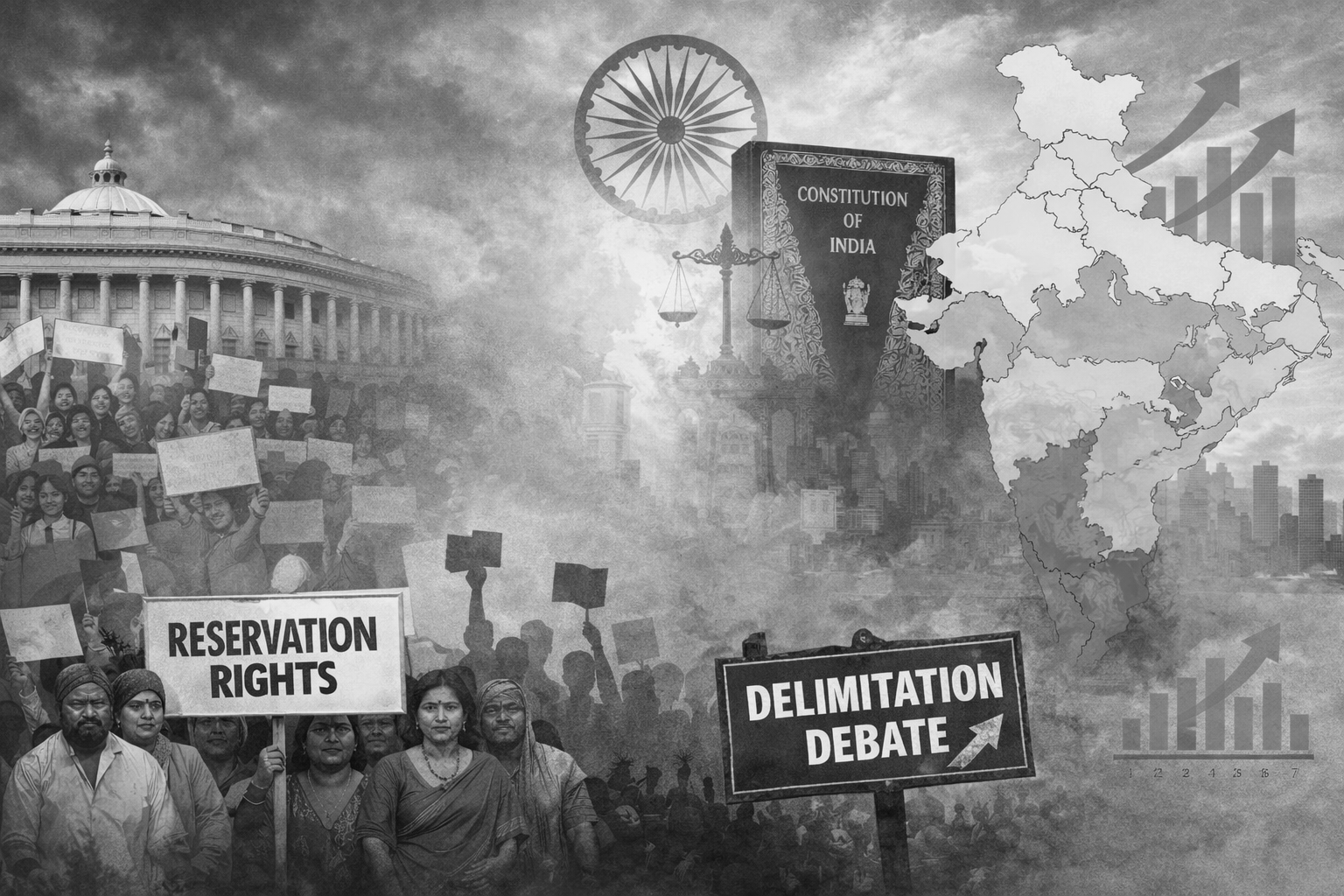
The defeat of the Constitution Amendment Bill proposing 33 per cent reservation for women in legislatures and an increase in Lok Sabha seats has triggered strong reactions across southern India, highlighting deeper tensions around delimitation , federal balance , and political intent . The bill, which failed to secure a two-thirds majority in the Lok Sabha, has not only delayed a long-pending reform on women’s political representation but also intensified concerns among southern states that linking reservation with delimitation could alter the balance of power in Parliament.
In Andhra Pradesh, Chief Minister N. Chandrababu Naidu termed the defeat an “unpardonable crime” and a “black day” , arguing that it shattered the aspirations of women seeking greater representation. He accused opposition parties of committing a “national betrayal” and maintained that increasing Lok Sabha seats would have strengthened governance. In contrast, YSR Congress leader Y.S. Jagan Mohan Reddy warned that delimitation could reduce southern representation, stating the outcome delivered justice neither to women nor to the south, particularly penalising states that implemented population control.
Tamil Nadu Chief Minister M.K. Stalin welcomed the bill’s defeat as a “victory” for federalism, alleging that the legislation was a disguised attempt to push delimitation and shift political power toward northern states. He credited opposition unity for blocking what he called a “black law” and reiterated the demand to freeze delimitation until 2051. Similarly, Telangana Chief Minister Revanth Reddy described the development as a rejection of the government’s intent, alleging that the bill acted as a cover for broader constitutional changes . He argued that a standalone bill on women’s reservation could have been passed easily and warned that the proposed delimitation would widen the gap between northern and southern states.
In Karnataka, the Congress-led government also aligned broadly with the opposition narrative. Senior leaders, including Deputy Chief Minister D.K. Shivakumar, indicated that while there was clear support for women’s empowerment , the linking of reservation with delimitation complicated the bill and contributed to its defeat. The broader Congress position echoed this, describing the outcome as a “victory for democracy” and accusing the Centre of attempting to alter the federal structure through the legislation.
Despite differences in tone, a common thread runs across southern leadership: strong support for women’s reservation but firm opposition to its linkage with delimitation. While leaders like Naidu viewed the defeat as a setback to gender justice , others such as Stalin and Reddy framed it as resistance against centralisation and structural imbalance. The episode has thus transformed a gender reform debate into a wider national conversation on representation, equity, and federalism , with growing calls for a clean, consensus-driven women’s reservation law that does not compromise regional interests.