
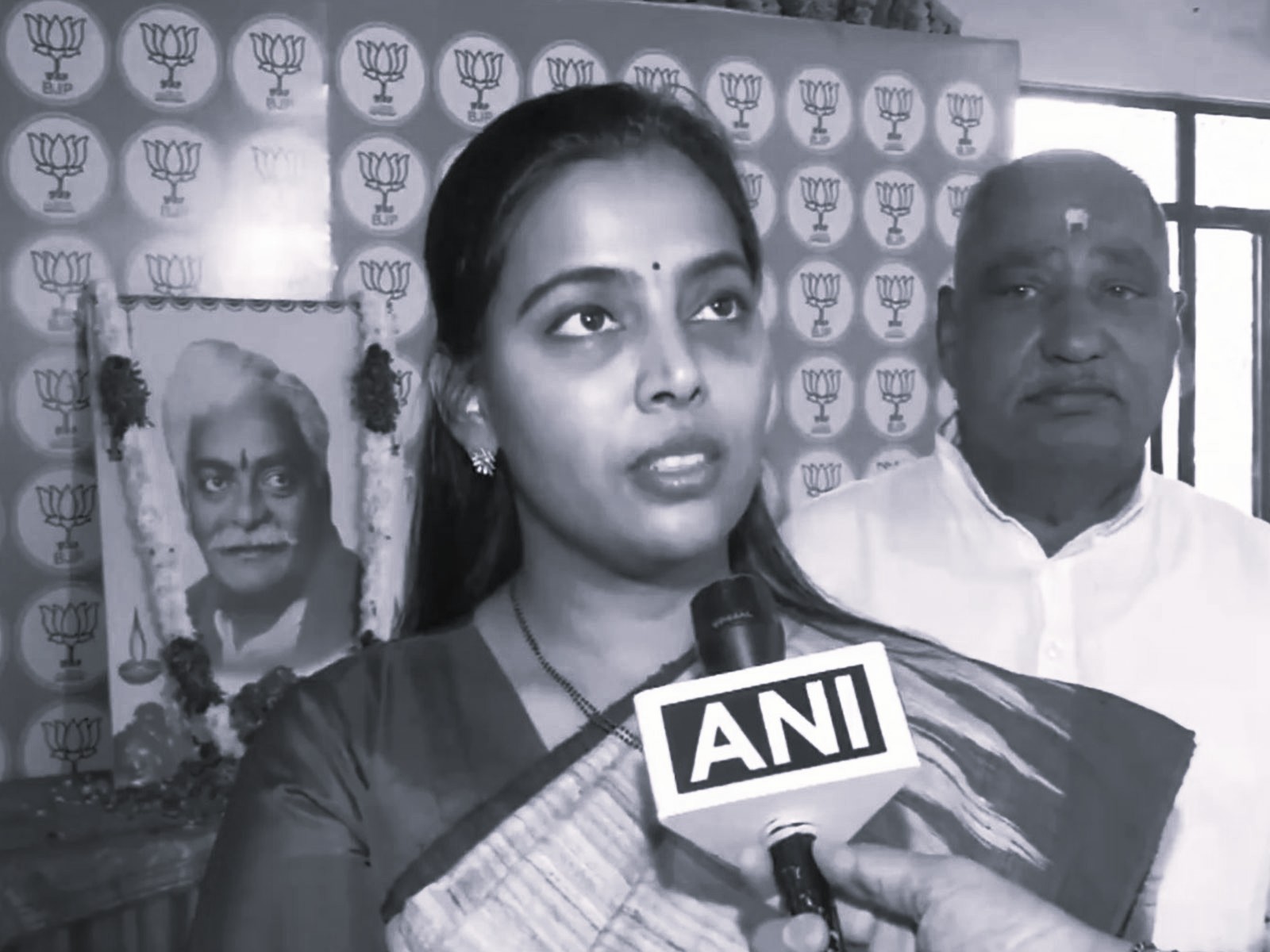
Women’s Reservation Bill a Historic Reform, Says BJP’s Bandaru Vijayalakshmi
India is moving toward a defining moment in its democratic journey, with the push to implement 33% reservation for women in legislatures gaining momentum. Framed under the Nari Shakti Vandan Adhiniyam , the reform is being positioned not just as a policy change, but as a long-overdue correction to the gender imbalance in political power .
The conversation around women’s political representation has resurfaced with renewed urgency following the passage of the 106th Constitutional Amendment Act, 2023 . While the law promises sweeping change across the Lok Sabha, State Assemblies, and Delhi Assembly , its actual rollout is expected to align with the 2029 general elections , after the completion of delimitation and census exercises.
In Hyderabad, BJP leader Bandaru Vijayalakshmi described the reform as a turning point that could redefine governance in India. She argued that the inclusion of more women in legislative spaces would lead to more inclusive decision-making , reflecting the needs of a broader cross-section of society. Drawing on both history and present-day examples, she pointed to women occupying key leadership roles today, emphasizing that their administrative capabilities are no longer in question.
At the national level, Prime Minister Narendra Modi has framed the reform as central to his vision of women-led development . Stressing that women make up nearly half of India’s population, he has argued that meaningful participation in lawmaking is essential for achieving balanced economic growth and social progress . The government has reiterated its commitment to ensuring that the quota is implemented across all elections Parliament and state assemblies alike by 2029.
Yet, beneath the optimism lies a complex political and procedural landscape. The implementation depends heavily on delimitation , a process that will redraw constituency boundaries and determine how reservations are allocated. This has raised questions about timelines and execution, with critics warning that delays in these exercises could push the reform further into the future.
Opposition voices have also called for a more consultative approach. Congress leader Jairam Ramesh has urged the government to build consensus and ensure transparency, particularly on issues such as the rotation of reserved seats and representation within marginalized groups. While the bill includes provisions for SC and ST women , the absence of a separate quota for OBC women continues to fuel debate.
Beyond parliamentary politics, the reform carries wider social implications. India’s experience with women’s reservation in local governance has already demonstrated how increased participation can transform leadership at the grassroots level. In several states, women have moved from symbolic presence to active governance, influencing decisions on health, education, and welfare.
Supporters of the bill believe that extending this model to higher levels of governance could bring similar results shifting policy priorities and making governance more responsive. Critics, however, caution against the risk of proxy representation , where women leaders may operate under indirect influence, a challenge that will require sustained institutional safeguards.
Despite these debates, the broader trajectory is clear. The Centre has announced a special Parliament session beginning April 16 , signaling that the issue remains high on the national agenda. If political consensus is achieved and implementation proceeds as planned, the reform could mark the beginning of a new phase in India’s democratic evolution .
More than a legislative milestone, the Women’s Reservation Bill represents an attempt to redefine who participates in shaping the nation’s future. By opening the doors of power to millions of women, it carries the potential to transform not just politics, but the very character of governance in India.