
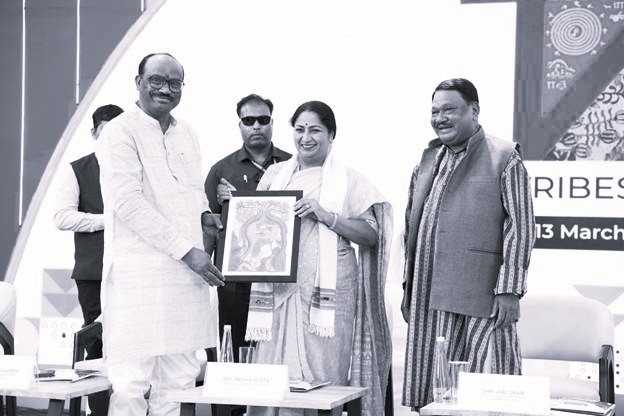
Women Lead Cultural Revival at Tribes Art Fest 2026
India’s diversity has earned it a unique global identity. Languages, attire, traditions and customs together form a cohesive cultural framework. Within this diversity, tribal communities play a crucial role . Nature-based living, collective thinking, spiritual connection and artistic expression form the foundation of tribal culture. Women play an especially significant role in preserving these traditions across generations.
Held in New Delhi, Tribes Art Fest 2026 emerged as a national platform for this living heritage. It was not merely an art exhibition, but a symbol of cultural pride, economic empowerment and women’s leadership . The festival enabled tribal artists to showcase their talent nationwide and initiated a constructive dialogue between tradition and modernity .
Cultural Heritage: A Way of Life, Not Decoration
Tribal art is not confined to decorative paintings; it reflects an entire way of life. Art forms such as Warli, Gond, Bhil, Saura, Sohrai and Dhokra depict nature, harvests, festivals, spiritual beliefs and community life. Every line tells a story; every colour holds a memory.
These traditions have largely been passed down orally or through family practices. While modernisation poses a risk of decline, such festivals help revive and sustain these traditions by providing artists with a national platform and fulfilling an important cultural responsibility.
Women: Pillars of Tradition
In tribal societies, women are the primary custodians of artistic traditions . From painting walls during festivals to creating ritual symbols and decorating homes, their work goes beyond aesthetics it represents identity and self-respect .
At Tribes Art Fest 2026, women artists demonstrated not only traditional skills but also adaptive creativity suited to contemporary platforms . Their work highlighted their capability, vision and leadership.
The Bond Between Nature and Art
Nature is central to tribal art. Forests, mountains, rivers and animals are not mere visuals but spiritual symbols . The philosophy of “Jal, Jameen, Jungle” underpins tribal life: water sustains life, land provides food and forests maintain balance.
This philosophy is reflected in art: Warli paintings often depict community dances and harvest scenes, while Gond art portrays wildlife, birds and folklore. These works remind modern society of the need for sustainable development in harmony with nature .
New Pathways for Economic Empowerment
Cultural festivals must also create economic opportunities. Tribes Art Fest 2026 facilitated direct interaction between artists and collectors, galleries, institutions and the design sector , reducing dependence on intermediaries and ensuring fair income.
Linking tribal art to markets transforms it into a viable livelihood and encourages youth participation. Without such support, traditional art risks fading in the face of modern employment trends.
Intergenerational Continuity
A defining feature of tribal art is its transmission across generations. Learning begins at home, where children acquire skills from an early age in an informal yet valuable educational system.
The participation of young artists at the festival is a positive sign. By combining tradition with digital platforms and modern presentation techniques , they are giving heritage a contemporary form.
Women’s Leadership and Collective Creation
Initiatives such as Project Khum showcased the creative strength of women through collective artistic efforts. This reflects not just individual talent but the power of community collaboration . Women’s leadership in cultural spaces is vital for inclusive social development and strengthens the spirit of equality.
Policy Support and the Road Ahead
Government initiatives such as the Pradhan Mantri Janjati Adivasi Nyaya Maha Abhiyan , Dharti Aaba Janjatiya Gram Utkarsh Abhiyan , expansion of Eklavya Model Residential Schools , and market support from the Tribal Cooperative Marketing Development Federation of India (TRIFED) provide a policy framework for tribal development.
However, policy alone is not sufficient. Effective implementation, along with training, market awareness and digital promotion , is essential. Cultural programmes must evolve from annual events into sustained platforms .
Cultural Recognition and National Identity
Granting tribal art national recognition enhances social respect and boosts community confidence. It must be viewed not as “local” or “rural” but as national heritage .
Tribes Art Fest 2026 marks a significant step in bringing tribal art into the mainstream and promoting cultural inclusivity .
Building the Future with Brushstrokes
As India advances towards becoming a developed nation by 2047, cultural preservation is as vital as economic growth . Women artists are not merely creating art, they are documenting history, reflecting society and shaping the future .
Tribes Art Fest 2026 underscores a key message: development and heritage are not contradictory; they can progress together. Culture flourishes in the hands of women , giving new meaning to Indian identity.
The festival ultimately conveys a simple yet powerful idea: true progress lies in moving forward without losing touch with one’s roots .