
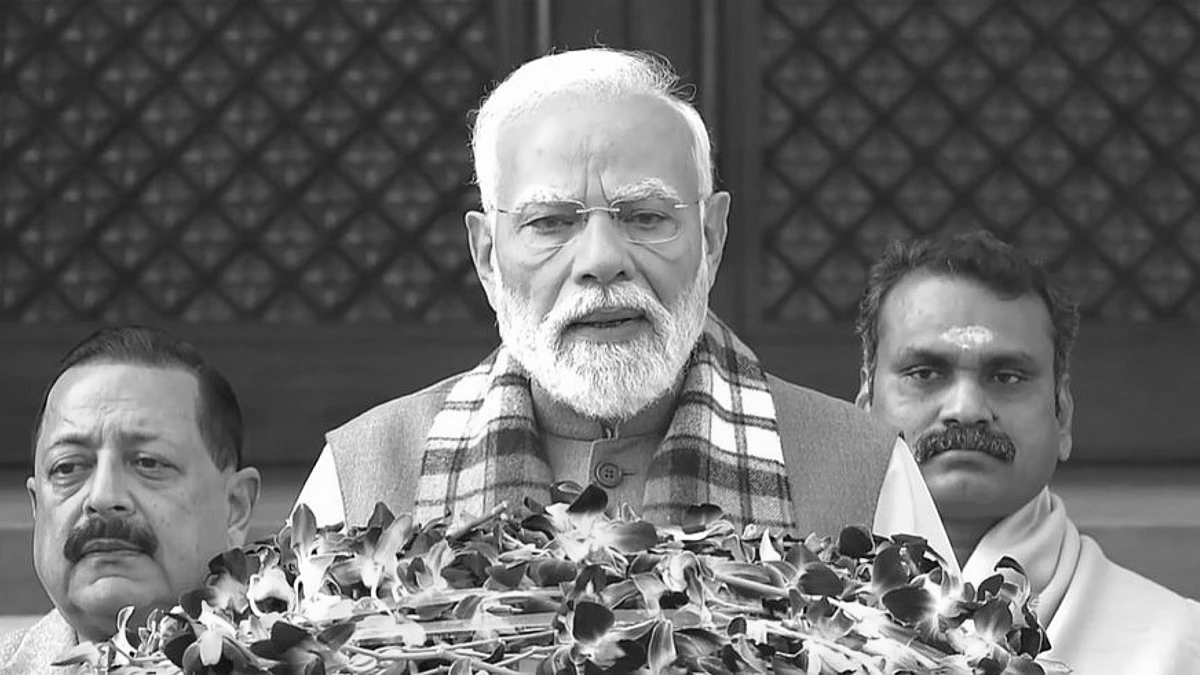
Winter Session 2025: PM Modi calls for constructive debate as Kharge notes Dhankhar exit
The Winter Session of Parliament 2025 commenced with Prime Minister Narendra Modi addressing the media, emphasising the session’s role in accelerating India’s developmental agenda and reinforcing democratic strength. He called for constructive, policy-driven debate and urged all political parties to prioritise national interest over electoral rivalries.
“The Winter Session is not merely a ritual, but a critical platform to infuse new energy into efforts accelerating the nation’s progress,” Shri Modi said. Highlighting the recent Bihar elections, he praised the record voter turnout as a testament to India’s democratic vibrancy, noting the encouraging participation of women voters. “It has been proven that democracy can deliver in India,” he said, adding that strong democratic institutions are helping elevate the country’s economic conditions and inspire confidence in the pursuit of a developed India.
The Prime Minister urged MPs to ensure balance and responsibility, emphasising that Parliament should focus on policy, not theatrics or slogan-shouting. First-time and younger MPs, he stressed, must be given adequate opportunities to represent their constituencies and contribute to national development. “The insights and energy of the new generation must be benefitted from by the House and the nation,” he added.
PM Modi also noted the significance of the session as the first under the guidance of the new Rajya Sabha Chairman, C P Radhakrishnan. He congratulated the Chairman and expressed confidence that parliamentary functioning would be further strengthened under his leadership. Highlighting ongoing reforms, he pointed to GST initiatives as examples of next-generation policy measures aimed at building trust among citizens, with several key initiatives set to be advanced during the Winter Session.
The Prime Minister cautioned against using Parliament as a platform to vent electoral frustrations. “Defeat should not be the ground to create disruption. Victory should not convert into arrogance either,” he said, emphasising that informed, constructive debate is essential to keep citizens better informed and strengthen national development.
On the same day, Leader of Opposition in the Rajya Sabha Mallikarjun Kharge welcomed Chairman Radhakrishnan but referred to the “unexpected and sudden exit” of his predecessor, Jagdeep Dhankhar, which triggered sharp reactions from the treasury benches. Kharge urged the Chairman to maintain a balance between both sides and provide opposition members the opportunity to raise their issues.
Kharge recalled Radhakrishnan’s Congress family background, noting his uncle’s tenure as MP from Coimbatore, and stressed the need for fair and impartial conduct of House proceedings for the credibility of the Chairman’s office. “It was a completely unexpected and sudden exit from the office of Chairman, which is unusual in parliamentary history,” he said, adding that the House was deprived of the opportunity to bid farewell to Dhankhar.
The remarks drew immediate objection from Parliamentary Affairs Minister Kiren Rijiju and Leader of the House JP Nadda, who emphasised maintaining the dignity of the occasion. Nadda also referenced the recent electoral losses faced by opposition parties, including Congress, in Bihar and Haryana. “This is a pious occasion. The issue raised is irrelevant and can hinder the congenial environment needed for debate,” he said.
Addressing the media, Prime Minister Modi reiterated that Parliament is a place for delivery, not drama, and should not be used to vent frustrations following electoral defeats. He urged all parties to ensure that debates remain substantive and focused on policy outcomes.
The session is expected to advance several key initiatives, with both government and opposition members called upon to prioritise constructive participation. Observers note that the tone set by the Prime Minister, alongside Kharge’s call for balance, signals an early focus on empowering new MPs, reinforcing democratic institutions, and ensuring that Parliament functions as a platform for effective policymaking rather than political theatre.
The Winter Session thus begins under the dual themes of progress and responsibility, with Parliament poised to play a central role in shaping India’s developmental trajectory while maintaining the dignity of democratic debate.