
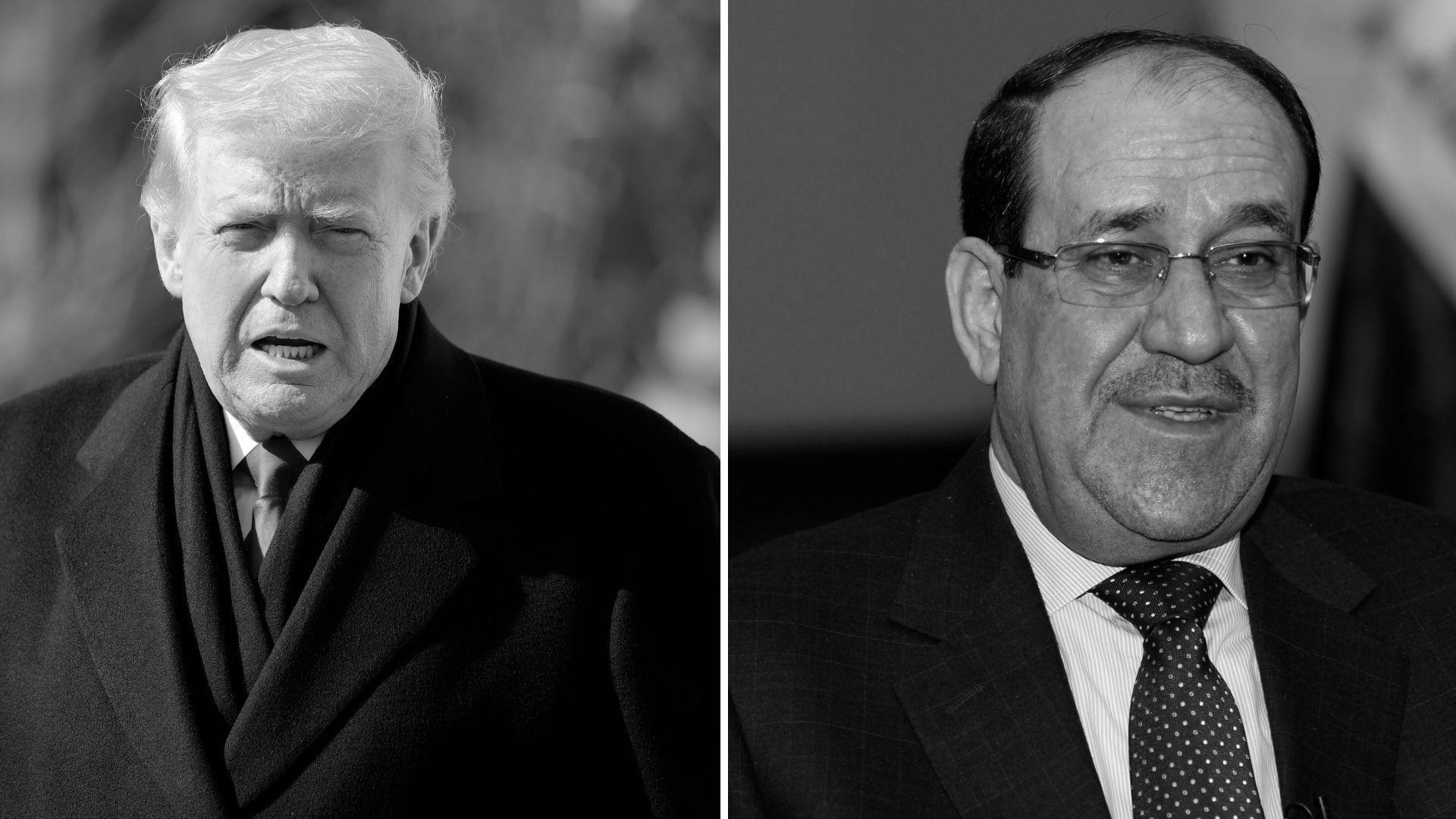
Will Iraq Finally Become the Bite Trump Can’t Chew? Al-Maliki Set to Return as Prime Minister
As US President Donald Trump issues blunt warnings and threatens to withdraw American support, Iraq appears on the brink of delivering a message Washington has long resisted that its political future may no longer be shaped in the White House.
With the powerful Shiite Coordination Framework formally endorsing Nouri al-Maliki as its prime ministerial nominee, the veteran leader is edging closer to an extraordinary political comeback nearly twelve years after being forced out amid sectarian chaos and the rise of the Islamic State group.
Trump has publicly opposed the move, warning that the United States would stop supporting Iraq if al-Maliki returns to power. Calling his previous tenure disastrous, Trump declared that without American backing, Iraq would have “ZERO chance of success, prosperity or freedom.”
Rather than deterring Baghdad, the warning has hardened political positions across Iraq, where leaders from multiple factions have denounced the statement as foreign interference in sovereign affairs.
A familiar strongman resurfaces
Al-Maliki, 75, served two terms as prime minister between 2006 and 2014 , becoming the most powerful Iraqi leader of the post-Saddam era. His rule saw escalating sectarian divisions, alienation of Sunni and Kurdish communities, and the eventual collapse of security that enabled ISIS to seize vast territories.
Yet within Iraq’s Shiite political establishment, al-Maliki remains a dominant force.
Although his State of Law coalition controls only 29 seats in the 329-member parliament, Iraqi politics is not governed by party arithmetic alone. Under the country’s unwritten post-2003 power-sharing system, the prime minister is chosen by the largest Shiite alliance , not by the largest party.
That alliance, the Coordination Framework, includes several Iran-aligned parties and former militia groups that together command close to 110 seats , giving al-Maliki decisive leverage in negotiations with Kurdish and Sunni blocs.
Why al-Maliki, not al-Sudani
Caretaker Prime Minister Mohammed Shia al-Sudani , whose bloc emerged as the single largest in last year’s elections, was widely expected to continue. But his fall was political, not electoral.
Al-Sudani attempted to balance relations with both Washington and Tehran. He restrained pro-Iran militias, avoided escalation during last year’s Israel–Iran conflict, and prevented attacks on US facilities moves that earned Western approval but alienated powerful Shiite armed groups.
For those factions, al-Sudani had become unreliable.
Al-Maliki, shaped by decades of exile in Iran and Syria during Saddam Hussein’s rule, is seen as ideologically consistent and strategically dependable particularly by Tehran.
The shadow of Soleimani
Trump’s confrontation with Iran casts a long shadow over Iraq. In January 2020 , during his first term, Trump ordered a US drone strike near Baghdad International Airport that killed Iranian General Qassem Soleimani and Abu Mahdi al-Muhandis, the deputy head of Iraq’s Popular Mobilisation Forces.
The assassination carried out on Iraqi soil without Baghdad’s approval deeply scarred US–Iraq relations and remains a defining moment in Iraqi political memory.
For many Shiite factions now backing al-Maliki, Trump’s latest warning evokes that episode, reinforcing long-standing distrust of American intentions.
A test of fading influence
Behind the scenes, Kurdish parties and Sunni blocs have resumed negotiations with the Shiite camp, seeking ministries, budget guarantees and regional concessions standard bargaining in Iraqi coalition politics.
If al-Maliki secures their support, his return would mark the strongest resurgence of Iran-aligned leadership in Baghdad since 2014.
For Washington, the dilemma is stark. Withdrawing support risks pushing Iraq further toward Tehran. Staying engaged under al-Maliki risks legitimising a leader it openly opposes.
Two decades after the US invasion that reshaped Iraq, American leverage has narrowed dramatically.
And as Baghdad charts its own course once again, Iraq may prove to be what Trump rarely encounters the bite he simply cannot chew.