
Will an ‘Arab-Islamic NATO’ turn into Pakistan’s trump card against India?
When Israeli jets struck a residential block in Doha on September 9, killing Hamas negotiators, they may have set off more than just regional outrage. The attack triggered an emergency summit of over 40 Arab and Islamic nations in Qatar, where the idea of forming an “Arab-Islamic NATO” was pitched with unusual urgency. For India, the prospect of such a coalition, particularly with Pakistan at the forefront, is deeply concerning.
A coalition born from Israeli strikes
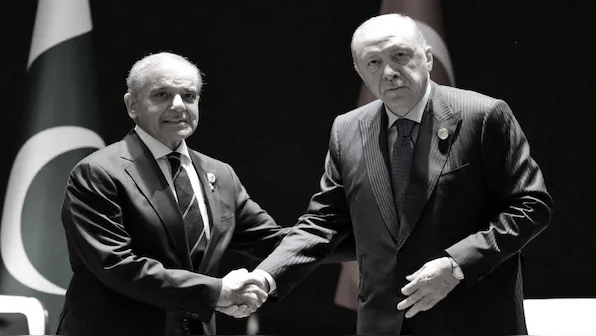
Israel’s Prime Minister Benjamin Netanyahu defended the Doha strikes and warned that other countries harbouring “terrorists” could face similar actions. That warning galvanized Arab and Islamic leaders in Qatar on September 15, where they condemned Israeli actions and debated collective measures. Egypt, Iran, and Iraq backed the idea of a military alliance akin to NATO, while Turkey and Pakistan strongly supported a joint task force. Pakistan’s Prime Minister Shehbaz Sharif and Foreign Minister Ishaq Dar went further, calling for a coordinated Arab-Islamic military response to Israeli “expansionist designs.”
Echoes of past initiatives
This isn’t the first time the idea has surfaced. In 2015, Egypt floated the concept of a joint Arab force, while Saudi Arabia announced a 34-nation “Muslim NATO” to fight terrorism. But disagreements over leadership and funding stalled both. This time, however, the momentum feels stronger because Israel — rather than terrorism — is being presented as the primary threat.
Why India should worry
The inclusion of Pakistan and Turkey adds an uncomfortable dimension for New Delhi. Both countries have long aligned against India, particularly on Kashmir, and an Arab-Islamic NATO could offer Islamabad a new platform to internationalize its anti-India agenda. Turkey’s military support to Pakistan, including equipment and personnel, during recent tensions with India underscores this risk.
Moreover, NATO-style principles — where an attack on one member is treated as an attack on all — could embolden Pakistan, making regional security calculations more complex for India.
A dilemma for Indian diplomacy
India’s strong ties with Israel in defence, technology, and energy sectors add another layer of complexity. Even though New Delhi has tried to maintain balance by supporting Palestine in multilateral forums, a formalized Arab-Islamic NATO could view India as leaning too close to Israel. For now, the proposal remains at the rhetoric stage. Yet, if it gains traction, New Delhi will need to step up its diplomacy with Arab capitals to prevent being sidelined in a fast-changing geopolitical landscape.