
Why Sonia Gandhi Refused The PM’s Chair: Memoir To Reveal Her Personal And Political Journey
For decades, Sonia Gandhi has fiercely guarded her private life while remaining at the centre of some of the most defining moments in Indian politics. Now, the Congress leader is set to tell her own story.
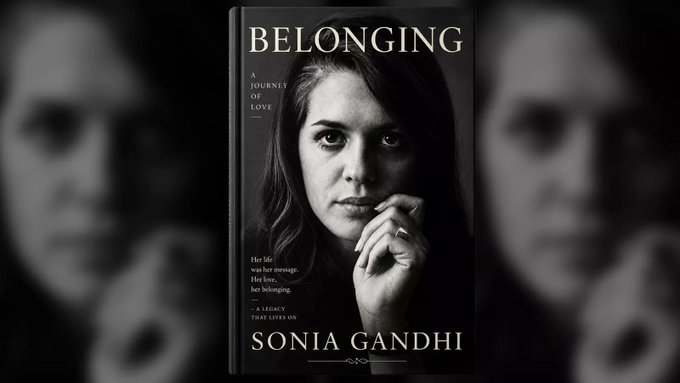
Her memoir, Belonging: A Journey of Love, will trace her journey from a small town in post-war Italy to becoming part of India’s most influential political family, chronicling the love, tragedies and political choices that transformed her life.
The book is scheduled to be released on November 10 by Alfred A Knopf, an imprint of Penguin Random House. The release date for India is yet to be confirmed.
The memoir begins in Cambridge, England, in 1965, where a 19-year-old Sonia Maino met and fell in love with Rajiv Gandhi, beginning a journey that would eventually take her from Europe to India and into the heart of the Nehru-Gandhi family.
Sonia Gandhi, now 79, writes about adapting to life in India, learning Hindi, wearing saris and embracing Indian food, while also recalling her relationship with her mother-in-law, Indira Gandhi.
But her personal journey was repeatedly marked by tragedy. She witnessed the death of Sanjay Gandhi in a plane crash, the assassination of Indira Gandhi in 1984, and, seven years later, the killing of Rajiv Gandhi during an election campaign.
After Rajiv Gandhi’s assassination, Sonia Gandhi resisted calls to enter politics for years. Eventually, heartbreak pushed her into public life, and she went on to become the longest-serving president of the Congress, leading the party from 1998 to 2022.
The memoir will also revisit one of the most consequential decisions of her political career, her decision to decline the prime ministership in 2004 after the Congress-led alliance won the Lok Sabha election, choosing Manmohan Singh instead to head the government.
Sonia Gandhi has said writing the book required her to revisit deeply personal experiences she had long kept private. While much has been written about her family, she believes few accounts have captured their motivations, actions and “very human failings”.
Through her own story, Belonging promises an intimate account of a woman whose life was shaped by extraordinary love and devastating loss, and who eventually became one of the most influential figures in modern Indian politics.