
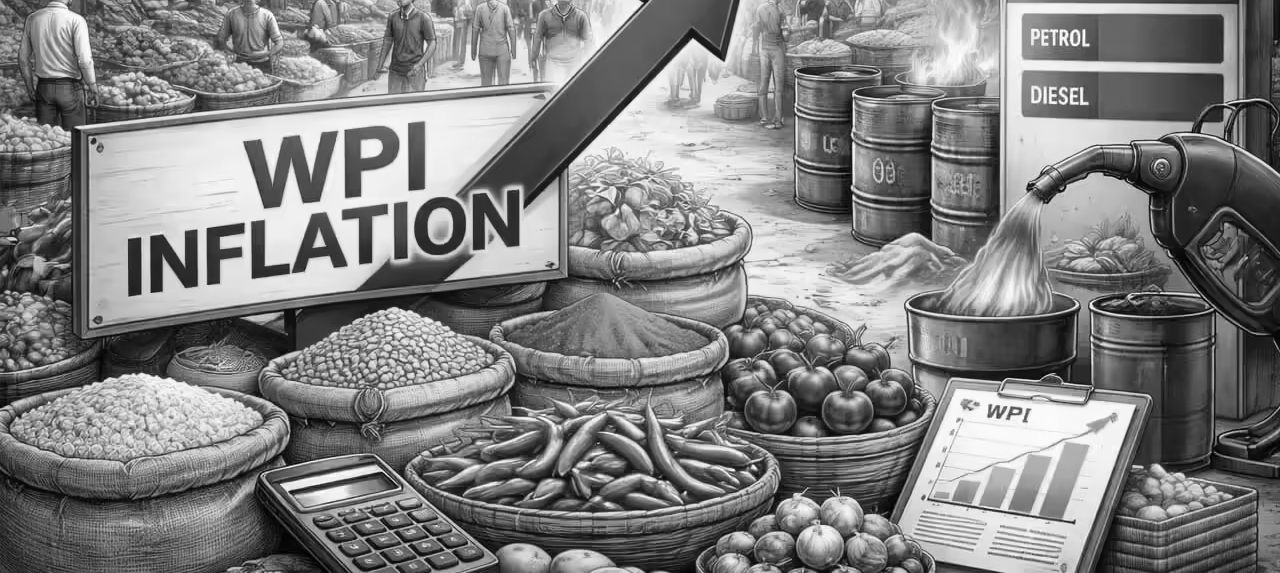
Wholesale inflation rises to 3.88% in March as energy and crude costs surge
India’s wholesale inflation rose to 3.88 per cent (provisional) in March 2026, marking an uptick in price pressures across key sectors, according to data released by the Ministry of Commerce and Industry . The rise in the Wholesale Price Index (WPI) reflects higher costs in energy, crude petroleum, manufactured goods, and select food items compared to the same month last year.
The main driver of the increase was the fuel and power segment , which moved sharply into positive territory. Rising prices of mineral oils , along with a sharp jump in crude petroleum and natural gas , pushed overall wholesale inflation higher. Energy costs, closely linked to global commodity movements, are increasingly shaping domestic price trends.
Food prices remained relatively stable. The WPI food index stood at 1.85 per cent year on year , showing that wholesale food inflation remains broadly contained. However, trends within the basket were mixed. While vegetables and cereals softened , items such as fruits, eggs, meat, and fish saw price gains, indicating selective rather than broad based pressure.
The manufactured products segment , which carries the largest weight in the index, also contributed to the rise. Prices increased in categories such as basic metals, chemicals, textiles, and food processing , signalling continued input cost pressures for industry. At the same time, segments like machinery, electronics, and apparel saw mild declines, helping limit the overall increase.
On a month on month basis, WPI rose 1.64 per cent in March over February , suggesting strengthening price momentum after relatively softer movements earlier in the year. The rise was driven by primary articles, fuel and power, and manufactured goods , pointing to broad based cost increases at the production level.
The latest reading also raises an important policy watch point. Analysts will closely track whether rising WPI inflation transmits into retail inflation (CPI) , which directly affects household budgets. If cost pressures persist, they could gradually filter into consumer prices, increasing pressure on common consumers through higher prices of goods and services.
The trend may also have implications for monetary policy expectations , as sustained inflationary pressures could influence the interest rate outlook and the Reserve Bank’s stance in upcoming policy reviews.
For industry, the rise signals ongoing input cost pressure across supply chains , particularly in energy intensive sectors and metals. While some categories have shown moderation, continued increases in raw material and fuel costs could affect profit margins , especially if firms are unable to fully pass on higher costs to consumers.
Overall, the data suggests that inflationary pressures are gradually building in the production system, making the coming months crucial for tracking both consumer price trends and broader macroeconomic policy responses.