
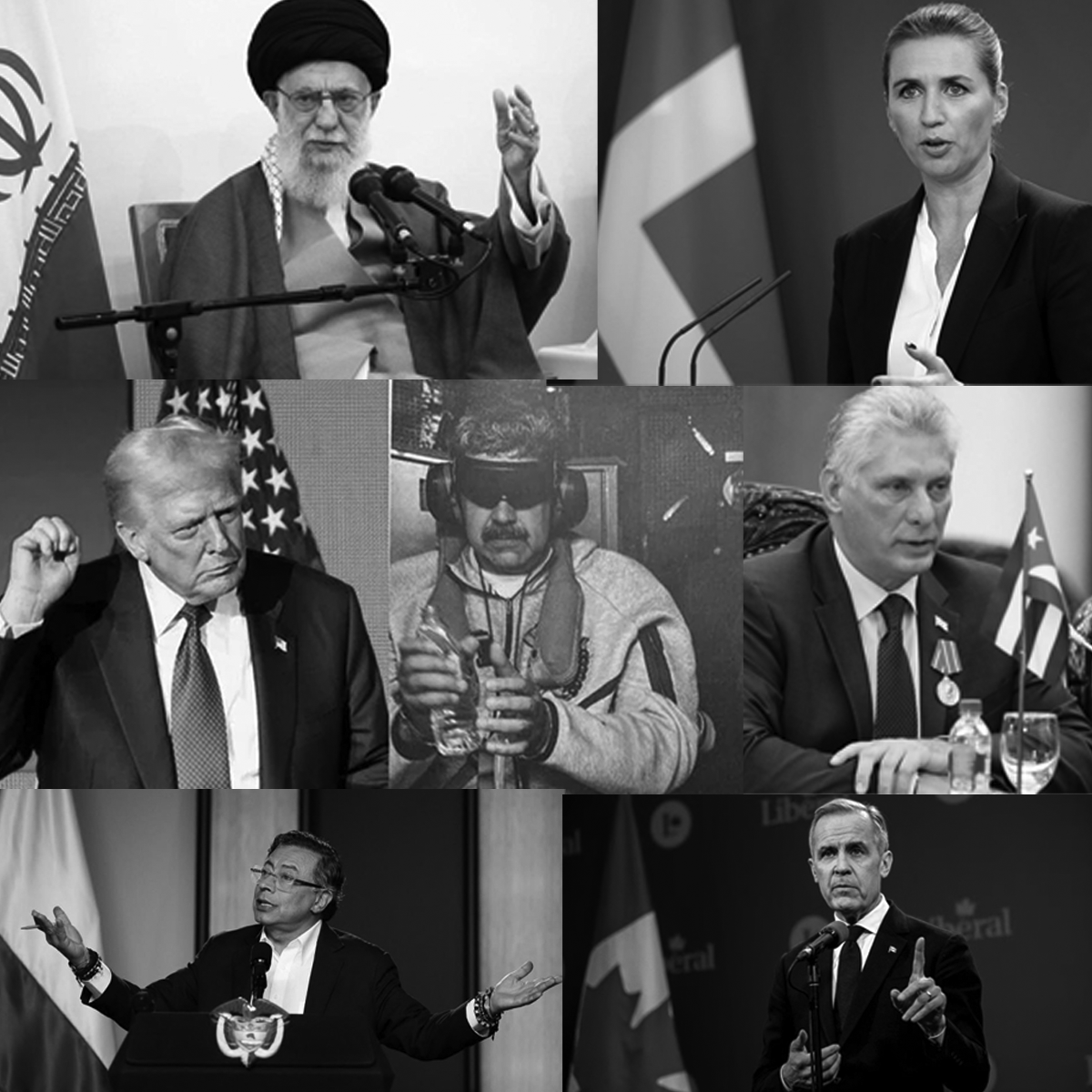
Who Next After Venezuela? Cuba, Colombia, Mexico, Canada, Denmark and Iran on Edge
The kidnapping of Venezuelan President Nicolás Maduro by the United States has triggered unease across capitals, as President Donald Trump followed the operation with a series of blunt warnings that suggested Venezuela was not an isolated case. The combination of decisive action and expansive rhetoric has forced governments to reassess their security, sovereignty, and relationship with Washington, amid fears that instability or defiance could invite similar consequences.
Speaking after Maduro was taken into US custody, Trump framed the arrest as a warning rather than an exception . “He had his chance,” Trump said, adding that leaders who ignore US demands or allow disorder to grow should “ remain on notice .” In a separate statement addressing Iran, he warned, “If Tehran violently kills peaceful protesters, we will come to their rescue,” a remark that took on sharper meaning after the capture of a sitting president allied with Tehran. Trump also declared that “ America can project its will anywhere, anytime ,” language widely interpreted as signalling readiness to act beyond Venezuela.
Across Latin America, Trump’s words intensified anxiety. Predicting instability in Cuba, he said, “ Cuba is ready to fall. It’s going down for the count ,” arguing that the loss of Venezuelan backing had left Havana exposed. In Colombia, his remarks were more confrontational. Referring to President Gustavo Petro, Trump said, “ He’s making cocaine and they’re sending it into the United States, so he does have to watch his ass .” When asked whether US military action against Colombia was possible, Trump replied that such an option “ sounds good ,” prompting concern that Venezuela could mark the start of a wider interventionist phase. Mexico was also warned directly, with Trump saying, “ They’re running Mexico. Mexico has to get its act together ,” suggesting Washington could step in if conditions did not change.
In Europe, Trump revived his long-standing claim over Greenland, stating shortly after the Maduro arrest, “ We do need Greenland, absolutely .” The timing alarmed Denmark, which responded firmly that Greenland is not for sale and remains part of the Danish Kingdom. Diplomats said the remarks unsettled US allies, who now see a clearer link between American statements and action.
Canada has also been drawn into the broader anxiety. Trump has repeatedly suggested that Canada could become the United States’ “ 51st state ,” a remark once treated largely as provocation. In the aftermath of Maduro’s arrest, Canadian officials reiterated that the country’s sovereignty is non-negotiable, while analysts noted that even rhetorical pressure now carries greater weight .
The ripple effects have extended beyond the Western Hemisphere. Israeli politician Yair Lapid warned that “ the regime in Iran should pay close attention to what is happening in Venezuela ,” a statement widely read as a reminder that internal unrest can quickly invite foreign intervention. Ukrainian President Volodymyr Zelensky , speaking about Russia, issued a similar cautionary message, saying President Vladimir Putin “should be careful,” underscoring how the Maduro episode has sharpened global anxieties.
Inside Iran, the shockwaves have reportedly reached the highest levels of leadership. Insiders say Supreme Leader Ayatollah Ali Khamenei has discussed contingency plans that include relocating to Moscow with close allies and family members if unrest intensifies or if there are signs of uncertainty within the military or security services. Reports suggest around 20 people could accompany him, including his son, who is often regarded as a potential successor . Iranian officials have accused the United States and Israel of exploiting economic hardship and protests as part of a broader destabilisation effort.
Critics argue that Trump’s post-arrest rhetoric has contributed to a sense of growing lawlessness in global affairs, where precedent is shaped less by international norms and more by power . Supporters contend that the United States is restoring deterrence and forcing adversaries to rethink their actions. Some analysts note that interpretations of Article 2 and Article 51 of the United Nations Charter , which are often cited to justify self-defense or unilateral action, risk being used to legitimize aggressive moves by other states, including Russia over Ukraine. By highlighting the US willingness to act without broad international consensus, the Maduro arrest, followed by Trump’s direct warnings to multiple countries, has altered the strategic atmosphere and increased the perception that lawlessness, unilateral interventions, and potential conflict are becoming more likely.
What began as a single operation in Venezuela has become a moment of global reckoning. From Cuba and Colombia to Denmark, Canada and Iran, governments are now asking the same question with new urgency: if Maduro could be taken, who might be next?