
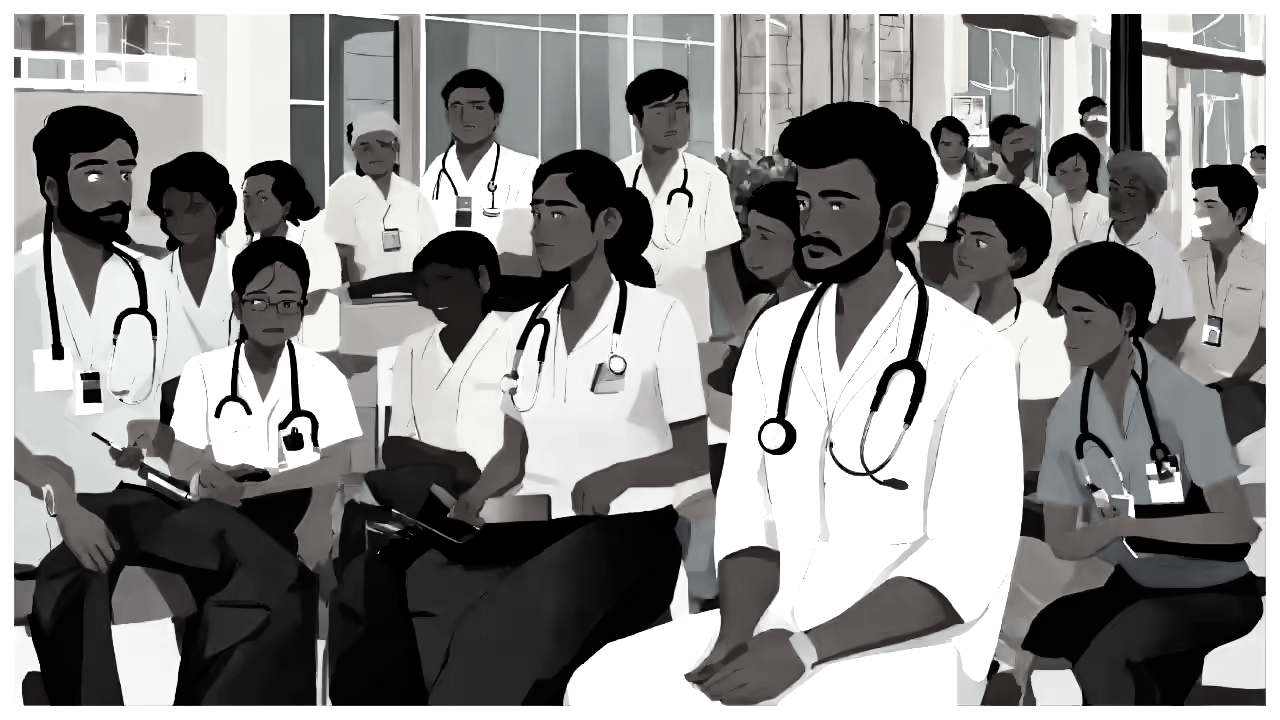
White coats everywhere, but rural India still suffers
On paper, India looks like a medical powerhouse. Every year tens of thousands of new MBBS doctors graduate, medical seats have expanded fast, and the country now counts over a million registered allopathic practitioners. But the proud numbers hide a stubborn truth: most doctors cluster in cities, public hospitals often run short of specialists, and villages, where half the population lives, still struggle for basic clinical care. This is the paradox of plenty.
India is producing doctors, a lot of them. Government data and recent reports show a sharp rise in MBBS seats and medical graduates over the last decade. The expansion matters: more seats mean more trained hands, more specialists, and, if deployed well, better care everywhere. But quantity alone has not solved access. The imbalance in where doctors work is the real problem.
The distribution gap is stark. Around 80% of doctors practise in urban areas, leaving rural districts dangerously thin on medical staff. Rural doctor density is estimated at about 3 doctors per 10,000 people, compared with roughly 13 per 10,000 in urban centres, a fourfold difference that translates into delayed diagnosis, long travel for basic treatment, and neglected preventive care for millions. This urban tilt is the main reason India’s doctor numbers don’t translate into universal access.
Public hospitals and specialist shortages add another layer of pain. Even premier institutions face attrition: several AIIMS campuses have reported dozens of resignations in recent years, leaving crucial specialist posts unfilled and stretching remaining staff thin. When centres of excellence lose doctors, smaller district hospitals and community health centres feel the ripple effects in wait times and quality.
Then there’s the brain drain. Thousands of Indian-trained doctors join healthcare systems abroad each year. The UK’s NHS, for example, employs a large number of Indian-qualified clinicians, a trend that helps those health systems but deepens domestic shortages unless matched by proportionate increases in retention and rural placement incentives.
Why does this keep happening? Three blunt reasons: money, opportunity, and lifestyle. Cities offer higher pay, private clinics, hospitals with better equipment, teaching roles, and urban schools for children. Rural postings often mean lower salaries, professional isolation, poor infrastructure, and safety or schooling concerns, conditions many fresh doctors are unwilling to accept without strong incentives. Training increases supply, but unless rural practice is made professionally and personally attractive, doctors will continue to cluster in towns and metros.
What would actually change the picture? Here’s a pragmatic checklist that policymakers and institutions must treat as urgent, not optional:
• Rural retention pay and career ladders, Higher rural allowances plus guaranteed fast-track promotions and academic links for rural doctors
• Decentralised postgraduate seats, Reserve more PG seats tied to rural service so specialists emerge from and stay in underserved districts
• Invest in rural infrastructure, Equip PHCs and district hospitals with diagnostics, telemedicine links, and reliable supply chains so doctors can practise effectively
• Bond enforcement with humane terms, Where government seats require rural service, make the postings safe, time-limited, and professionally rewarding
• Stop the talent bleed, Create attractive national career pathways and improved working conditions to slow the exodus abroad
Concrete facts to remember :
• India produces a record number of medical graduates and has over a million registered doctors on paper
• Rural India has roughly 3 doctors per 10,000 people, compared with 13 per 10,000 in urban areas
• Several AIIMS centres have seen dozens of resignations in recent years, worsening specialist shortages
• Tens of thousands of Indian-trained clinicians serve in foreign health systems, reinforcing domestic gaps
The white-coat numbers are cause for pride, but they are not an answer in themselves. If India wants healthcare that reaches every village, it must move beyond counting graduates and focus on where those graduates practise, how they are supported, and what makes rural medicine a sustainable, respected career. Only then will those white coats show up where they are needed most.