
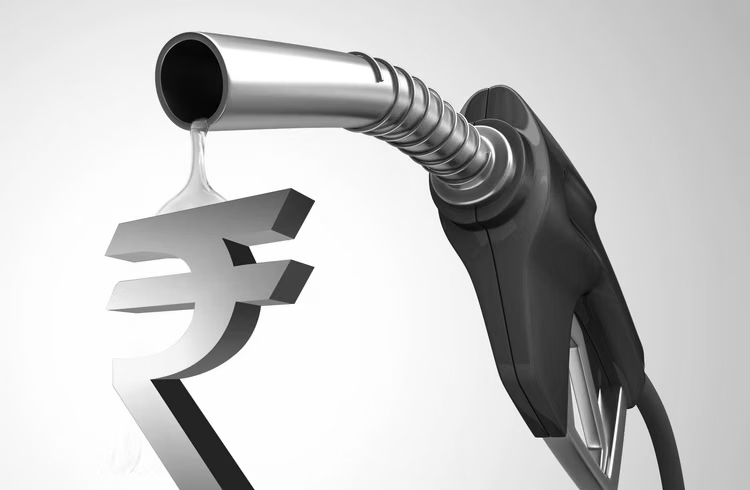
Where Does The Money Go When Oil Prices Surge? The Hidden Flow Behind Every Price Spike
When crude oil crossed $100 a barrel last week, millions of people around the world felt it almost immediately, at the fuel pump, in their grocery bills, in the rising cost of nearly everything. But while consumers absorbed the blow , somewhere else, someone was counting enormous gains .
The trigger this time was the conflict involving Iran and the closure of the Strait of Hormuz , one of the world's most critical oil shipping arteries. Prices that sat at a relatively comfortable $66 a barrel in February rocketed past $101 by mid-April. In the world of energy markets, that kind of move in that short a time is nothing short of seismic .
Why oil moves everything:
Oil is not simply a fuel. It is the invisible thread woven through virtually every layer of modern civilization. It powers engines, paves roads, manufactures plastics, and even feeds the world, fertilizers that sustain global agriculture are derived from it. When its supply is disrupted, the shockwaves travel fast and hit hard .
Economists explain this through one of their most fundamental tools, the supply-demand model . When a significant source of the world's oil is suddenly blocked, particularly without warning, as happened when the Strait of Hormuz closed, competition among buyers intensifies rapidly, and prices spike sharply . Countries and companies must keep buying oil regardless of the price. That extra money doesn't vanish, it simply changes hands.
Follow the money:
So where does all that extra cash actually go?
In Saudi Arabia , where the government controls nearly all oil production, surging prices directly fill national coffers, funding public spending and long-term investment. Despite rising wartime costs, profits remain substantial .
In West Texas , operators in the Permian Basin, the United States' most productive oil field, enjoy what economists call a “windfall” . Costs stay steady while revenues soar, and gains flow to shareholders or back into expanding production.
Norway tells perhaps the most responsible story. Its oil revenues flow into the Government Pension Fund Global , the world's largest sovereign wealth fund, preserving wealth for future generations. Alaska follows a similar model, sharing oil income directly with residents.
Britain's approach sits somewhere in between. In the North Sea, private shareholders benefit, but the government imposes a windfall tax , redirecting part of the profits into public finances.
Russia, profits without accountability:
Then there is Russia , where the story is considerably darker. Despite Western sanctions and a $60 price cap , its oil industry continues to operate. Profits are widely believed to flow to a tight inner circle of elites, quietly fuelling state power with limited transparency.
The real cost, consumers:
For ordinary people, the reality is blunt, pay more, or cut back . Since oil is embedded in nearly every product and service, the financial burden spreads across the economy , pushing up everyday costs.
The long game:
But history offers a pattern. Oil shocks often accelerate change. Governments and businesses are increasingly investing in renewable energy , electric vehicles , and efficiency, slowly reducing dependence on a volatile resource.