
When workers said enough: The Noida uprising and the nation’s unfinished reckoning
A violent protest erupts across Noida: Mandatory 12-hour shifts have become the norm across several units in Noida’s Hosiery Complex. Workers say they are routinely made to work 12 to 16 hours without proper overtime, earning between Rs 10,000 and Rs 12,000 a month, and even with overtime, barely reaching Rs 14,000. “Room rent alone is Rs 5,000,” one protester said. “Then there is ration, transport and children’s education.” There is no way to manage this salary." These are not workers making demands beyond their station. These are workers making demands for basic human dignity: a weekly off, a washroom break without humiliation, a salary that does not collapse under the weight of a single month's rent.
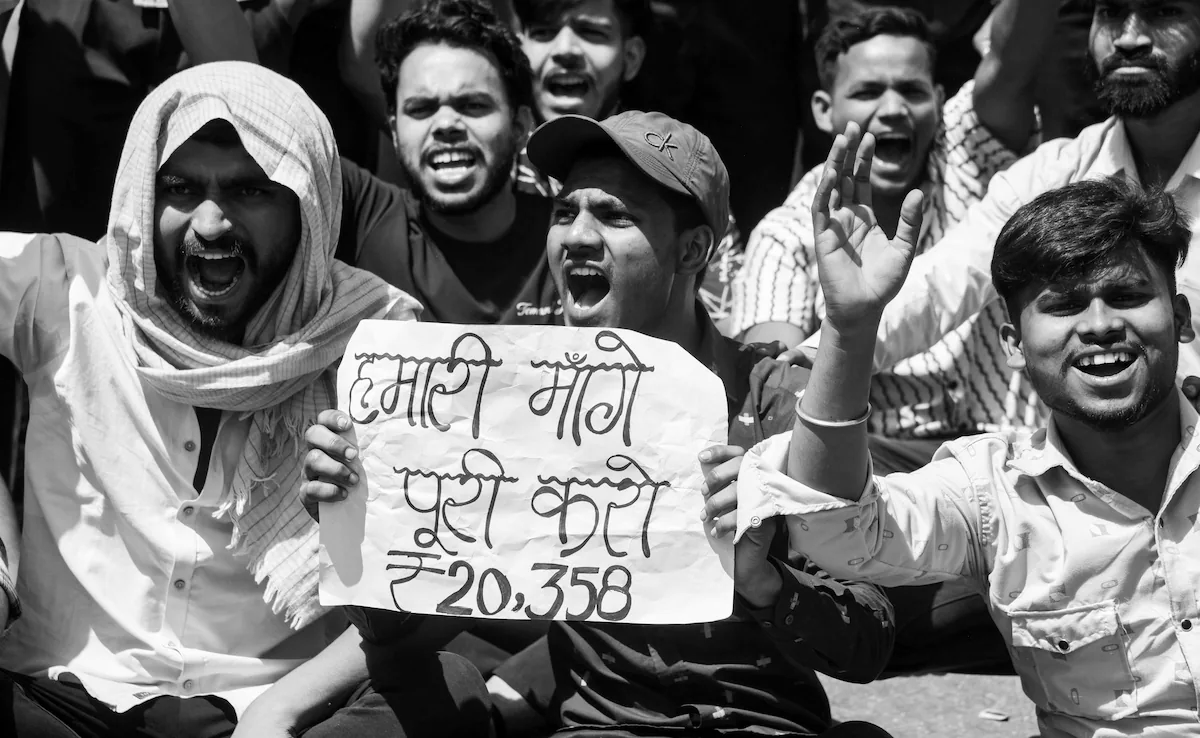
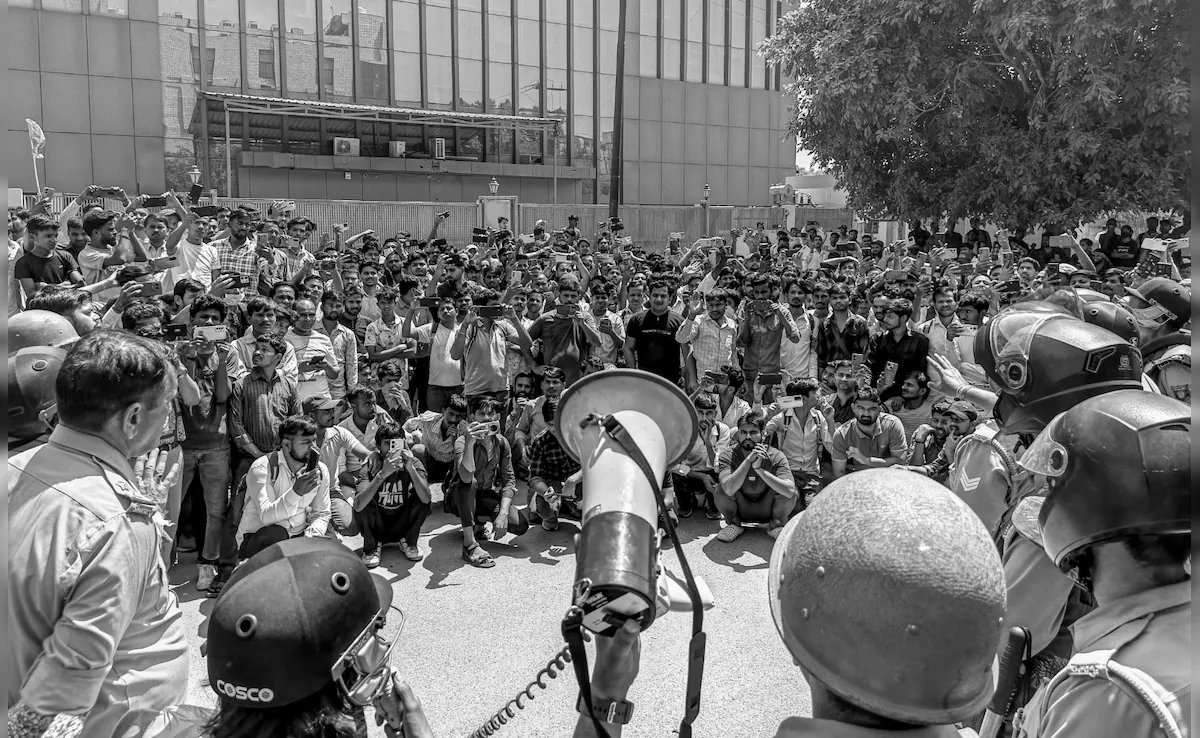
What began as a sit-in for better pay and fixed duty hours turned into large-scale arson and vandalism across Noida's industrial corridors on April 13, with approximately 45,000 workers flooding the streets at more than 80 locations.
The Uttar Pradesh government's response was, characteristically, to reach first for the conspiracy shelf . Labour Minister Anil Rajbhar declared the protests a "well-planned conspiracy," invoking the recent arrest of four terror suspects with alleged Pakistan-based handlers as grounds for suspicion, calling the unrest an attempt to disrupt the state's development and law and order. Chief Minister Yogi Adityanath helpfully added a Naxalism angle for good measure. When a government's first instinct upon hearing workers demand washroom breaks is to search for foreign fingerprints, it tells you rather a lot about whose interests that government believes it is there to protect.
The high-level committee eventually raised interim minimum wages by 21 per cent, unskilled workers going from Rs 11,313 to Rs 13,690 monthly. Workers demanding Rs 20,000 . The government offering Rs 13,690. A gap of over Rs 6,000 remains, and in an inflationary economy where the Iran war has driven fuel costs through the roof and pushed living expenses higher across the board, this is not a compromise. It is an insult dressed as a concession . Protests on Day 2 continued regardless.
This is not merely a Noida story. In Bengaluru , corporate employees have taken to the streets against government policies perceived as unabashedly pro-employer , resisting a political environment that treats the workforce as a variable cost to be optimised rather than a constituency to be served. Across India, a generation of engineers and graduates, carrying degrees, debt, and genuine ability, are entering the labour market only to find salaries that cannot sustain a dignified life in any Indian city. Many are simply not entering at all , deferring careers or retreating from formal employment entirely, a quiet but corrosive drain on the country's human capital.
The companies at the centre of the Noida unrest are not struggling enterprises. Noida is among the largest planned industrial townships in Asia, home to some of India's most profitable manufacturing operations, with owners whose names appear comfortably in the upper reaches of Forbes' richest lists . The argument that minimum wage compliance would trigger job losses deserves to be treated with the scepticism it has always warranted. These are not companies on the margins. They are companies whose margins are built, in part, on the systematic underpayment of the people who make them run .
The Noida protests are a tipping point , not an episode. The question of labour rights in India is no longer a background hum. It is, quite visibly, on fire.