
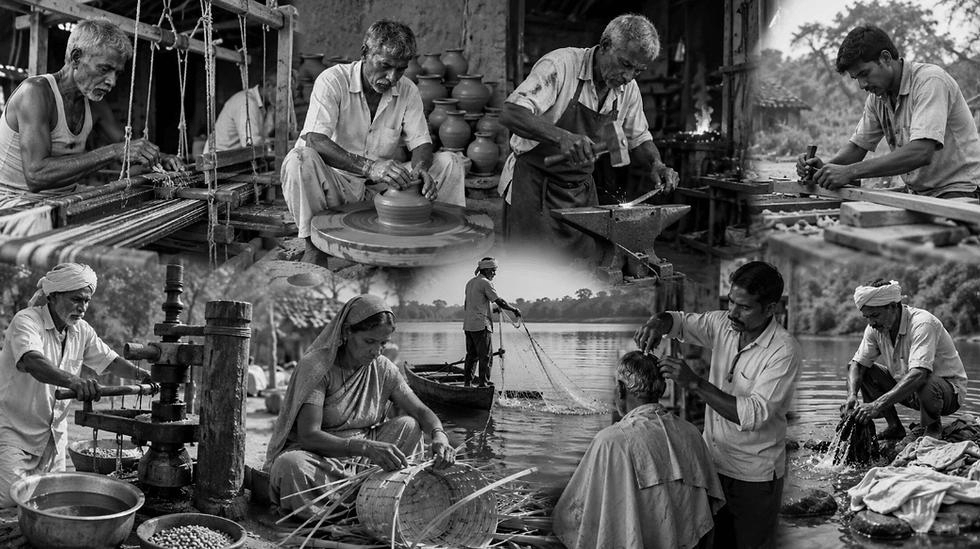
When Generations Turn Away: The Declining World of Traditional Artisans
For generations, traditional occupations have been an integral part of Andhra Pradesh’s rural economy and cultural identity. Potters shaped clay into household vessels, handloom weavers produced distinctive regional fabrics, blacksmiths made agricultural tools, and artisans created toys, baskets, wooden products and decorative objects using skills passed down through families. Fishing communities, toddy tappers and several other occupational groups also depended on knowledge developed through years of experience. Today, however, many of these livelihoods are facing an uncertain future as modernisation, factory-made products, changing consumer preferences and limited market opportunities reshape the traditional economy.
The decline of these occupations is not simply the result of people losing interest in handmade products. The economic conditions that once supported traditional workers have changed significantly. Many artisans now struggle with rising production costs, irregular orders, competition from mass-produced goods and difficulties in reaching customers. While their skills continue to hold cultural and practical value, the income generated from these occupations is often insufficient to support a family. This has raised concerns about the gradual disappearance of traditional skills and the loss of livelihoods that have sustained rural communities for generations.
Pottery is one of the clearest examples of this transition. Traditional potters, commonly known as Kummaris, once supplied households with clay pots, water containers, cooking vessels and storage products. The increasing availability of plastic, steel and aluminium alternatives has reduced demand for several everyday clay products. Although decorative pottery, garden planters, customised products and festival items offer new opportunities, not every artisan has the resources, equipment or market connections to explore these alternatives. Many continue to depend on seasonal demand, making their earnings unpredictable.
Handloom weaving is facing a different but equally serious challenge. Andhra Pradesh is known for its distinctive weaving traditions in Mangalagiri, Venkatagiri, Dharmavaram, Uppada, Ponduru and Chirala. These places are recognised for their fabrics, designs and craftsmanship. However, handloom weavers face intense competition from powerlooms and mass-produced textiles. Fluctuating yarn prices, rising production costs, uncertain orders and dependence on intermediaries further affect their earnings. Although handloom products may command higher prices in specialised markets, the actual amount received by the weaver does not always reflect the time and labour involved in producing them.
Blacksmiths, or Kammaris, have also experienced changes in demand as industrially manufactured tools and mechanised agricultural equipment have become more common. Basket makers who traditionally worked with bamboo, palm leaves and other natural materials face competition from inexpensive plastic and synthetic products. Traditional fishing communities are dealing with rising fuel expenses, changing fish availability, pollution and competition from mechanised fishing. Toddy tappers face occupational risks and changing economic conditions, while several other craft-based occupations are struggling to find regular customers.
The departure of younger generations from traditional occupations is closely connected to financial insecurity. Many artisans do not receive a fixed monthly income. Their earnings depend on orders, seasonal demand, raw-material availability and the time required to complete each product. Unlike salaried employment, traditional work may not provide paid leave, retirement benefits or reliable access to social security. For young people who have completed their education, a job offering a regular salary and predictable working hours often appears more attractive than continuing a family occupation with uncertain returns.
Migration to towns and cities for employment has further weakened the transfer of traditional skills between generations. The nature of the work also influences young people's decisions. Pottery, weaving, metalwork, fishing and toddy tapping can involve long hours of physical labour, while some occupations carry considerable health and safety risks. When younger workers see their parents or grandparents struggling to earn a stable income despite years of experience, they may hesitate to follow the same profession. As a result, experienced artisans are ageing without enough younger people willing to learn their skills.
The expansion of machinery and mass production has transformed the way people manufacture and purchase everyday goods. Factory-made products can be produced quickly, in large quantities and at relatively low prices. They are also widely available through retail chains and online platforms. Powerlooms, for example, can produce textiles at a scale and speed that individual handloom weavers may find difficult to match. Plastic containers and industrially manufactured household products have replaced several traditional clay and natural-material alternatives. Factory-made furniture and tools have also changed demand for certain forms of carpentry and blacksmithing.
Consumer preferences have evolved alongside these developments. Many buyers prioritise affordability, convenience, standardised designs and easy availability. Some younger consumers prefer modern products that require less maintenance and can be purchased immediately. Consequently, traditional products that once served everyday needs are increasingly being viewed as specialised, decorative or premium purchases. The weakening of local relationships between artisans and customers has also increased dependence on intermediaries, who often control access to larger markets and influence the prices paid to producers.
However, machinery is not the only reason for the decline, nor does modernisation have to mean the disappearance of traditional occupations. Technology can help artisans improve productivity, quality and finishing without eliminating the handmade character of their products. Improved pottery wheels, efficient kilns, upgraded looms and modern tools can reduce physical effort and make production more efficient. The real challenge is to introduce suitable technology while protecting the skills and identity that make traditional products distinctive.
Several traditional occupations have opportunities to adapt to changing markets. Potters can expand beyond household vessels into decorative pots, garden planters, customised products, festival items and home décor. Handloom weavers can explore contemporary designs, stoles, furnishings and other products that appeal to new customer groups. Direct partnerships with designers, retailers and online platforms could help them reach buyers willing to pay for genuine handmade textiles. However, higher retail prices must translate into better earnings for the weavers themselves.
Carpenters can diversify into customised furniture, interior work, repairs and restoration. Blacksmiths can focus on specialised agricultural tools, equipment repairs, metal fabrication and decorative products. Basket makers can develop eco-friendly packaging, gift products and decorative items for hotels and resorts. Fishing communities can explore fish processing, packaging, direct marketing and improved storage facilities. Such opportunities, however, require investment, training and access to reliable markets.
Andhra Pradesh's traditional crafts also demonstrate the potential for handmade products to reach wider audiences. Kondapalli toys, Etikoppaka lacquerware, Narsapur crochet lace, Bobbili Veena, Budithi brassware, Durgi stone carvings and Udayagiri wooden cutlery represent different forms of regional craftsmanship. These products have cultural and commercial value, but their continued survival depends on connecting artisans with changing consumer markets. Better branding, product development, quality improvement and wider distribution can help them compete beyond their traditional locations.
Preserving these occupations requires more than occasional exhibitions or public recognition. Traditional workers need practical assistance that improves their incomes and makes their livelihoods more secure. Access to affordable credit and working capital is essential for purchasing raw materials, repairing equipment and fulfilling larger orders. Small loans with reasonable interest rates and simple application procedures can help artisans manage their businesses without depending heavily on private lenders. Financial assistance during periods of reduced demand or emergencies can also prevent families from abandoning their occupations.
Marketing and direct access to customers are equally important. Government-supported exhibitions, craft fairs, retail partnerships, online marketplaces and export opportunities can help artisans find new buyers. Digital training can introduce them to product photography, online payments, branding and e-commerce. Cooperatives and producer groups can strengthen the bargaining power of individual workers by purchasing raw materials collectively, sharing equipment, negotiating better prices and securing bulk orders. Transparent pricing and timely payments should ensure that artisans receive a fair share of the final selling price.
Skill development must also extend beyond traditional production techniques. Younger artisans need training in contemporary designs, product development, financial management, packaging and business operations. Partnerships between experienced craftspeople, design institutions, industrial training institutes and educational institutions could help combine traditional knowledge with modern skills. Common facility centres can provide access to expensive machinery, storage and production equipment that individual artisans may not be able to afford.
Social security is another important requirement. Artisans and workers in physically demanding occupations need access to health insurance, pensions, accident coverage, safety equipment and assistance during periods when illness or reduced demand prevents them from working. Without these protections, traditional occupations will continue to appear financially risky to younger generations. Making these livelihoods secure is therefore as important as improving the products they manufacture.
Several government initiatives provide a framework for supporting traditional workers. The PM Vishwakarma scheme, launched on September 17, 2023, covers 18 traditional trades and offers eligible beneficiaries recognition, skill training, a toolkit incentive of up to Rs.15,000 and collateral-free credit support through two loan tranches of Rs.1 lakh and Rs.2 lakh at a concessional interest rate. The National Handloom Development Programme supports the handloom sector through interventions intended to improve production, skills, infrastructure and marketing. Initiatives such as SFURTI seek to strengthen traditional industries through cluster development and shared facilities. In Andhra Pradesh, institutions and platforms such as APCO and Lepakshi can help connect handloom products and handicrafts with buyers.
The state has also announced support measures for handloom households, including free electricity up to 200 units a month from April 1, 2026, and an increased pension of Rs.4,000 a month for eligible handloom weavers aged 50 and above under the NTR Bharosa scheme. However, the effectiveness of these initiatives depends on implementation. Artisans need to know which benefits are available, how to apply and where to receive assistance. Regular monitoring should establish whether support is reaching workers, improving their incomes and creating sustainable employment. The availability of a scheme alone does not guarantee that an artisan has benefited from it.
Traditional crafts are part of Andhra Pradesh's cultural identity, and their preservation requires documentation of techniques, recognition of skilled artisans and opportunities for younger people to learn from experienced craftspeople. Geographical Indication recognition, where applicable, can help protect the identity and reputation of distinctive products. Schools, museums, craft centres and tourism initiatives can also create awareness about the value of handmade goods. Encouraging apprenticeships and connecting experienced artisans with young learners can help prevent specialised knowledge from disappearing when older workers retire.
However, preserving an occupation should not mean expecting every young person to continue a family profession regardless of its financial difficulties. The objective should be to make these livelihoods attractive and economically viable for those who choose them. Younger generations may be more willing to enter traditional occupations if they can combine inherited skills with modern design, technology, digital marketing and entrepreneurship. This would allow traditional craftsmanship to evolve without losing its identity.
The future of traditional occupations will depend on how successfully craftsmanship is connected with modern technology, design, marketing and social protection. Machinery and mass production may continue to reshape consumer markets, but handmade products can retain their value through quality, originality and cultural significance. Andhra Pradesh's traditional workers do not lack skill or experience; many lack the financial security and market opportunities needed to turn that expertise into a sustainable livelihood. Supporting them must go beyond celebrating their heritage. It must ensure fair earnings, access to technology, reliable markets and social dignity. The survival of traditional occupations will ultimately depend not only on preserving the past but also on making these skills relevant and rewarding for the future.