
What Is EU ‘Associate Membership’? Canada Could Become The Bloc’s First Ever
European Commission President Ursula von der Leyen has backed opening the door for Canada to become the European Union’s first “associate member”, as Ottawa seeks closer ties with the bloc without pursuing full membership. The proposal comes as Canada looks for new alliances amid tensions with the United States.
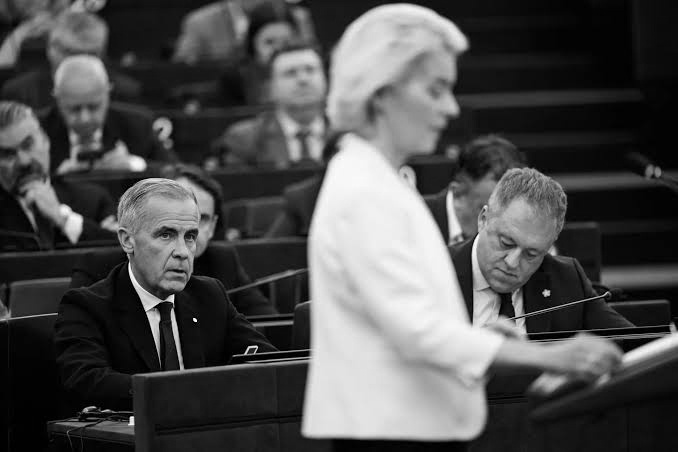
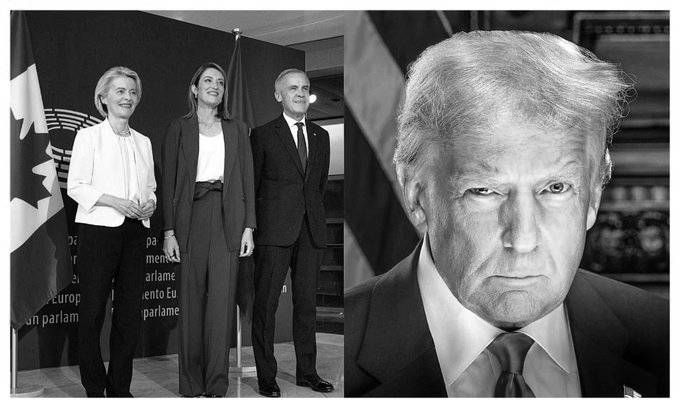
Canadian Prime Minister Mark Carney attended von der Leyen’s State of the Union address in Strasbourg earlier this week and said Canada wanted a “unique alliance” with the EU, but not membership. US President Donald Trump criticised the idea, calling the prospect of Canada joining the EU “laughable” and warning it could be a “hostile act”. He also threatened “very heavy tariffs” on Europe if he believed European leaders had bad intentions.
An “associate member” status does not currently exist under EU treaties, although similar ideas have been discussed before. Germany previously suggested associate membership for Ukraine, while the concept was also considered for post-Brexit Britain.
Canada wants to get “as close as we possibly can” to the EU while strengthening rather than diminishing its sovereignty, Canadian ambassador designate to the EU Jonathan Wilkinson said, according to the Associated Press. A Canadian official said discussions could include allowing Canadians to live and work in Europe without visas.
Von der Leyen said the sides would create a “common prosperity and economic space” covering manufacturing, technology, defence, the Arctic, artificial intelligence, energy and critical minerals. She said Europe and Canada “see the world with the same eyes”, pointing to cooperation on Ukraine, defence, raw materials and supply chains.
Canada has also joined the EU’s €150 billion SAFE defence programme, becoming its first non European participant. Carney has argued that middle powers need to cooperate because negotiating bilaterally with a hegemon means negotiating “from weakness”.
However, creating associate membership could be legally complex. No framework exists, and it remains unclear how approval would work. Any treaty based status would require unanimity among all 27 EU capitals and domestic ratification.
Canada already has the CETA trade agreement with the EU, although several countries have yet to ratify it. Deeper Single Market access would require alignment with EU rules and could leave Canada as a rule taker without voting rights.
The proposal is not expected to change the accession path for European candidates, although Ukraine has viewed associate membership without voting rights as “unfair”. Montenegro, Albania, Ukraine and Moldova are among the bloc’s most advanced candidates, with the EU saying new members could join as soon as 2030.