
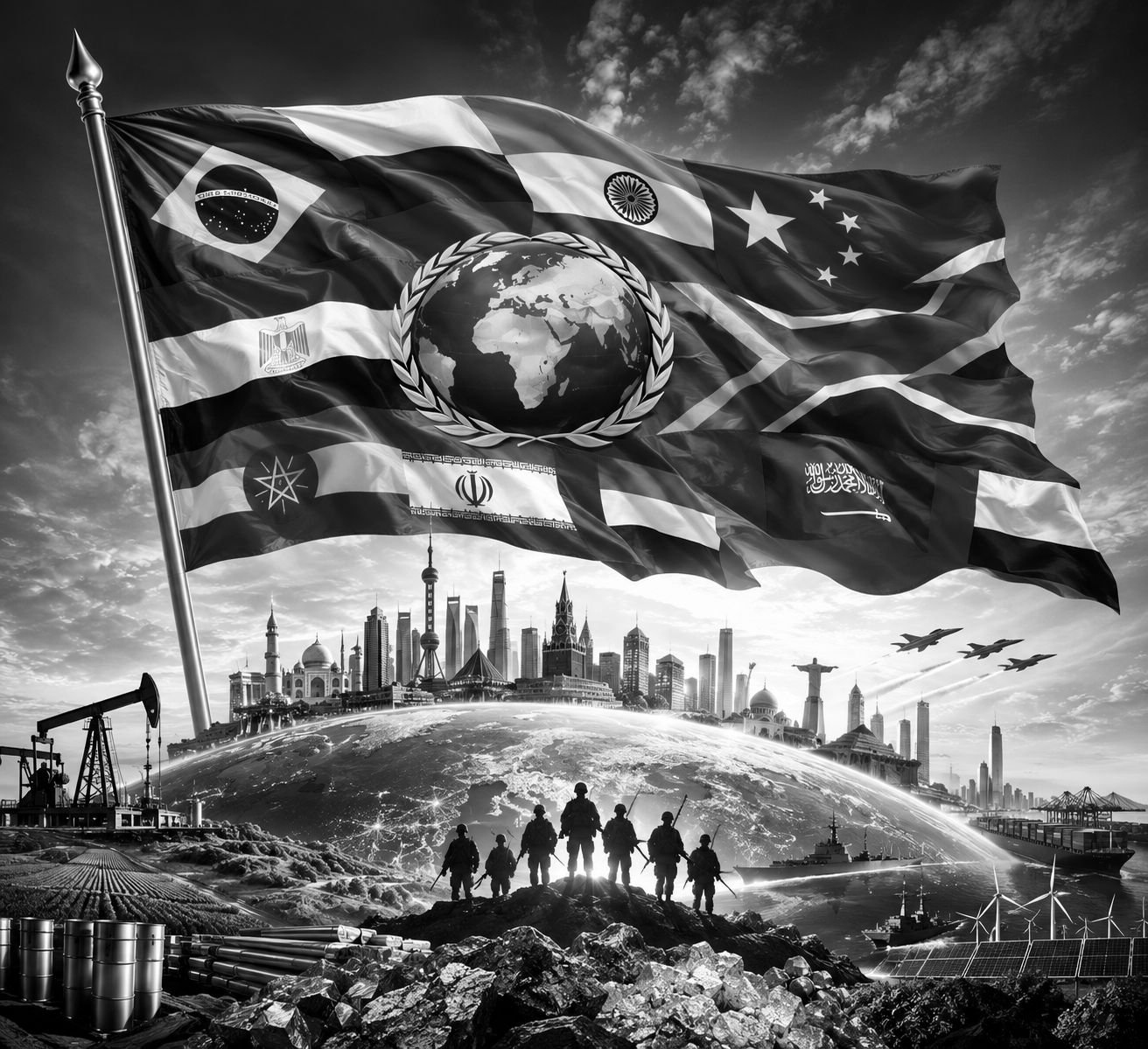
What If BRICS Was A Country? 4 Billion People, $35 Trillion Economy And 6,000 Nukes
What if BRICS was a country? The answer would create one of the world's biggest demographic, economic and strategic powers, stretching across four continents and bringing together some of the largest producers, consumers, militaries and energy suppliers.
The expanded BRICS has 11 members - Brazil, Russia, India, China, South Africa, Egypt, Ethiopia, Iran, the UAE, Indonesia and Saudi Arabia. Together, they represent more than 40 per cent of the world's population, account for roughly 40 per cent of global GDP on a purchasing-power-parity basis and contribute more than 25 per cent of global trade.
The comparison with the G7 is striking. The US, Canada, Britain, France, Germany, Italy and Japan together account for only around 10 per cent of the world's population. BRICS has a larger share of global output on a purchasing-power basis, although the G7 remains significantly richer in nominal dollar terms and retains enormous influence over global finance and technology.
BRICS' strength also lies beneath the ground. Its members hold roughly 44 per cent of global oil reserves and 53 per cent of natural-gas reserves, while producing around 43.6 per cent of the world's oil and 36 per cent of its gas. China also dominates the processing of several rare-earth elements vital for electronics, electric vehicles, renewable energy and defence.
That gives the bloc potential influence over global prices and supply chains. Coordinated production cuts could push energy prices higher, while increased or discounted supplies could put downward pressure on them. Yet major exporters want strong revenues, while consumers such as India and China seek affordable energy.
A more coordinated BRICS could also put economic pressure on the US by encouraging trade in local currencies, reducing dependence on Western financial systems and strengthening its influence over energy and critical-mineral supply chains. However, the dollar and US financial system remain deeply embedded in global trade.
Military power adds another layer. China, India and Russia have some of the world's largest armed forces and are nuclear-armed states, with their combined arsenals estimated at more than 6,000 warheads. But BRICS is not a military alliance and these weapons remain under national control.
Its biggest weakness is its diversity. India and China are strategic competitors, while members have different political systems, economic priorities and relationships with the US and Europe.
So, if BRICS were one country, its combined population, economy, trade, resources and military capability would be extraordinary. But its real global weight will depend on whether these very different nations can turn their numbers into coordinated action.