
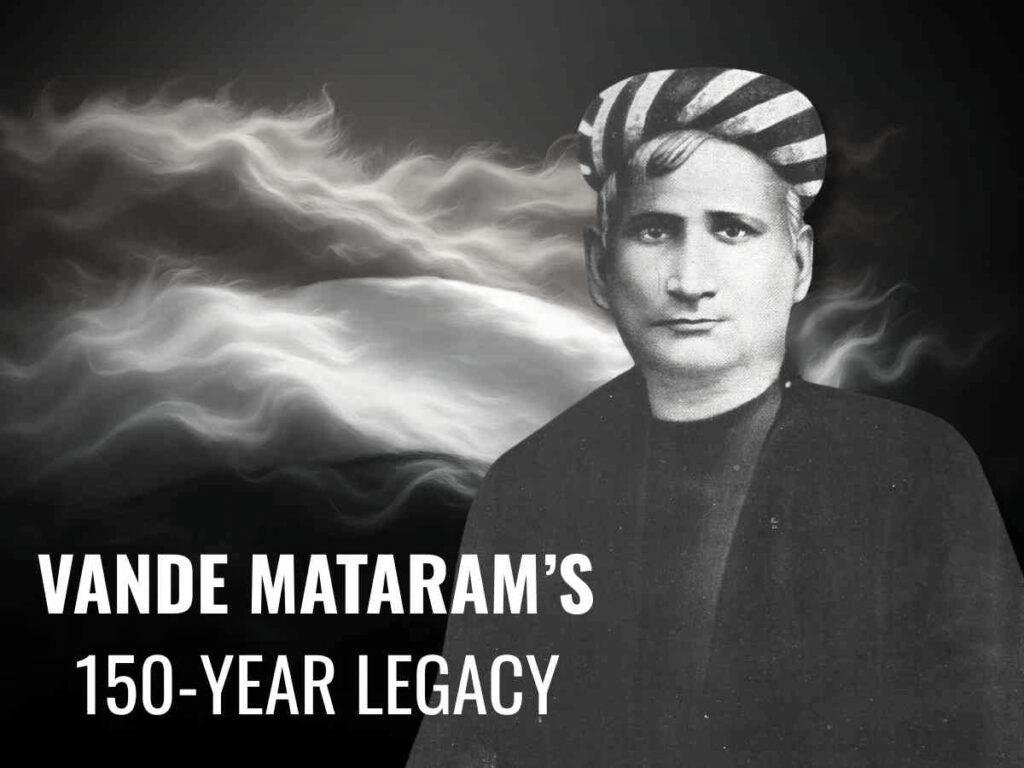
West Bengal marks 150 Years of ‘Vande Mataram’ amid cultural celebrations and political debate
West Bengal Governor C V Ananda Bose on Monday led the state’s celebrations marking the 150th anniversary of the patriotic song Vande Mataram , organising a series of cultural initiatives aimed at promoting India’s heritage, national pride and collective spirit.
The celebrations began with a ‘Vande Virasat March’ from Bankim Bhavan in Chinsurah, Hooghly district , the ancestral home of novelist Bankim Chandra Chattopadhyay , who authored the song. Over 60 bikers took part in the march, symbolising unity and shared cultural pride. The procession culminated at Jorasanko Thakurbari in Kolkata, where Governor Bose lit the ‘Akhand Jyoti’ , signifying the enduring spirit of India’s national awakening and devotion to the motherland.
Vande Mataram was written by Bankim Chandra Chattopadhyay in 1875 and later featured in his novel Anand Math (1882). The novel vividly depicted the Sanyasi Revolt , regarded as one of the earliest organised uprisings against British colonial rule, lending the song deep historical, cultural and nationalist significance within India’s freedom movement.
The initiative, conceptualised by the Governor under the leadership of Prime Minister Narendra Modi , also included an evening cultural programme at the Victoria Memorial Hall . During the event, renowned singer Kailash Kher was conferred the Governor’s Excellency Award in recognition of his outstanding contribution to Indian art and culture. Kher also performed at the programme.
The 150th anniversary celebrations have coincided with a renewed political debate over Vande Mataram in Parliament. In early December, the Lok Sabha held a special discussion to commemorate the milestone. Prime Minister Modi described the song as a powerful symbol of India’s unity and freedom struggle, while raising questions over historical decisions related to its text, including the omission of certain stanzas in 1937.
The remarks triggered a sharp response from the Opposition, with Congress leaders such as Priyanka Gandhi Vadra and Mallikarjun Kharge accusing the government of politicising the national song and using the debate for political mileage. The discussion soon turned into a BJP–Congress face-off , reflecting differing interpretations of history, national identity and cultural legacy.
While the West Bengal celebrations focused on heritage, culture and youth engagement, the parliamentary debate underscored how Vande Mataram continues to evoke strong political and emotional responses even 150 years after its creation, remaining a potent symbol of India’s freedom struggle and national consciousness.