
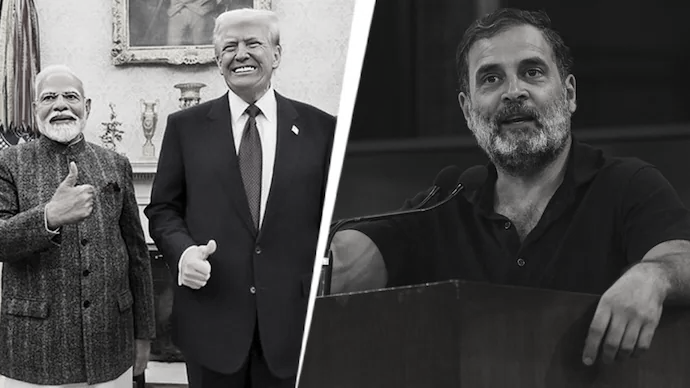
‘Weak PM’, Congress attacks Modi on H-1B blow
• Trump orders companies to pay USD 100,000 for H-1B visa
• 70% of H-1B visa holders are Indians, tech sector to be hit hard
• Rahul Gandhi calls PM Modi 'weak', Kharge questions foreign policy
The United States’ sudden move to impose a staggering USD 100,000 annual fee on H-1B visas for highly skilled workers has sparked sharp criticism from India’s main opposition party, the Congress. Party leaders accused Prime Minister Narendra Modi of being a “weak PM,” saying his preference for optics over decisive action is now putting India’s interests and skilled workforce at risk.
Congress president Mallikarjun Kharge argued that foreign policy should be about protecting India’s national interests, not organizing grand events or superficial displays of diplomacy. “Bear hugs, hollow slogans, concerts, and getting people to chant ‘Modi, Modi’ is not foreign policy. It cannot replace wise, strategic action,” he said.
Highlighting the real-world consequences of the H-1B fee hike, the Congress pointed out that Indians form around 70% of H-1B visa holders in the US. With the new fee and existing tariffs, the economic loss to India could exceed ₹2.17 lakh crore across multiple sectors, including technology, outsourcing, and services. Congress leaders also flagged related policy concerns, such as the HIRE Act targeting Indian outsourcing firms and the lifting of the Chabahar port exemption, which could affect India’s strategic interests.
Rahul Gandhi, Leader of Opposition in the Lok Sabha, criticized the government on social media, saying the hike threatens the future of India’s best and brightest talent. Congress deputy leader Gaurav Gogoi added that former PM Manmohan Singh would have acted decisively in such a scenario, contrasting this with Modi’s “strategic silence,” which he described as a liability for national interests.
The H-1B visa programme, originally meant to attract high-skilled workers to the US, has increasingly been criticized by Washington as being misused to replace local American workers. US President Donald Trump’s proclamation cited national security concerns and alleged misuse of the programme.
The new visa fee could have long-term implications for India’s tech talent migration and global competitiveness. Rising costs may discourage many skilled Indian professionals from working in the US, potentially slowing knowledge exchange and reducing India’s influence in global tech hubs.
Diplomatically, India now faces a delicate balancing act. A strong response could protect its citizens and strategic interests, but silence or inaction could risk losing leverage. Options could include high-level diplomatic negotiations, reciprocal measures, or engagement with multinational corporations to safeguard Indian talent abroad. Congress argues that proactive, smart diplomacy,rather than optics,is essential to protect India’s workforce and long-term interests.
The controversy is likely to dominate political discourse, putting Prime Minister Modi under pressure to defend India’s position while navigating complex US-India relations. For now, the Congress is using the H-1B fee hike to frame the debate as a failure of leadership, highlighting both economic and strategic risks to the country.