
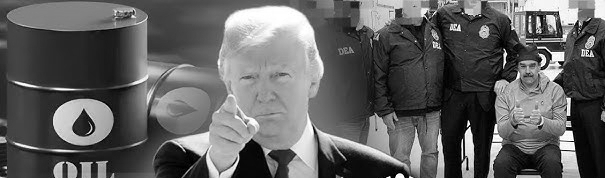
Was it ever about anything but oil? Trump says Venezuela to hand over multi‑billion‑dollar oil shipment to US
President Donald J. Trump announced that interim authorities in Venezuela will transfer between 30 million and 50 million barrels of high-quality, sanctioned oil to the United States of America, a move valued at roughly $2.2 billion to $4.2 billion at current market prices and one that has intensified scrutiny of Washington’s military intervention and its consequences for global energy markets.
“I am pleased to announce that the Interim Authorities in Venezuela will be turning over between 30 and 50 MILLION Barrels of High Quality, Sanctioned Oil, to the United States of America,” Trump said in a public statement. He added that the oil would be sold at market prices, with the proceeds placed under his direct control. “This Oil will be sold at its Market Price, and that money will be controlled by me , as President of the United States of America, to ensure it is used to benefit the people of Venezuela and the United States! ” he said.
Trump said the transfer would begin immediately. “The Oil will be taken by storage ships, and brought directly to unloading docks in the United States,” he stated, adding that he had directed Energy Secretary Chris Wright to execute the plan without delay.
The announcement takes place against the backdrop of a broader U.S. campaign aimed at Venezuela’s oil sector. In December, U.S. forces seized a sanctioned oil tanker known as Skipper off the coast of Venezuela, part of a naval effort to interdict vessels carrying Venezuelan crude under sanctions. The United States then imposed a maritime blockade on sanctioned tankers and began pursuing other vessels tied to Caracas, actions that have drawn accusations from Venezuelan officials of theft and international piracy.
At prevailing crude benchmarks, the scale of the proposed handover underscores that the deal is not symbolic but a multi-billion-dollar strategic concession. While modest relative to overall U.S. consumption, analysts say it is large enough to influence refinery planning, regional crude flows and diplomatic calculations.
The announcement follows a deadly U.S. military operation in Venezuela that resulted in the capture of President Nicolás Maduro and a sharp escalation in violence. Venezuela’s military said at least 24 security officers were killed in the operation, bringing the official death toll to at least 56. Additional civilian deaths were reported, though the exact number remains unclear. Cuba confirmed that 32 Cuban military and police officers stationed in Venezuela were also killed, prompting two days of national mourning on the island.
Maduro, now in U.S. custody, appeared in court and pleaded not guilty to charges including narco-terrorism, denouncing the proceedings as politically motivated and rejecting the legitimacy of the case against him.
Attention has also turned to Venezuela’s vice president and interim leadership, now governing under intense pressure. With Maduro detained and senior figures facing uncertain futures, the sudden decision to hand over oil worth billions of dollars has sparked widespread speculation over motive. Critics argue the offer reflects political self-preservation rather than cooperation . In a climate where power has shifted overnight and military force has reshaped leadership, the oil transfer is widely seen as insurance. Sarcastically described by observers as a return gift for capturing Maduro , the deal has reinforced perceptions that fear, rather than diplomacy, is driving decisions in Caracas.
Global oil markets, meanwhile, remain cautious. Traders and analysts say markets may not be fully prepared to absorb Venezuelan crude amid uncertainty over sanctions, legality, logistics and long-term political stability. Major producers such as Saudi Arabia, Russia, Iraq and the UAE are closely watching developments, aware that a re-entry or redirection of Venezuelan supply could affect prices and OPEC+ calculations.
U.S. oil majors such as Chevron, ExxonMobil and ConocoPhillips have so far signaled restraint, citing legal ambiguity, infrastructure decay and the high cost of restoring Venezuelan production, which analysts say could require tens of billions of dollars and years of investment.
Footage released by Venezuela’s military has further deepened domestic and international unease, showing the faces of fallen security officials layered over images of American aircraft over Caracas and armored vehicles destroyed by explosions, highlighting the human cost behind the geopolitical maneuvering.
Supporters of the U.S. move argue that unlocking Venezuela’s stranded oil could eventually benefit both nations. Critics counter that extracting and selling another country’s resources in the immediate aftermath of a lethal military operation blurs the line between intervention and exploitation.
Leadership has fallen. Bodies have been counted. Billions of dollars’ worth of oil is in play.
And beneath the language of stability and humanitarian concern, one question continues to echo. Was it ever really about anything other than oil?