
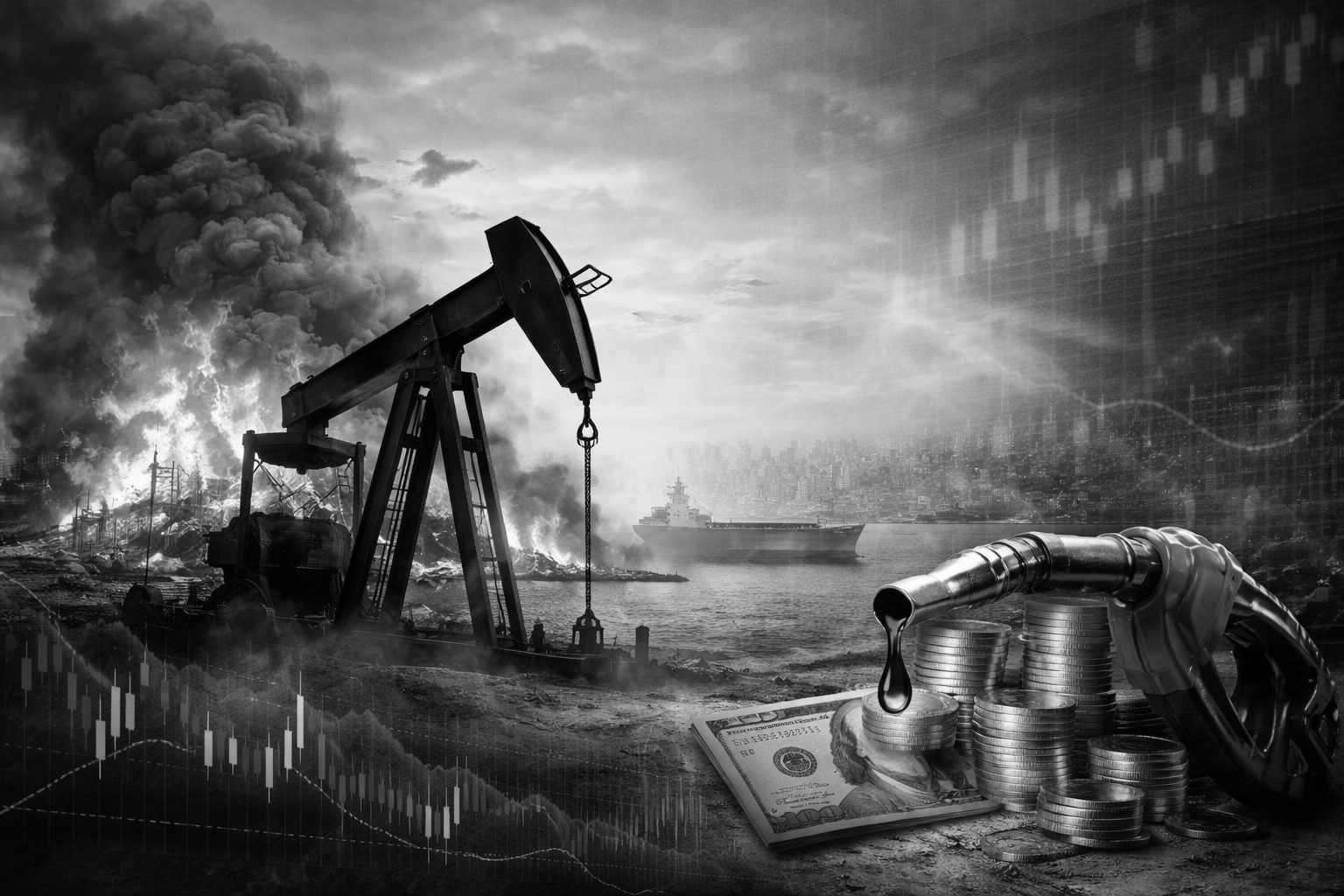
War-Driven Oil Surge From $70 to $119 Sparks Global Market Turbulence
Global markets are reeling from sharp swings in oil prices after fresh attacks on energy infrastructure in the Middle East pushed Brent crude briefly above $119 per barrel , before easing to around $108.65 . The spike followed Iranian strikes on oil and gas facilities across the Persian Gulf , in retaliation for Israel’s attack on the South Pars gas field , heightening fears of prolonged supply disruptions.
Nearly three weeks into the conflict, oil has become a headline-driven market , with prices reacting instantly to geopolitical developments. Benchmark US crude reflected this volatility, rising above $101 before dropping toward $94 , highlighting rapid shifts in investor sentiment.
The conflict has targeted key energy assets, including LNG plants and refineries, while raising serious concerns over the Strait of Hormuz , through which nearly 20% of global oil supply flows . Even the risk of disruption has been enough to trigger price spikes, with analysts warning oil could surge to $150 per barrel if tensions escalate further.
Equity markets reacted sharply. Stocks fell 3.4% in Japan , 2.8% in Germany , and 2.7% in South Korea . US markets proved relatively resilient, with the S&P 500 down 0.3% , the Dow Jones falling 203 points (0.4%) , and the Nasdaq slipping 0.3% , recovering from steeper early losses as oil prices cooled.
Bond markets mirrored the turbulence. The two-year US Treasury yield climbed to 3.96% before easing to 3.79% , while the 10-year yield held at 4.26% , well above pre-war levels. Rising yields signal expectations that central banks will maintain tight policy to contain inflation.
This marks a dramatic shift in outlook. Markets that once expected multiple rate cuts now assign a 73% probability that rates will stay unchanged or even rise . The Federal Reserve , along with the Bank of Japan, European Central Bank, and Bank of England , has held rates steady.
The economic impact is widening. Rising oil prices are fueling inflation , increasing costs for fuel, transport, and manufacturing, and weakening demand, as seen in softer US housing data. Meanwhile, gold has fallen 5 - 6% and silver over 8% , reflecting pressure from higher yields.
Natural gas prices have surged up to 35% , adding to supply chain stress. For oil-importing nations like India, rising import bills and currency pressures are intensifying economic strain.
Despite brief signs of de-escalation, markets remain on edge. Sustained oil volatility could prolong inflation, delay rate cuts, and slow global growth , reinforcing oil’s central role in shaping the global economy.