
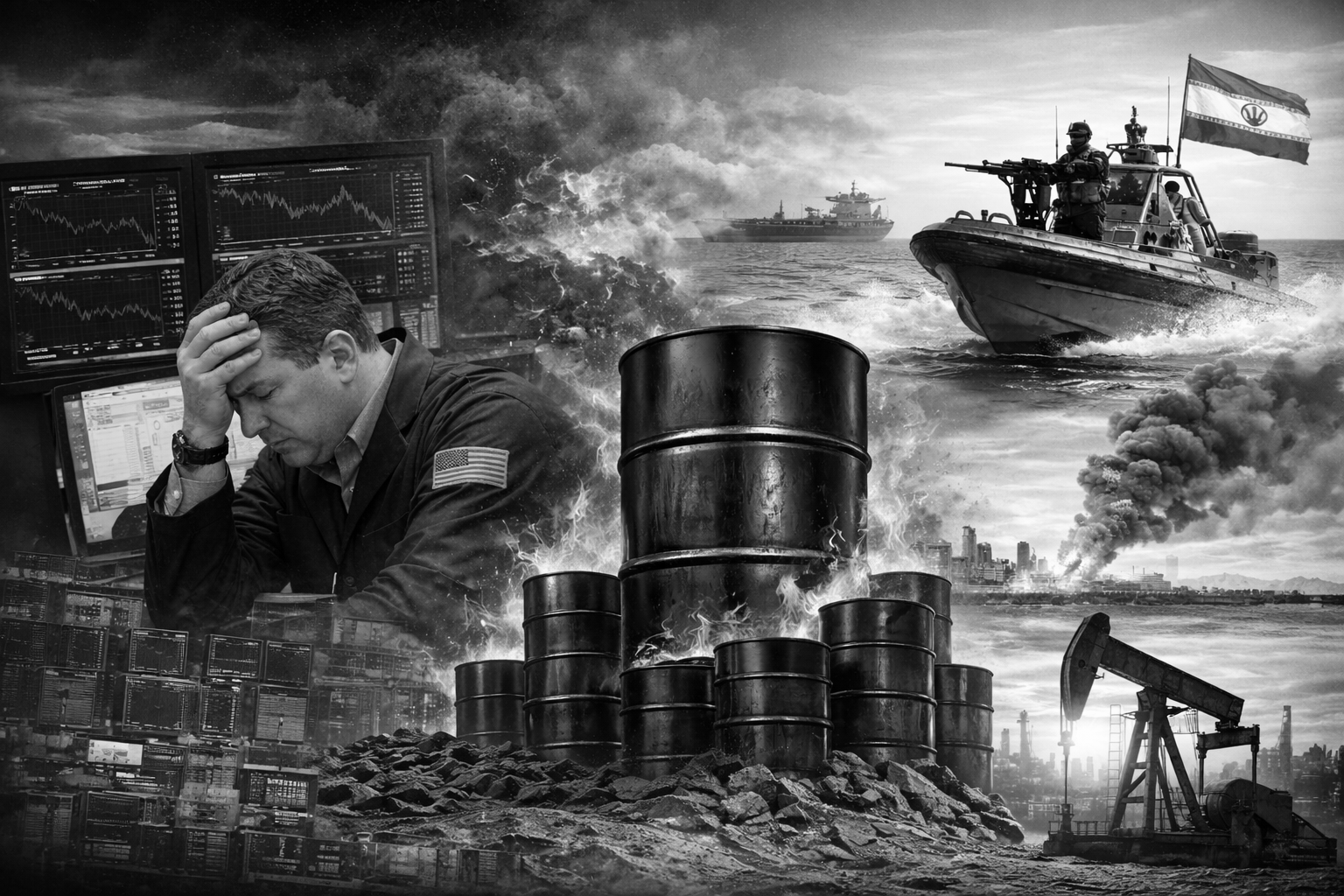
Wall Street Tumbles Amid Iran Tensions, Oil Tops $100
Global markets witnessed sharp volatility on Thursday as escalating tensions in the ongoing Iran conflict rattled investor sentiment, disrupted energy flows, and raised concerns over inflation and economic stability.
On Wall Street, major indices declined significantly. The S&P 500 fell 1.7 per cent , marking its worst day since January and putting it on track for a fifth consecutive weekly loss, its longest such streak in nearly four years. The Dow Jones Industrial Average dropped 469 points , while the Nasdaq Composite slid 2.4 per cent , taking it more than 10 per cent below its record high , a level commonly described as a market correction.
The downturn followed fading optimism over diplomatic efforts to end the conflict. Earlier, US President Donald Trump had indicated progress in talks. However, Iran denied direct negotiations and rejected a US ceasefire proposal conveyed via Pakistan, reinforcing uncertainty.
At the same time, military activity intensified. Additional US troops moved closer to the region, while Israel expanded operations against Hezbollah in southern Lebanon. Missile alerts sounded across Israel, and heavy strikes were reported in parts of Iran, indicating a worsening security situation.
A major concern for global markets remains Iran’s tightening grip over the Strait of Hormuz, a crucial oil transit route. The country appears to be implementing a “toll-like” system , requiring ships to undergo vetting and, in some cases, pay for safe passage under the supervision of the Islamic Revolutionary Guard Corps. Shipping traffic through the strait has reportedly fallen by nearly 90 per cent , severely affecting global supply chains.
This disruption pushed oil prices sharply higher. Brent crude rose 4.8 per cent to USD 101.89 per barrel, while US crude gained 4.6 per cent to USD 94.48. Prices eased slightly later after Trump announced he would delay potential military action against Iran’s energy infrastructure until April 6 , signalling a window for continued negotiations.
Bond markets also reacted strongly, with the US 10-year Treasury yield climbing to 4.43 per cent , up from below 4 per cent before the conflict. Rising yields have increased borrowing costs, adding pressure on businesses and households. At the same time, expectations of interest rate cuts have weakened, as higher oil prices raise inflation risks despite signs of a mildly slowing labour market.
Technology stocks led the losses. Meta Platforms fell 8 per cent , while Alphabet Inc. dropped 3.4 per cent after a US jury found Instagram and YouTube liable in a landmark social media addiction case. Other major firms like Nvidia and Amazon also declined, while Apple posted marginal gains.
Global markets mirrored the trend, with key indices in Europe and Asia closing lower, reflecting widespread concern over the conflict’s economic fallout.
Meanwhile, Iran is reportedly moving to formalise its control over the Strait of Hormuz through legislation to levy transit fees, a move criticised by international bodies as a potential violation of maritime law.
With diplomatic efforts uncertain and geopolitical tensions escalating, markets are expected to remain volatile, as investors closely track developments that could impact global trade, energy supplies, and economic growth.