
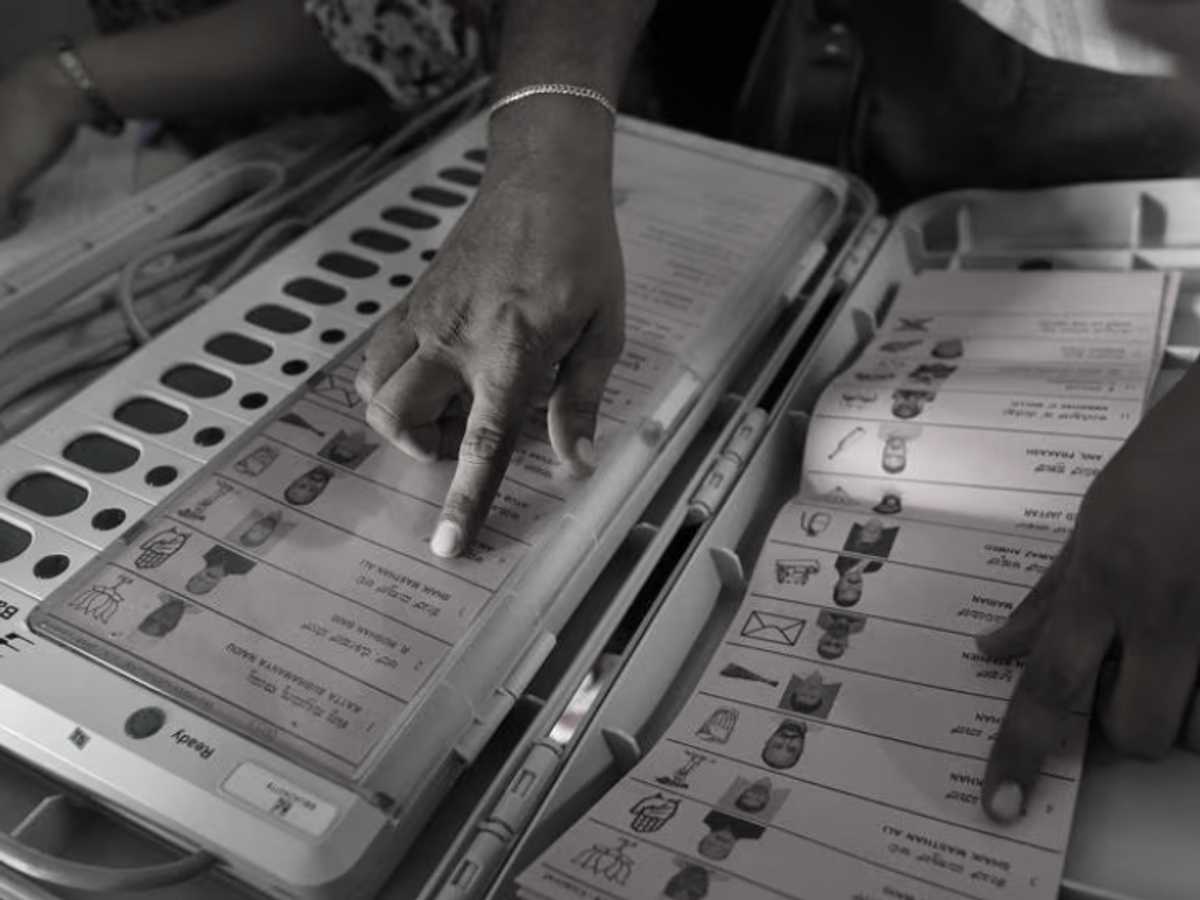
Voting in colour, because black-and-white was confusing
For the first time in nearly a decade, India’s voters will see a splash of colour on their Electronic Voting Machines. Starting with the upcoming Bihar assembly elections, EVMs will display colour photographs of candidates, replacing the black-and-white images that have been in use since 2015. This small but significant change is aimed at making voting easier, clearer, and more intuitive for millions of citizens.
The Election Commission of India (EC) has not only upgraded the photos but also improved the visibility of serial numbers and ensured that the font for candidates’ names and the NOTA option is bold, uniform, and internationally standardised. The new EVM ballot papers, printed on durable 70 GSM paper, will also feature pink-coloured sheets for assembly elections, making them visually distinct.
This development goes beyond aesthetics. In constituencies where multiple candidates share similar names or where voters have low literacy levels, distinguishing candidates has often been a challenge. Colour photos now occupy three-fourths of the photo space, ensuring instant recognition and reducing errors at the ballot. By making the candidate’s face more prominent, the EC is essentially bridging the gap between voters and their representatives.
Experts see this move as part of a broader effort to modernise India’s electoral process. Clearer visuals, larger fonts, and standardised serial numbers all aim to reduce confusion, increase confidence in voting, and ensure that elections remain transparent and accessible. The EC’s approach is also a subtle reminder that technology, when implemented thoughtfully, can strengthen democracy.
However, the change also highlights a long-standing question: why did it take nearly ten years for such a simple improvement? While the black-and-white photos were functional, they often failed to serve the practical purpose of clear identification. The introduction of colour photos is both a correction and an upgrade, showing that even small innovations in governance can have a big impact on public participation.
As India heads into its next state elections, voters will now engage with a system that is easier to navigate, more visually intuitive, and fundamentally more voter-friendly. This step may seem minor, but it signals a broader commitment to improving democratic processes, making every vote count with clarity and confidence.
Colourful EVMs are not just about aesthetics,they are about accessibility, clarity, and ensuring that every voter can make an informed choice without confusion. A simple tweak, yet a significant stride toward a more voter-friendly India.