
Volvo Owner Drags SUV Through Ahmedabad Over ‘Broken’ Alloy Wheel Claim
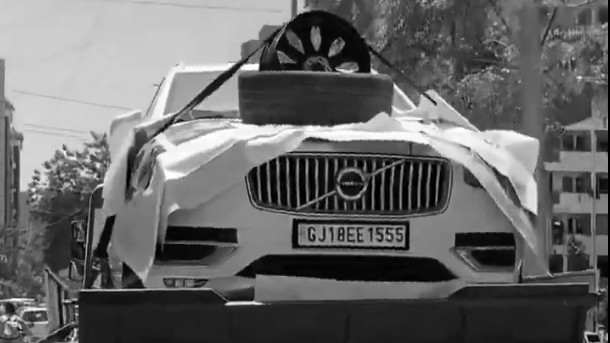
In an unusual and dramatic protest that quickly grabbed attention across social media, an Ahmedabad resident took to the streets with his Volvo SUV mounted on a tow truck, alleging serious safety concerns after what he claimed was a broken alloy wheel incident.
The owner, whose vehicle appeared to be a Volvo XC90 , placed the allegedly damaged alloy wheel prominently on the hood of the SUV while the vehicle was driven through different parts of Ahmedabad. Videos and pictures of the protest soon spread widely online, sparking debate among automobile enthusiasts and consumers over vehicle safety and after-sales responsibility .
The message displayed on the back of the tow truck accused the luxury carmaker of compromising customer safety. According to the owner, the alloy wheel of the SUV had “snapped in two” , raising concerns over the vehicle’s build quality and reliability.
In a strongly worded statement pasted on the vehicle, the owner alleged that the company’s much-publicised safety claims were misleading. The message suggested that buyers would be “better off purchasing an Alto instead of a Volvo ,” a remark that quickly caught public attention due to the sharp comparison between an affordable hatchback and a premium luxury SUV.
The protest message further claimed that once a vehicle is sold, the company “takes absolutely no responsibility,” leaving the owner’s life “completely at risk.” The visibly damaged component was displayed as proof of the alleged failure.
The incident has triggered widespread reactions online, with many users expressing shock over the claims, while others called for a detailed technical investigation into the matter before drawing conclusions. Several social media users also debated whether the damage could have resulted from road impact or possible manufacturing issues.
Volvo , globally known for positioning itself as a leader in automotive safety, had not officially responded to the allegations at the time the report was filed. A message sent to a company media relations official reportedly did not receive a response.
The episode once again highlights how dissatisfied customers are increasingly using public demonstrations and viral social media campaigns to pressure major brands and seek accountability.