
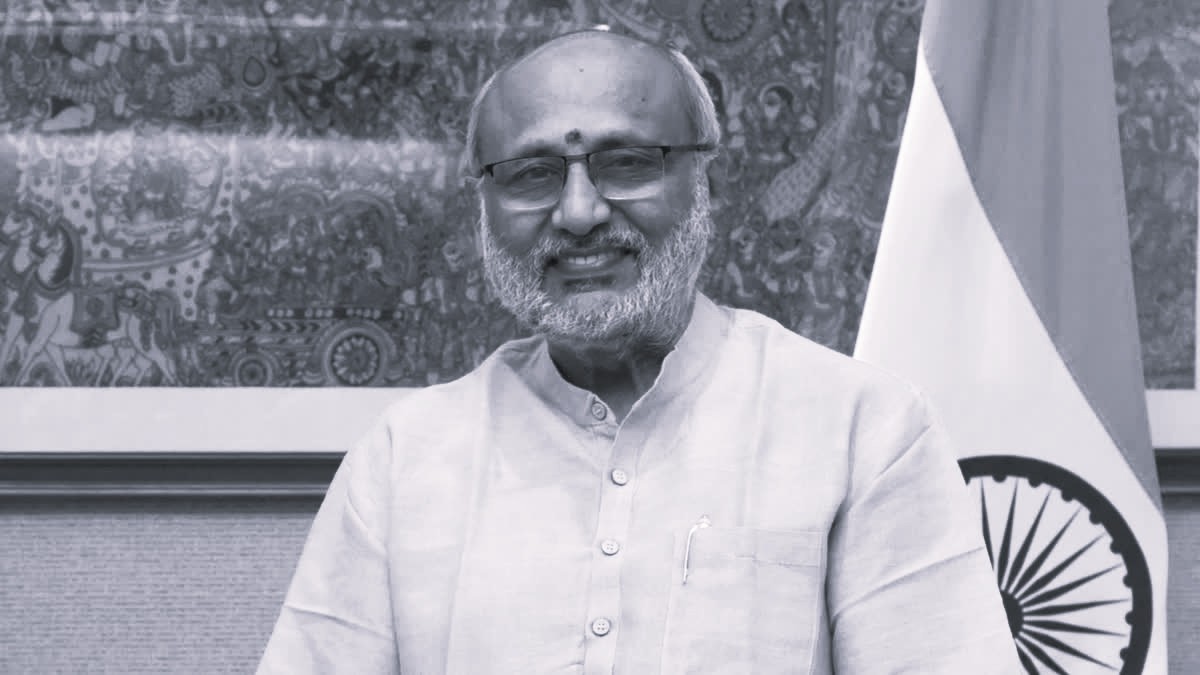
Visit of Vice President of India to Seychelles
India’s Vice President C.P. Radhakrishnan’s upcoming visit to Victoria for the swearing-in of Seychelles’ new President, Dr. Patrick Herminie, on October 27 marks a pivotal moment in the 48-year-old bilateral partnership. The visit not only symbolizes India’s recognition of Seychelles’ political transition but also reinforces New Delhi’s intent to deepen maritime, economic, and developmental cooperation under the expanding ambit of its Indian Ocean strategy.
Dr. Patrick Herminie, a former Speaker of the National Assembly, won the October 11 presidential runoff with 52.7 percent votes, defeating incumbent Wavel Ramkalawan. His return to power brings the United Seychelles party back into governance after five years in opposition. Herminie’s campaign promises to lower living costs, revive public services, and restore unity have generated optimism in New Delhi. His agenda for economic diversification and resilience aligns strongly with India’s regional outreach, particularly under the SAGAR (“Security and Growth for All in the Region”) and the newly unveiled MAHASAGAR (“Mutual and Holistic Advancement for Security and Growth Across Regions”) initiatives.
Historical and Strategic Context India was among the first countries to recognize Seychelles after its independence in 1976. Since then, ties have evolved from goodwill and aid to strategic cooperation. India’s early gestures such as being the first to deliver COVID-19 vaccines in 2021 cemented its image as a dependable partner. Over the decades, several high-level exchanges, from Indira Gandhi’s 1980 visit to Narendra Modi’s virtual summits, have strengthened political trust.
Seychelles’ geographical position spanning an exclusive economic zone (EEZ) of 1.2 million sq km makes it a crucial maritime partner for India, offering access to East African markets and sea lanes of global significance. Meanwhile, India is Seychelles’ top tourism source and a leading trading partner, with bilateral trade touching USD 89.76 million in 2018–19. The 6,000-strong Indian diaspora continues to bind the two nations through cultural and historical links dating back to the 18th century.
Defense and Security Cooperation Defense collaboration remains a cornerstone of India–Seychelles relations. India supplies arms, equipment, and training to the Seychelles People’s Defence Forces and conducts joint anti-piracy patrols. The Integrated Coastal Surveillance System, already operational, enables real-time maritime domain awareness. A potential revival of the stalled Assumption Island coast guard facility—first agreed upon in 2015 and later modified in 2018—is expected under Herminie’s tenure. Its completion would boost Seychelles’ maritime surveillance capacity and reaffirm India’s role as a “net security provider” in the Indian Ocean.
Joint exercises such as MAHASAGAR and AIKEYME (involving ten African nations) are likely to scale up, supported by expanded intelligence-sharing and counter-piracy coordination.
Economic and Developmental Partnerships India has implemented 29 small development projects in Seychelles, with total exports valued at USD 84.49 million in 2018–19. New negotiations on a Double Taxation Avoidance Agreement and investment in housing, real estate, and infrastructure are on the horizon. As Seychelles seeks to position itself as a gateway to East Africa, India’s growing investment presence could enhance regional trade and supply-chain connectivity.
Blue Economy and Renewable Energy Seychelles’ “blue economy” ambitions align closely with India’s sustainability goals. Ongoing joint projects include a 1 MW solar cluster, solar installations across 146 government buildings, and cooperation under the Global Biofuels Alliance and Blue Economy Protocol (2015). Future plans emphasize technology-driven innovation through the proposed Blue Technology Incubator, potentially integrating Indian expertise in marine biotechnology and renewable energy. Both nations also aim to explore Seychelles’ EEZ for sustainable fisheries and renewable resource generation, in tandem with climate resilience projects under MAHASAGAR.
Tourism and People-to-People Links Tourism, which contributes roughly a quarter of Seychelles’ GDP, is another pillar of bilateral ties. India is its largest tourist source, aided by direct connectivity through IndiGo’s Mumbai–Mahé flights launched in March 2025. Joint marketing efforts and roadshows in Indian cities have targeted sustainable, luxury, and adventure tourism. Seychelles aims to exceed 20,000 Indian arrivals annually by the end of 2025, facilitated by visa-free or electronic travel authorization measures. Efforts to attract travelers from emerging Indian cities such as Bengaluru and Ahmedabad are also underway.
Multilateral engagement and future outlook At the multilateral level, Seychelles’ participation in platforms like the Indian Ocean Commission, Colombo Security Conclave (as observer), and Voice of the Global South summits enhances coordination on Small Island Developing States (SIDS) and African Union priorities. India’s emphasis on non-intrusive, development-driven cooperation reinforces its image as a reliable partner.
Analysts view Herminie’s presidency as an opportunity to rejuvenate India - Seychelles relations across defense, tourism, and blue economy sectors. Under the MAHASAGAR vision, India plans to employ AI-driven maritime surveillance, bolster sustainable economic corridors, and address regional challenges like illegal fishing and climate change. As Vice President Radhakrishnan’s visit coincides with Seychelles’ leadership transition, it represents not just ceremonial diplomacy but a renewed blueprint for shared prosperity in the Indian Ocean region - anchoring India’s position as Seychelles’ enduring “rock of dependability.”