
Vikram-1 Soars: India's First Private Rocket Reaches Orbit, Breaking ISRO's Launch Monopoly
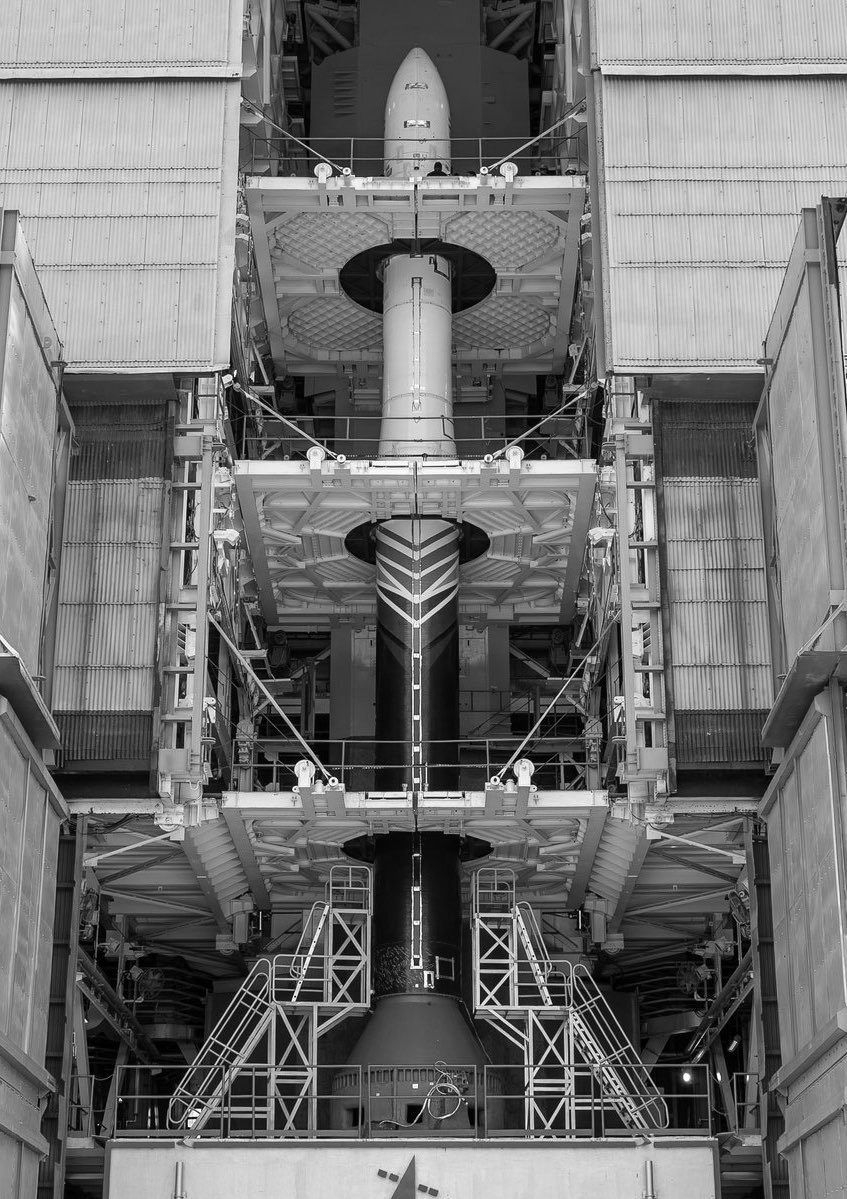
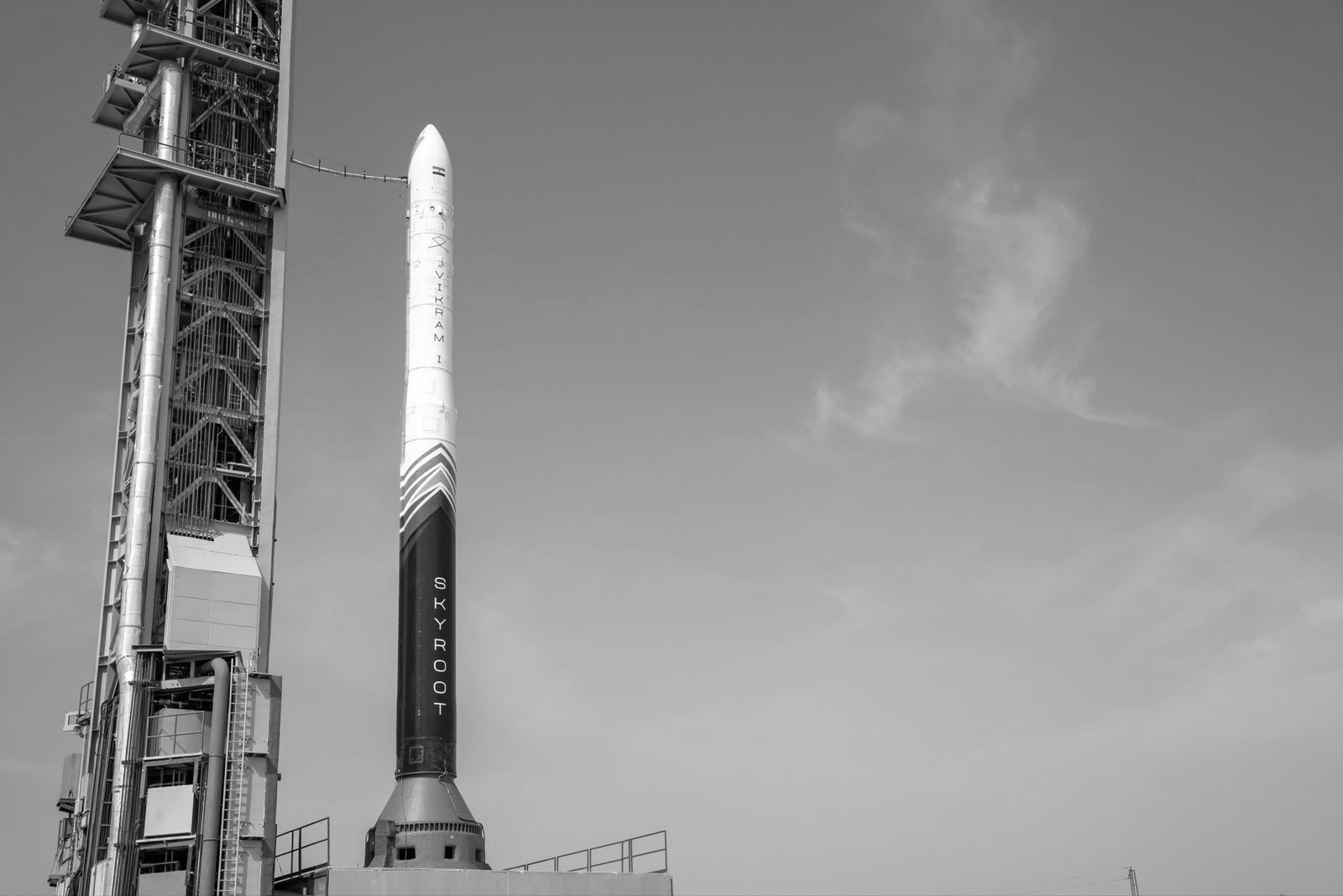
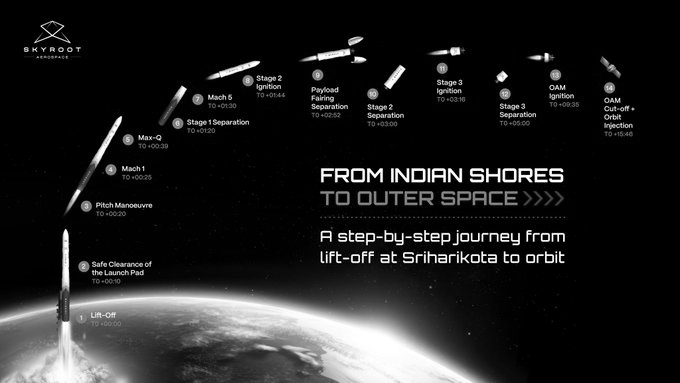
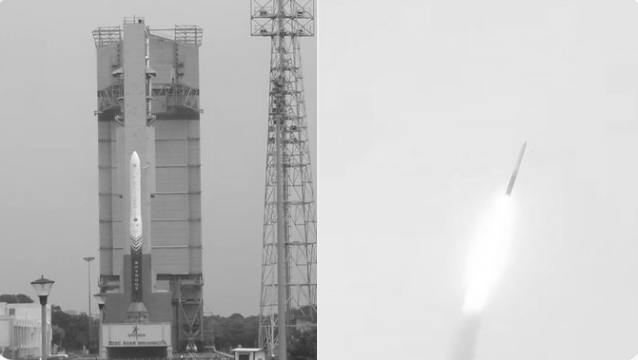
India scripted history on Saturday as Vikram-1 , the country's first privately developed orbital rocket, successfully reached space and completed orbital insertion, marking a watershed moment for India's private space sector. Built by Hyderabad-based Skyroot Aerospace , the 22-metre, four-stage vehicle, comprising three solid-propellant stages and a restartable liquid-fuel Orbital Adjustment Module, lifted off from the first launch pad at the Satish Dhawan Space Centre at 12.05 pm , roughly 35 minutes behind the original 11.30 am slot after a "planned hold" linked to navigation issues. Named "Mission Aagaman" , the roughly 16-minute test flight culminated in the rocket completing its final burn and sequentially deploying its payloads into a 450 km Low Earth Orbit . Skyroot called it a "grand success."
The mission carried six commercial and technology-demonstration payloads: Skyroot's own SCOPE satellite, Germany's DCUBED demonstrator, Grahaa Space's SOLARAS S3 satellite, and Cosmoserve Space's debris-capturing robotic arm "Embrace." Two symbolic payloads rode along too, "Cosmic Bloom," a floral artwork, and an 18-karat gold micro-rocket bearing microscopic tributes to C.V. Raman, Vikram Sarabhai and A.P.J. Abdul Kalam . Also aboard was a handwritten postcard from Prime Minister Narendra Modi reading "Vande Mataram," alongside postcards from engineers, scientists and Indian astronauts.
Speaking with Skyroot CEO Pawan Kumar Chandana and co-founder Naga Bharath Daka at ISRO's Mission Control Centre, PM Modi hailed the launch as proof that "we can be Atmanirbhar," and later remarked that "this is merely the beginning." Chandana informed the PM that "your card has successfully reached orbit."
The achievement makes India the third country after China and the US to have a private company place a rocket into orbit, and puts Skyroot , India's first space-tech unicorn at a $1.1 billion valuation , alongside global peers like Rocket Lab, Firefly and Relativity in going from founding to orbit. Chandana and Daka, IIT alumni and former ISRO engineers, founded Skyroot in 2018 ; former ISRO chief S. Somanath serves as the company's honorary technical advisor.
The launch validates the Indian Space Policy 2023 , which opened the space value chain to private players, alongside a liberalised FDI regime (up to 74% automatic in satellite manufacturing, 49% in launch vehicles, 100% in components) and funding vehicles including a ₹1,000 crore VC Fund and ₹500 crore Technology Adoption Fund. India's startup count has grown from one in 2014 to over 400 today ; NSIL has launched 141 satellites with tenfold revenue growth. Earlier milestones, Vikram-S in 2022, Agnikul's 2024 launch from India's first private pad, and February's ₹511 crore SSLV transfer to HAL , paved the way. India's space economy, valued at USD 8.4 billion , is projected to reach USD 40-45 billion by 2030 .