
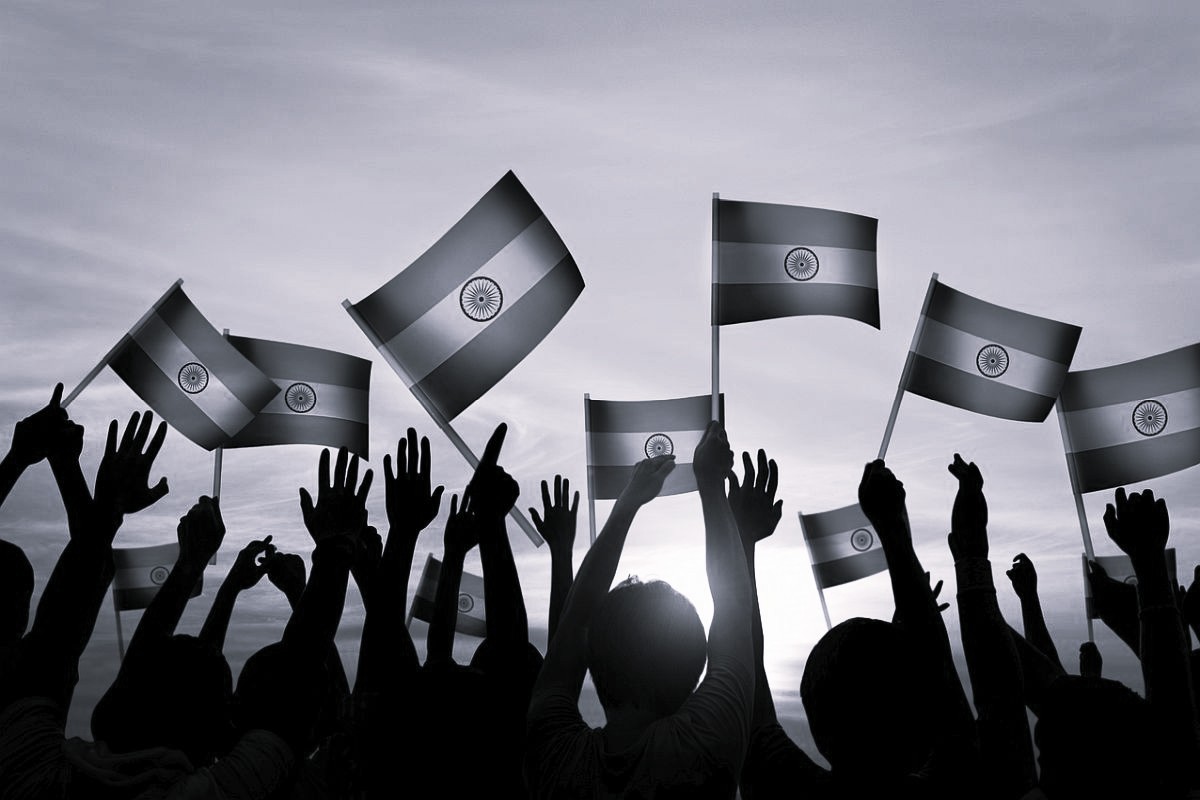
Vande Mataram: The song that awakened a nation
On a quiet November morning in 1875, the Bengali literary world first encountered a poem that would one day echo through India’s streets, temples, battlefields, and parliaments. Published in Bangadarshan, a magazine edited by Bankim Chandra Chattopadhyay, the poem opened with two simple but immortal words: “Vande Mataram.” Few then realized that this invocation “I bow to thee, Mother” would one day become the heartbeat of a nation yearning for freedom.
Bankim Chandra (1838–1894), a magistrate by profession and a thinker by temperament, lived in Bengal still under the heavy shadow of British colonial rule. The memory of famine, the humiliation of foreign domination, and the stirrings of national self-respect fused in his imagination. Out of that fire was born Anandamath (1882), a novel that carried within its pages both a story and a prophecy. Within it lay the song that would define the soul of modern India.
The mother and her children
The setting of Anandamath was Bengal during the famine of 1770 a time when hunger stalked the land and rebellion brewed among monks turned warriors. The story follows Mahendra and his wife Kalyani, who stumble into the world of saffron-clad ascetics the Santans, or “Children of the Mother.” These monks have renounced worldly life to serve a higher cause: the liberation of the Motherland.
At the heart of the monastery, under flickering lamps, Mahendra witnesses three images of the divine Mother Durga, fierce and radiant, symbolizing India’s glorious past; Lakshmi, sorrowful and pale, representing the nation enslaved; and Saraswati, serene and smiling, heralding an enlightened future. In that moment, Mahendra realizes that to serve the Mother is to serve God. It is here, amid the rustling of the forest and the ringing of conch shells, that the monks raise their voices in a song “Vande Mataram.”
The Hymn
The poem unfolds like a prayer, blending nature’s beauty with divine reverence. Its original verses in Sanskritized Bengali flow with both tenderness and might:
Vande Mātaram!
Sujalām, suphalām, malayaja-śītalām, Śasya-śyāmalām, Mātaram! Vande Mātaram!
Śubhra-jyotsnā pulakita-yāminīm, Phulla-kusumita drumadala-śobhinīm, Suhāsinīm, sumadhura-bhāṣinīm, Sukhadām, varadām, Mātaram! Vande Mātaram!
Koṭi-koṭi kaṇṭha kalakala-nināda-karāle Koṭi-koṭi bhūjaidhr̥ta kharakaravale, Abalā kena mā ēto bala, Bahubaladhārinīm, namāmi tarinīm, Ripudalavariniṁ, Mātaram! Vande Mātaram!
Tumi vidyā, tumi dharmā, Tumi hr̥di, tumi marmā, Tvam hi prāṇāḥ śarīre, Tvam hi Durgā daśapraharaṇadharī, Kamalā, kamaladalavihāriṇī, Vāṇī vidyādāyinī, Namāmi tvām! Vande Mātaram!
The English Rendering by Sri Aurobindo (1909)
Mother, I bow to thee! Rich with thy hurrying streams, Bright with orchard gleams, Cool with thy winds of delight, Dark fields waving, Mother of might, Mother free! Glory of moonlight dreams, over thy branches and lordly streams, Clad in thy blossoming trees, Mother, giver of ease, Laughing low and sweet, Mother, I kiss thy feet, Speaker sweet and low, Mother, to thee I bow.
Who hath said thou art weak in thy lands, When the sword flashes out in twice seventy million hands, And seventy million voices roar thy dreadful name from shore to shore? Thou art wisdom, thou art law, thou our heart, our soul, our breath. Thine the strength that nerves the arm, thine the beauty, thine the charm. Every image made divine in our temples is but thine.
Thou art Durga, Lady and Queen, with her hands that strike and her swords of sheen; Thou art Lakshmi lotus-throned, and the Muse with her garland crowned. Mother, to thee I bow!
These verses captured India’s geography and spirit with almost mystical power. The rivers, forests, fields, and winds became symbols of the divine feminine — Bharat Mata , the eternal mother.
From literature to liberation
What began as a literary hymn soon became a call to arms. The cry of “Vande Mataram” spread from the pages of Anandamath to the hearts of a people awakening to their destiny.
In 1896, Rabindranath Tagore sang the song at the Calcutta session of the Indian National Congress, the first time it was performed publicly in a political forum. The hall rose in reverence; a wave of emotion swept across the assembly. For the first time, Indians felt united not by region or language, but by devotion to a shared Mother.
When the British partitioned Bengal in 1905 to weaken nationalist sentiment, Vande Mataram became the rallying cry of the Swadeshi Movement. Streets, schools, and temples resounded with its echo. Students shouted it as they faced police batons; women hummed it as they spun khadi; children wrote it on walls in defiance of colonial bans. The British authorities grew fearful for they saw that no decree could silence a song that had become a nation’s soul. To shout “Vande Mataram” was to declare moral independence before political freedom had even arrived. It was an act of faith, of courage, and of collective awakening.
Faith and Controversy
As India’s struggle grew broader and more diverse, debates emerged over the song’s religious imagery. The later verses invoked Hindu goddesses Durga, Lakshmi, Saraswati as manifestations of the Mother. Some Muslim leaders in the Congress felt this might not represent all faiths. In 1937, under the leadership of Jawaharlal Nehru and Subhas Chandra Bose, the Congress Working Committee resolved that only the first two stanzas which celebrate the land’s beauty without theological references would be sung at official gatherings. This was not a rejection but a reaffirmation: the song’s inclusive essence would remain untouched, its spirit unbroken. Thus, Vande Mataram remained the anthem of India’s heart, symbolizing unity beyond creed.
In the constituent assembly
On January 24, 1950, just two days before the Constitution of India came into force, the Constituent Assembly adopted a historic resolution. “Jana Gana Mana” would be the National Anthem, and “Vande Mataram” would have equal status as the National Song. It was an act of gratitude and acknowledgment that without Bankim’s words, the dream of freedom might have lacked its divine music.
Dr. Rajendra Prasad, then President of the Assembly, said that while both songs held sacred places, Vande Mataram had “stirred the hearts of millions and inspired our freedom.” It was a moment of poetic justice: the hymn that had once been whispered in fear was now enshrined in the democratic foundation of the Republic.
After Independence: The eternal anthem
After 1947, Vande Mataram continued to resonate at public ceremonies, Republic Day parades, and in classrooms. It became the song of remembrance, a link between the freedom that was won and the unity that must be preserved.
Its opening lines Sujalām, suphalām, malayaja-śītalām became a celebration of India’s natural abundance and cultural harmony. The song’s rhythm could be heard in the monsoon rains, the chants at rallies, and the orchestra of school assemblies. Whenever crises struck wars, natural disasters, or political turbulence it was this refrain that lifted national morale. It reminded Indians that the land they walked upon was not mere soil but sanctified Mother Earth, nurtured by sacrifice.
On the Silver Screen
Cinema, the modern temple of emotion, ensured that Vande Mataram never faded. The 1952 film Anand Math, adapted from Bankim’s novel, brought the hymn to millions who had never read the book. The climactic scene of monks marching into battle with the chant of Vande Mataram filled theatres with tears and applause.
Over the decades, filmmakers returned to it as a shorthand for courage and collective pride. It echoed through Bharat Mata (1963), was invoked symbolically in Leader (1964), and resurfaced as a musical leitmotif in Karma (1986). Even in the 21st century, films like Mission Kashmir (2000) and Kabhi Khushi Kabhie Gham (2001) wove it into orchestral themes, proving that patriotism, like melody, never goes out of tune. Each adaptation reimagined Vande Mataram for its time, but its emotional pulse remained the same, a sacred call to remember who we are.
A.R. Rahman and the Rebirth of a National Emotion
In 1997, as India completed fifty years of independence, the song found a new voice in A.R. Rahman. His album Vande Mataram reinterpreted Bankim’s hymn for a global generation blending Indian classical sounds with rock and world music.
Released on August 15, 1997, and officially endorsed by the Government of India, Rahman’s version was not a remix but a revival. The music video showed Indians of every region, language, and faith farmers, soldiers, dancers, monks, and children united in a single melody.
Rahman said he wanted to “connect India’s cultural past with its future.” His rendition did precisely that. When the crescendo rose and millions joined in the chorus “Vande Mataram!” it felt as if the soul of Bankim Chandra himself had returned to sing with his children. The album became an anthem for modern India, bridging generations and genres. Even today, Rahman’s Vande Mataram is played at Independence Day events and public concerts, a reminder that the Mother still listens, and her song still breathes.
The song beyond time
Nearly 150 years after its creation, Vande Mataram continues to live in the Indian conscience in textbooks, in films, in marches, and in memory. It is not bound by language or religion. It is not merely a melody of nationalism; it is the hymn of gratitude to the land that nourishes and unites.
Whenever the nation rises to salute its tricolor, the words echo softly in every heart:
“I bow to thee, Mother.”
The strength of the song lies in its balance devotional yet political, poetic yet revolutionary. It does not call for conquest but for awakening; not for exclusion but for belonging. It sees India not as a territory to be owned but as a Mother to be revered. Bankim Chandra once wrote that love for the Motherland must be as pure as a saint’s devotion to God. More than a century later, his song still reminds us of that sacred truth.
Epilogue: The eternal salutation
From the famine fields of Bengal to the digital age of modern India, Vande Mataram has traversed history like a sacred river. It has endured bans, debates, and reinterpretations yet its essence remains untouched. Every time it is sung, whether by a schoolchild or a maestro, the song renews India’s oldest vow, the promise to honor the land, protect its freedom, and uphold its unity. And so, the chant continues, from monastery to parliament, from cinema to stadium, from the lips of monks to the microphones of musicians:
Vande Mataram - I bow to thee, Mother.
The words that once awakened a sleeping nation still whisper in every Indian heart, a reminder that patriotism is not merely love of country, but worship of the Mother herself.