
Uttar Pradesh tops nation in digital registration of Waqf Properties on centre’s Ummeed Portal
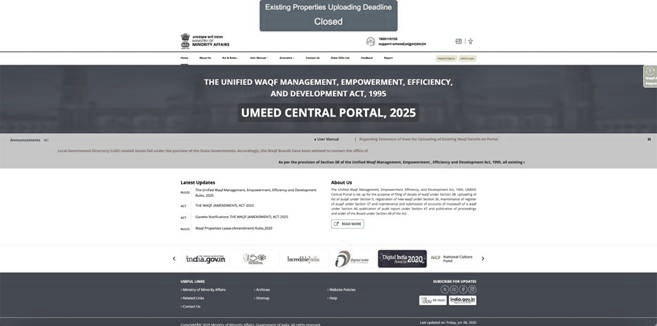
Uttar Pradesh has emerged as the leading state in the digital registration of Waqf properties on the Union Ministry of Minority Affairs’ Ummeed portal , completing the process for 92,832 properties well ahead of the stipulated deadline. The nationwide initiative aims to bring transparency, accountability, and better management to Waqf assets, which include mosques, graveyards, schools, and other charitable properties.
The Ministry had directed all states on June 6, 2025, to ensure online registration of Waqf properties by December 5, 2025. Although the deadline was later extended by six months, UP officials said the state had completed the exercise in advance, aided by awareness drives and administrative support for Mutawallis, the managers of Waqf properties, across districts.
Of the total properties registered in UP, 86,347 are Sunni Waqf properties and 6,485 are Shia Waqf properties, making the state’s share the highest in the country. District-wise figures highlight Lucknow leading in Shia property registration with 625 entries, followed by Amroha and Meerut. For Sunni Waqf properties, Barabanki tops the list with 4,940 registrations, followed by Sitapur, Azamgarh, Bijnor, Moradabad, Saharanpur, Meerut, and Jaunpur. Officials emphasised that digital registration will prevent misuse of properties, facilitate development, and streamline their management under central supervision.
Across India, over 5.17 lakh Waqf properties were initiated for registration on the Ummeed portal, and around 2.16 lakh have been approved. While some states like Punjab, Karnataka, and Jammu & Kashmir have made strong progress, others have lagged. West Bengal, for instance, registered less than 1% of its Waqf properties, highlighting significant gaps in compliance. Several northeastern states, including Assam, Manipur, Meghalaya, Goa, and Ladakh, reported very few or no entries, while Telangana and Kerala have sought extensions through State Waqf Tribunals due to incomplete uploads. The Centre has clarified that no penalties will be imposed for three months after the deadline to allow custodians to complete the registration process.
The rollout of the Ummeed portal has faced several hurdles nationwide. Technical glitches and slow portal performance near the deadline, incomplete documentation and unclear property titles for many Waqf assets, and variation in land records and measurement systems across states delayed the process. Mutawallis often had to work late or during restricted portal access windows to complete uploads. Officials believe that once fully implemented, the digital registration initiative will ensure better planning, protection, and development of Waqf properties while minimizing misuse.
For Uttar Pradesh, leading the registration process not only demonstrates administrative efficiency but also sets a national benchmark. Accurate data will allow authorities to better manage religious and charitable assets, plan development projects, and improve governance. For states lagging behind, tribunal extensions and ongoing assistance from the Centre are expected to help complete registrations within the extended timeline.
Uttar Pradesh’s achievement in digitally registering over 92,000 Waqf properties ahead of schedule marks a significant step toward transparency, accountability, and modernization of religious property management in India, while highlighting the varying levels of progress across other states.