
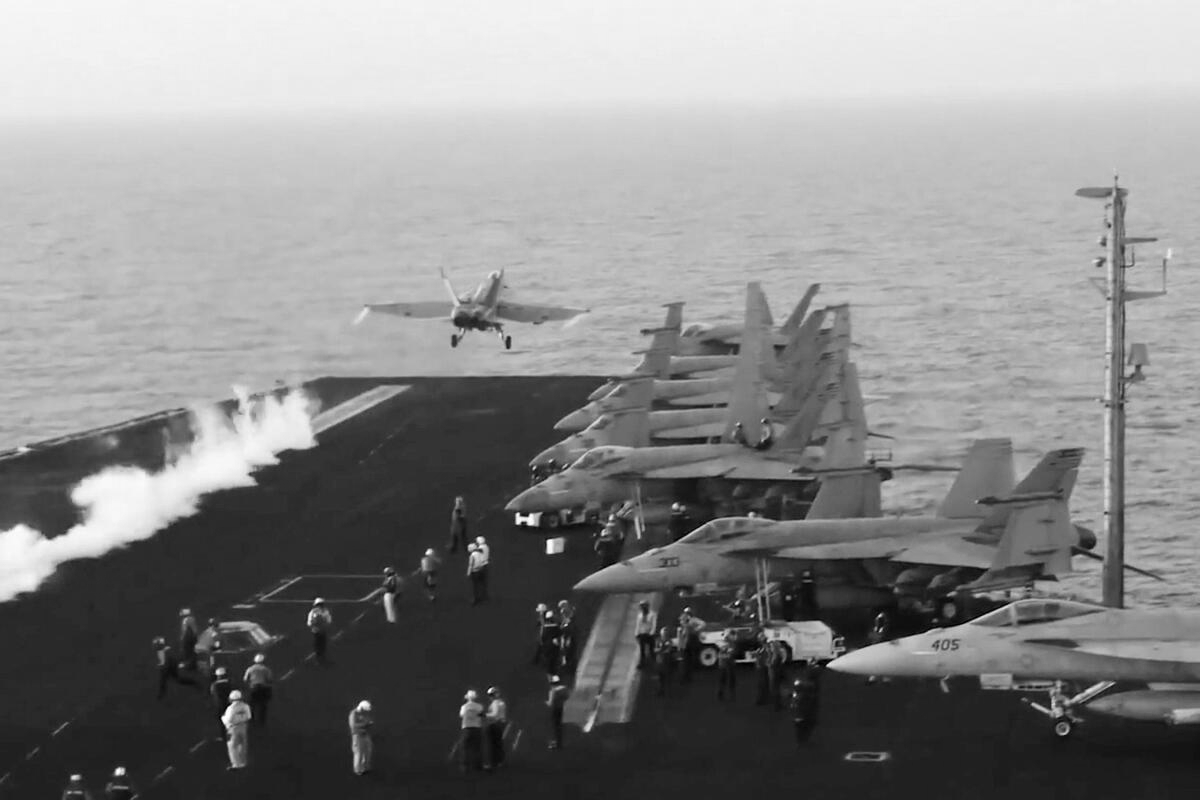
US warships deploy as Houthis signal renewed strikes in Red Sea corridor
Tensions in the Middle East escalated further after Yemen’s Houthi rebels issued a renewed warning of possible attacks on commercial shipping in the Red Sea, coinciding with the arrival of a United States aircraft carrier strike group in the region.
The development comes after US President Donald Trump threatened military action against Iran over its violent crackdown on nationwide protests. The USS Abraham Lincoln(aircraft carrier) , accompanied by guided missile destroyers, is now moving toward the Red Sea and surrounding waters, a move Trump described as a precautionary step should Washington decide to act against Tehran.
The Iranian-backed Houthis released a short video suggesting an imminent escalation, using images of a burning vessel and the caption “Soon.” Although the group did not specify targets, the message has renewed concerns over maritime security in one of the world’s most vital shipping corridors.
During earlier hostilities linked to the Gaza war nearly two years ago, the Houthis launched more than 100 attacks on commercial vessels transiting the Red Sea, claiming the campaign was intended to pressure Israel over its conflict with Hamas. In response, the United States and its allies formed a multinational naval coalition known as Operation Prosperity Guardian to safeguard one of the world’s most critical shipping routes. The rebel group later suspended its operations following a ceasefire but has repeatedly warned that it could restart attacks if regional tensions escalate again.
Iran also issued strong warnings to the United States and Israel. Defence Ministry spokesperson General Reza Talaei-Nik said any attack would be met with a response “more painful and decisive than in the past,” adding that Tehran remained on full military alert amid growing threats.
As tensions mount, Iran has restricted small private aircraft from flying within its airspace, citing security concerns. Several international airlines have already begun avoiding Iranian airspace, reflecting fears of a wider regional conflict.
The renewed Houthi threat and the deployment of US naval forces underscore the fragile security environment in the Red Sea, a vital artery for global commerce through which nearly 12 percent of the world’s trade and about 30 percent of container traffic passes each year. Any disruption to this corridor, which links Europe and Asia via the Suez Canal, could sharply raise shipping costs, delay energy supplies, and trigger wider instability in international markets and the region.
Observers warn that the convergence of internal unrest in Iran, renewed militant threats from allied groups, and heightened US military presence increases the risk of miscalculation in an already volatile region.