
U.S. urges Netanyahu to advance Gaza ceasefire’s second phase, but Israel holds leverage
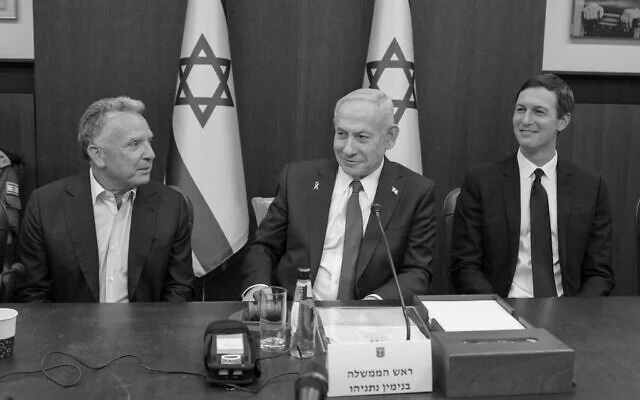
American officials met with Israeli Prime Minister Benjamin Netanyahu on Saturday in Jerusalem, urging him to move into the second phase of the ceasefire that ended the recent war in Gaza. Netanyahu met with U.S. envoy Steve Witkoff and Jared Kushner, President Donald Trump’s son-in-law and Middle East adviser. While the meeting concluded, no breakthrough or formal agreement was reached, leaving Israel in control of the next steps and highlighting that the pace of the ceasefire depends on Netanyahu’s decisions. Although publicly Trump and Netanyahu have praised each other and Trump has taken credit for successes in Israel and Ukraine, behind closed doors it is clear that the real leverage lies with Netanyahu , with U.S. officials pushing for progress but largely dependent on Israel’s choices.
Netanyahu says he is facing domestic pressure to delay the second phase until Hamas returns the body of the last hostage it is holding. While the hostage issue is genuine, analysts note that it also allows Israel to manage the timing and scope of the ceasefire , balancing international expectations with domestic political pressures and security concerns. A key step in the next phase is reopening the Rafah border crossing between Gaza and Egypt, which would allow Palestinians to travel and facilitate aid delivery. Ali Shaath, head of a prospective technocratic Gaza government, announced Thursday that the crossing would open in both directions this week, but Israel has not confirmed this and said only that the matter would be considered next week, reinforcing that Netanyahu ultimately controls how and when implementation occurs.
The family of Ran Gvili, the hostage whose body remains in Gaza, called for international pressure on Hamas. “President Trump himself stated this week in Davos that Hamas knows exactly where our son is being held,” the family said. “Hamas is deceiving the international community and refusing to return our son, the last remaining hostage, in clear violation of the agreement it signed.” Meanwhile, Egypt has pressed for the immediate reopening of the Rafah crossing, with Foreign Minister Bader Abdelatty speaking to U.N. envoy Nickolay Mladenov about deploying international monitors, Israeli troop withdrawal, and Gaza’s reconstruction, calling the second phase a “key entry point” for recovery. An official from Trump’s Board of Peace expressed hope that remaining issues could be resolved, but Israel has made no commitment, underscoring that progress depends on Netanyahu’s decisions amid ongoing U.S. and international pressure.
The humanitarian crisis in Gaza continues to worsen. Two Palestinian children, aged 13 and 15, were killed by an Israeli strike while searching for firewood near an area Israel considers safe, about 500 meters from the Yellow Line, their families said. The lack of electricity and fuel has forced many Palestinians to scavenge for wood, garbage, and plastic for cooking and heating. Hundreds of thousands live in tents and damaged buildings as nighttime temperatures drop below 10°C (50°F) amid Mediterranean storms. At least nine children have died from severe cold in recent weeks, and since the October 10 ceasefire, the Gaza Health Ministry reports over 480 Palestinians have been killed by Israeli fire, though Israel disputes these figures.