
US tariffs shift trade landscape: Brazil seeks stronger agricultural and tech partnership with India
With global trade flows disrupted by recent US tariffs, Brazil has called for closer alignment with India, particularly in agriculture and technology. Brazil’s Ambassador to India, Kenneth Felix Haczynski da Nobrega, said that the present geopolitical shift should be seen as an “opportunity” for both emerging economies to deepen cooperation.
“Brazil and India are trusted partners. In this new context of US tariffs, we must work even more closely together, identifying complementarities between our economies and agricultural sectors. We see this as a positive moment,” Nobrega said. Maitri 2.0 Cross Border Agri-Tech, a five-day programme (Sept 22–26) brought together scientists, innovators, and researchers from both nations.
The envoy highlighted joint research on climate change, extreme weather, and food security as key priorities. He stressed that both India and Brazil, consistently ranked among the world’s top four food producers, must collaborate to build agricultural resilience and boost productivity.
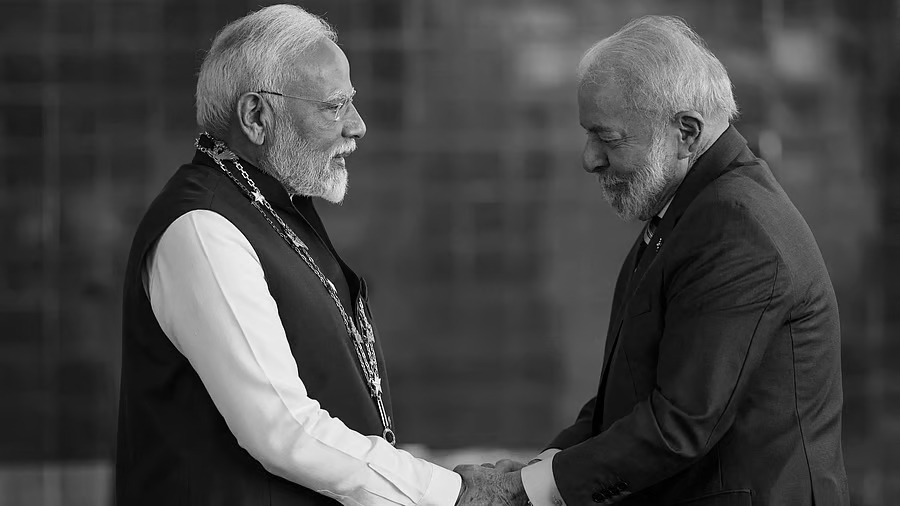
Nobrega also linked the initiative to Prime Minister Narendra Modi’s July state visit to Brazil, which produced a 10-year roadmap for cooperation under five pillars. “Two of those pillars are being implemented today—food security through agricultural collaboration, and science, technology, and innovation,” he noted.
The Maitri 2.0 program, inaugurated by the Indian Council of Agricultural Research (ICAR), builds on the foundation of Maitri 1.0 (2019–2020). While the first edition strengthened international agri-tech ties, the new edition emphasizes incubators as engines of start-up growth. The event brings together leading incubators, start-ups, investors, policymakers, and academic experts, aiming to create cross-border co-incubation models, joint ventures, and global access to innovation.
Officials said the initiative demonstrates how India’s policy-driven agri-tech ecosystem has nurtured start-ups and how similar frameworks could be adapted for Brazil. Beyond technology, Maitri 2.0 positions both countries as key voices in global debates on sustainable agriculture and climate resilience.