
US Supreme Court to decide the fate of Trump’s tariff tomorrow
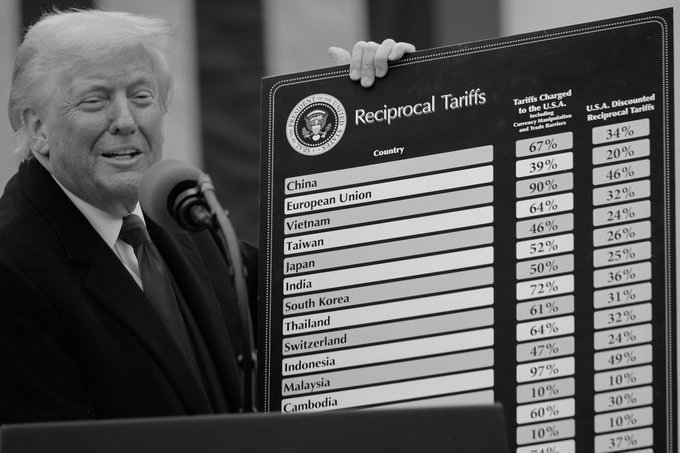
The U.S. Supreme Court will hear arguments over the legality of President Donald Trump’s sweeping 2025 tariffs on November 5, a case that could redefine the limits of presidential authority and reshape the global trade landscape. The court’s decision will determine not only the fate of the tariffs but also whether the president can unilaterally use emergency powers to impose broad economic measures without congressional approval. Trump’s tariffs, which have already been challenged and partially blocked by lower courts, now face their ultimate constitutional test.
U.S. officials have expressed confidence that the Supreme Court will not move to block Donald Trump’s tariffs, even as it reviews their legality on November 5. They noted that three of the six justices currently on the bench were appointed by Trump himself, making it unlikely that the court will rule against him. The administration believes that, even if the court questions the legal basis of the tariffs under the International Emergency Economic Powers Act, the measures will remain in effect through other trade authorities. This expectation underscores the administration’s view that the tariffs are here to stay regardless of the legal outcome.
Trump has described the case as one of the most consequential in American history. In a post on Truth Social, he wrote, “Next week’s Case on Tariffs is one of the most important in the History of the Country. If a President is not allowed to use Tariffs, we will be at a major disadvantage against all other Countries throughout the World, especially the ‘Majors.’ In a true sense, we would be defenceless!” He credited tariffs for contributing to “Great Wealth and National Security” during his presidency, saying, “The Stock Market has hit All Time Highs many times during my short time in Office, with virtually No Inflation, and National Security that is second to none.”
Trump said he would not personally attend the Supreme Court session, stating, “I will not be going to the Court on Wednesday in that I do not want to distract from the importance of this Decision.” Calling it “one of the most important and consequential Decisions ever made by the United States Supreme Court,” he warned, “If we win, we will be the Richest, Most Secure Country anywhere in the World, BY FAR. If we lose, our Country could be reduced to almost Third World status-Pray to God that that doesn’t happen!”
A constitutional battle over executive power
The case revolves around Trump’s use of the International Emergency Economic Powers Act (IEEPA) of 1977, which he invoked to raise tariffs up to 50 percent on India and Brazil and as high as 145 percent on China earlier this year. The law allows the president to act during extraordinary emergencies, but critics argue that it was never intended to authorize broad economic measures without Congress’s consent. Three lower courts have ruled that IEEPA does not grant the president authority to set tariffs, placing constitutional boundaries squarely before the Supreme Court.
Under the U.S. Constitution, Congress holds exclusive power to set tariffs, though it has historically delegated limited trade authority to presidents in narrowly defined circumstances. Previous leaders, Franklin D. Roosevelt, John F. Kennedy, Ronald Reagan, and George W. Bush, used those powers under congressional oversight and primarily for national defense. Trump’s case is the first in U.S. history where a president’s invocation of emergency powers for tariffs has reached the Supreme Court, making it a defining test of constitutional checks and balances.
Global and domestic stakes
Trump has justified his tariffs by claiming the U.S. trade deficit and drug inflows, including fentanyl, constitute “extraordinary threats” to national security. Legal scholars have argued that these justifications stretch IEEPA far beyond its intended purpose. The law was enacted in the post-Watergate era to prevent the abuse of executive emergency powers, not to authorize indefinite economic interventions.
Small businesses and importers have challenged Trump’s tariffs, asserting that he overstepped his authority. The administration’s legal defense relies on Richard Nixon’s 1971 use of the Trading with the Enemy Act, which permitted temporary import surcharges. Yet IEEPA was enacted in 1977 precisely to replace and restrict those sweeping wartime powers.
American companies had paid nearly USD 90 billion in disputed tariffs by September 23, more than half of all tariff revenue collected in fiscal year 2025, which ended on September 30. A ruling against Trump could force refunds, upend trade policy, and reshape how the United States engages with global markets.
Trump’s actions have also drawn international scrutiny. The World Trade Organization (WTO) prohibits using national security as a blanket excuse for protectionist barriers, and trade partners including India, China, and the European Union view the tariffs as violations of those norms. The case, therefore, has global stakes, its outcome could influence international trade negotiations and challenge America’s reputation as a predictable economic partner.
The Global Trade Research Initiative (GTRI) said, “With the Trump tariffs standing on shaky legal ground, India must pause and reassess its negotiation strategy before committing to an FTA that could disproportionately favour U.S. interests.” The research body urged India to wait for the ruling before entering any new trade arrangements that might later be destabilized by American policy shifts.
What the verdict means for America
If the Supreme Court rules against Trump, the decision would reaffirm Congress’s authority over tariffs, curtail executive overreach, and require a rollback of existing trade measures. It could also trigger massive refund claims from importers and prompt U.S. allies to recalibrate their trade strategies. But if Trump’s authority is upheld, it would dramatically expand presidential control over economic policy, allowing future administrations to use tariffs as instruments of foreign and domestic leverage without congressional approval.
Whatever the outcome, this case will define the boundaries of presidential power in the modern era. For Trump, it is not merely a legal battle but a political test of his long-standing narrative that tariffs equal national strength. Whether he wins or loses, the Supreme Court’s ruling will mark a turning point in America’s trade policy, its constitutional balance of power, and its standing in the global economic order.