
US-South Korea Drills Begin Despite Trump Order To Scale Back Over ‘Very Good’ Kim Jong-un Ties
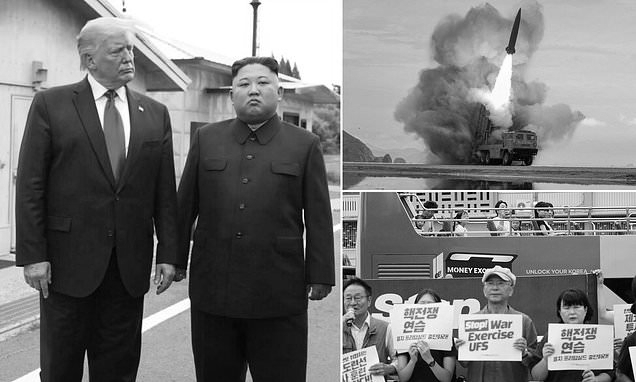
US-South Korea military drills began on Monday just hours after President Donald Trump ordered the Pentagon to substantially scale back US participation, citing his “very good relationship” with North Korean leader Kim Jong-un and South Korea’s refusal to support US action over Iran.
The Ulchi Freedom Shield exercise will run for 11 days, from August 17 to August 27. South Korea’s Defence Ministry said the drills would proceed as planned, despite Trump’s order. About 18,000 South Korean troops are taking part. The exact number of US troops involved has not been disclosed, although the US has about 28,500 troops permanently stationed in South Korea.
The exercise is aimed at preparing the allies for a possible North Korean attack. Training includes responses to drones, GPS disruption and cyberattacks, reflecting concerns about North Korea’s changing military capabilities. Washington and Seoul have described the drills as defensive.
Trump said he was “not happy” that the United States had agreed to participate in the exercises. In a post on Truth Social, he wrote: “Based on my very good relationship with Kim Jong Un, of North Korea, I am not happy with the fact that the United States has, long ago, agreed to participate in Joint Military Exercises with South Korea.”
He also said the drills were costly and sent an inappropriate message to Pyongyang.
“These exercises are not only costly, with much of these costs paid for by the United States of America (as usual!), but send a signal that is totally inappropriate and hostile, to a Country that, as long as Donald J. Trump has been President, has been unthreatening and respectful,” Trump wrote.
Trump said it was too late to cancel this year's drills but instructed Defence Secretary Pete Hegseth to “substantially reduce” their scale. It remains unclear exactly which parts of the exercise will be changed.
The decision highlights Trump’s renewed focus on his relationship with Kim. During his first term, Trump met Kim three times, with their most recent meeting taking place in 2019. After the 2018 Singapore summit, Trump suspended or reduced some major US-South Korea exercises, calling them expensive and provocative. His latest move brings that approach back into focus.
Trump has recently signalled an interest in re-engaging with Kim. He shared a photograph of the two leaders on social media and said they “get along GREAT”, despite noting the unfriendly look in the picture.
North Korea has long condemned US-South Korea military exercises as preparations for an invasion. Pyongyang has continued expanding its nuclear and missile programmes and has recently carried out ballistic missile launches ahead of the drills. North Korea has also strengthened defence ties with Russia and sent troops to support Moscow in the Ukraine war. US officials have warned that the experience could help North Korean forces improve their battlefield capabilities, including in drones, GPS disruption and cyber operations.
But North Korea is not the only factor behind Trump's decision.
Trump also expressed frustration with South Korea's refusal to support US action against Iran. He wrote that he had recently asked South Korean President Lee Jae Myung whether Seoul wanted to join the US in the “denuclearization of the Islamic Republic of Iran”.
“And they said, ‘No thanks!’” Trump wrote.
South Korea is a longstanding US ally, but its decision not to join the US effort over Iran has now become part of Trump's criticism of the alliance.
The timing makes the decision especially significant. North Korea remains a nuclear-armed threat, while its growing military cooperation with Russia is giving its forces new combat experience. At the same time, Trump appears determined to keep the door open to Kim, even if that means reducing exercises designed to deter Pyongyang.
The development therefore goes beyond one military exercise. It raises questions about US deterrence in East Asia, the future of the Washington-Seoul alliance and Trump's wider strategy, as his demands on allies in Asia become increasingly linked to conflicts far beyond the Korean Peninsula.