
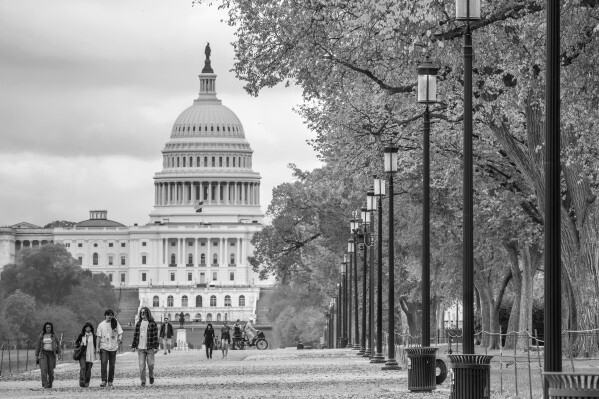
US Senate Backs Sweeping Energy Bill, Data Centres Face New Power Rules
The US Senate has advanced a sweeping bipartisan energy legislation aimed at speeding up approvals for major infrastructure projects, including power plants, pipelines, mines and data centres, in its first major legislative action since last week's midterm elections dealt a major setback to President Donald Trump and congressional Republicans.
The Senate voted 73-25 on Monday to take up the Bipartisan American Affordability and Jobs Act of 2026. The legislation seeks to cut years-long permitting delays for both renewable energy and fossil fuel projects, expand electricity infrastructure and ensure large data centres pay their share of the power costs rather than passing them on to households.
Trump urged lawmakers to back the measure, calling it a "BIG WIN for US ENERGY INDEPENDENCE and DOMINANCE". He said faster construction of pipelines, mines and power plants would bring down energy costs. However, he reiterated his opposition to wind energy, saying he would not approve wind turbines.
The bill was negotiated by Republican Senators Shelley Moore Capito and Mike Lee and Democratic Senators Martin Heinrich and Sheldon Whitehouse. Its revised provisions strengthen consultation with tribal communities over projects affecting culturally significant sites, extend the period for objections to agency reports and expand opportunities for states to participate.
The legislation has drawn support from clean energy developers and the oil and gas industry. However, environmental organisations, including the Sierra Club and National Wildlife Federation, oppose it, arguing that changes to the National Environmental Policy Act and Endangered Species Act could weaken safeguards, restrict judicial reviews and accelerate fossil fuel expansion.
The midterm results could complicate its passage. House Minority Leader Hakeem Jeffries, expected to become Speaker in January, has criticised the proposal as inadequate. Several Democrats want stronger clean energy provisions and tighter restrictions on oil, gas and mining expansion.
Democratic Senator Chris Van Hollen also opposed advancing the bill, citing inadequate protection for Maryland's proposed offshore wind project. Meanwhile, Trump has spent nearly $4 billion on settlements with energy companies to abandon offshore wind projects. Senator Whitehouse said the legislation would end such buyouts.
Supporters say the bill could lower electricity costs, create jobs and accelerate clean energy development. But environmental advocates warn that weakening scientific standards under the Endangered Species Act could put threatened wildlife at greater risk.
Although the 73-25 vote marks a significant step, the legislation must still clear the Senate and House before reaching Trump's desk.