
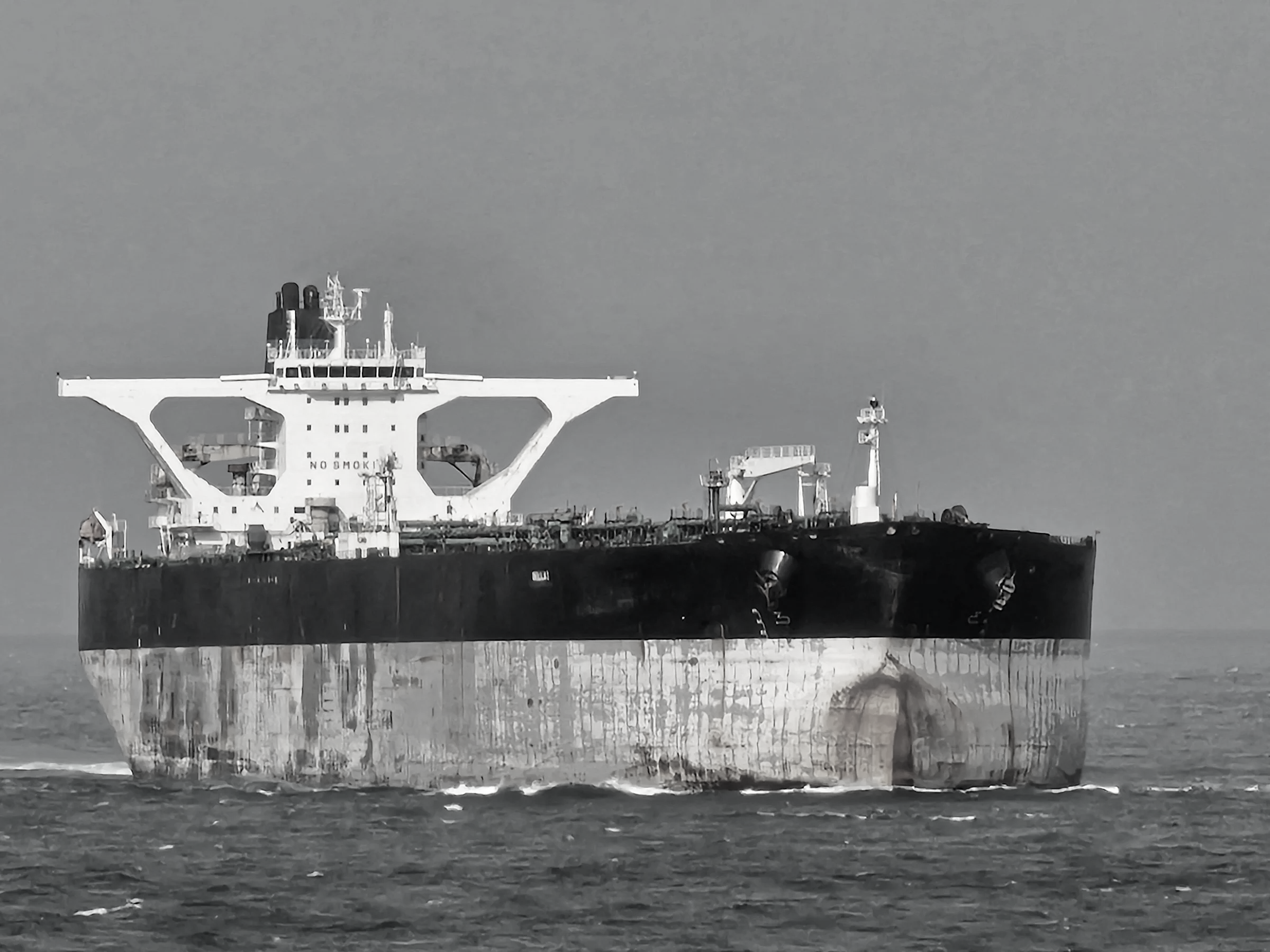
U.S. Seizes two Venezuelan oil tankers in North Atlantic, Caribbean amid sanctions crackdown
The U.S. Coast Guard, supported by the Departments of Homeland Security, Justice, Defense, and State, seized two oil tankers linked to Venezuela in operations conducted today in the North Atlantic and Caribbean.
The vessels, the M/V Bella 1 (renamed Marinera ) and the M/T Sophia , were part of what U.S. officials call the “shadow fleet” ships that evade sanctions through deceptive practices such as turning off tracking systems, changing flags, or altering vessel identities.
The Bella 1 , captured in the North Atlantic after a weeks‑long pursuit, had attempted to avoid detection by flying a Russian flag and repainting its name on the hull. U.S. authorities said the tanker had been sanctioned for transporting Venezuelan oil in ways that circumvent U.S. restrictions. The Sophia , described as a “stateless dark fleet vessel,” was seized near the Caribbean Sea. Being stateless without a legitimate national flag made it easier for the Coast Guard to board and seize the vessel under international law.
These seizures are part of a broader U.S. effort to enforce sanctions on Venezuelan oil exports, which officials say are often linked to illicit financing networks involving Iran and militant groups. Analysts note that the U.S. is systematically tracking and intercepting sanctioned Venezuelan crude, taking a step-by-step approach to cut off revenue streams to the Maduro government.
The operation follows an earlier seizure of the Skipper tanker in December 2025, which carried about 1.8 million barrels of Venezuelan crude and had been sanctioned for its role in sanctions‑evasion networks. Together, these actions reflect an intensified U.S. crackdown on the shadow fleet operating in Venezuelan waters.
Diplomatic reactions have been swift. Russia criticized the seizure of the Marinera , claiming it was illegal under international law due to the Russian flag. China, Iran, and Cuba have also condemned U.S. actions, with Cuba calling them “state terrorism” and a violation of international law.
Venezuela’s government has not yet issued an official response to today’s seizures, though it has previously condemned similar U.S. actions as illegal aggression and theft of national resources. Vice President Delcy Rodríguez and Defense Minister Vladimir Padrino López have described such measures as attempts to control Venezuela’s oil wealth and pledged resistance. Rodríguez has repeatedly framed U.S. actions as imperialist interference, declaring that Venezuela will never be “anyone’s colony.”
Internally, there are signs of division. While some officials signal willingness to engage on oil sales with the U.S. under controlled arrangements such as the reported agreement allowing up to 50 million barrels of previously frozen crude to be refined and sold through U.S. channels, hard-line voices continue to denounce the seizures as theft and interference.