
US Security Pact In Question? Is Gulf Rethinking US Ties After Saudi-Pakistan Pact
Is the US security role in the Gulf coming under question? Saudi Arabia, the UAE, Qatar, Kuwait and Bahrain are reportedly growing frustrated with Washington as the US-Iran war drags on, raising fresh questions about whether the Gulf should continue relying so heavily on American military power.
The concern is not simply about US President Donald Trump. Gulf officials are also questioning whether Washington has a clear plan for dealing with Iran and whether the large American military presence in the region is still worth the risks. The debate has grown after Iranian attacks targeted US military sites in Qatar, Kuwait and Bahrain, while Saudi Arabia and the UAE also faced Iranian strikes.
Still, this does not mean the Gulf states are abandoning the US. They remain dependent on American weapons, intelligence, air defence and military support. Instead, they appear to be looking for more choices so they are not dependent on Washington alone.
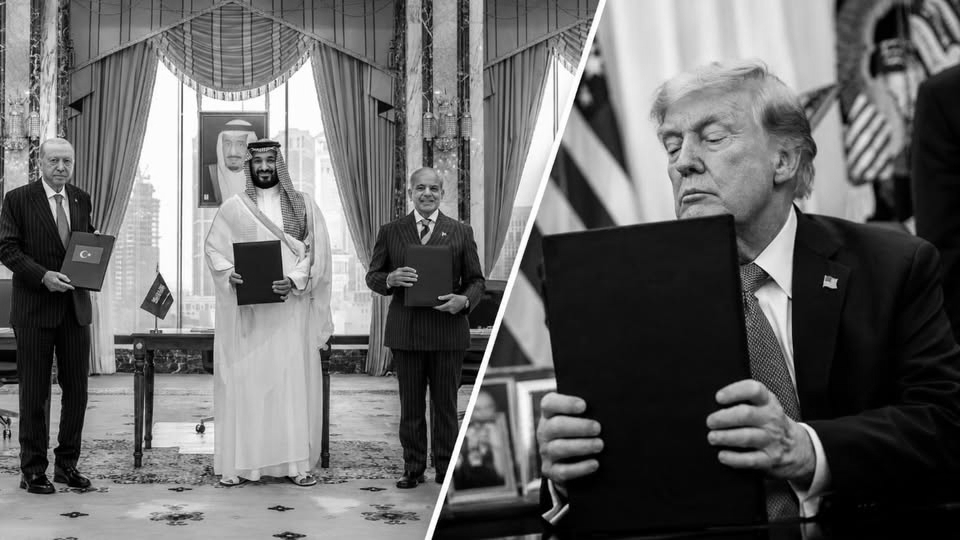
That is where the Mecca Joint Defence Agreement between Saudi Arabia, Pakistan and Turkey becomes important. The three countries signed the pact in Mecca on August 7. It says an armed attack on any one of them will be treated as an attack on all three. However, the agreement does not publicly spell out exactly what military support each country must provide in such a situation.
The pact builds on the Saudi-Pakistan Strategic Mutual Defence Agreement signed in 2025 and brings Turkey into a wider security arrangement. Turkey has said it wants the new grouping to expand, with other countries potentially joining.
Pakistan's role is especially significant. The country is now becoming a bigger security partner for Saudi Arabia at a time when Riyadh is trying to diversify its defence ties. Turkey adds another major military power, with its defence industry and NATO experience.
Trump, meanwhile, has welcomed the pact rather than criticised it. He called it a “big, bold, and important first step” and said Saudi Arabia, Turkey and Pakistan would be able to defend themselves in a more meaningful way.
That support is striking because the pact could also be seen as part of a wider move towards greater regional security independence from Washington.
The shift could have wider effects. Analysts say China may benefit if the Gulf moves towards a more multipolar security system, where the US is no longer the unquestioned centre of regional defence.
The UAE has also seen debate over the Saudi-Pakistan-Turkey pact, showing that the new arrangement is not being viewed in exactly the same way across the Gulf.
Washington is also searching for new diplomatic routes. Secretary of State Marco Rubio recently held talks with the foreign ministers of Austria and Greece. Both European ministers later spoke with Iranian Foreign Minister Abbas Araghchi, suggesting that the US is exploring more channels to Tehran as direct diplomacy remains stuck.
For the Gulf, the message is becoming clearer: America remains important, but dependence on America is no longer being taken for granted. The Saudi-Pakistan-Turkey pact may not replace the US security system, but it shows that Gulf powers are preparing for a future in which they have more than one option.