
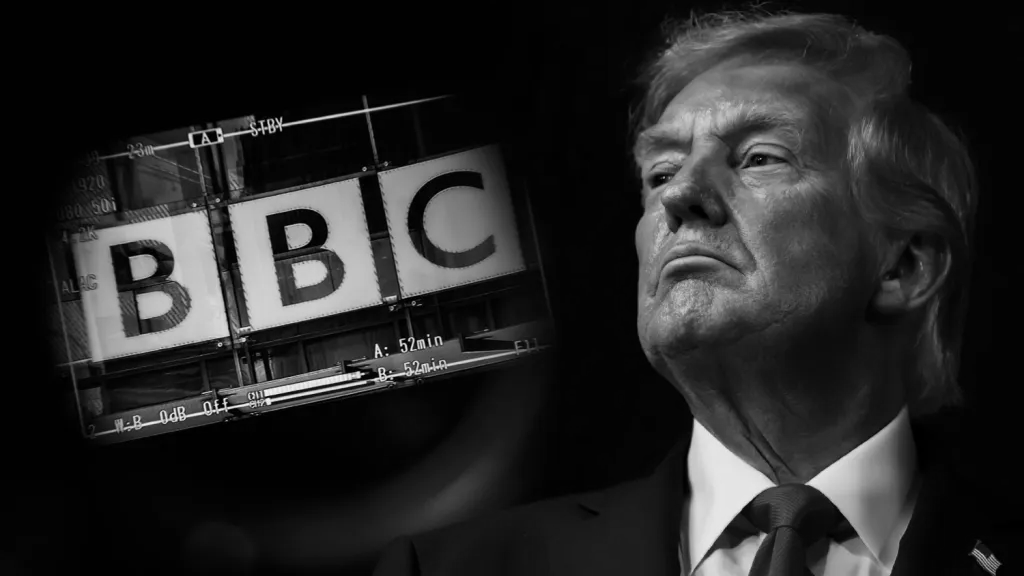
US President Donald Trump to pursue legal action against BBC despite apology over edited speech
US President Donald Trump has announced that he will proceed with legal action against the British public broadcaster BBC, despite the corporation issuing an apology over its editing of his January 6, 2021, speech in a news documentary aired last year.
“We’ll sue them. We’ll sue them for anywhere between a billion and 5 billion dollars, probably sometime next week,” Trump told reporters aboard Air Force One overnight on Saturday. “We have to do it. They’ve even admitted that they cheated. Not that they couldn’t have not done that. They cheated. They changed the words coming out of my mouth,” he added.
The controversy stems from the BBC’s Panorama documentary, aired in October 2024, which referenced Trump’s 2021 address in Washington DC. In the original speech, Trump told his supporters: “We’re going to walk down to the Capitol, and we’re going to cheer on our brave senators and congressmen and women.” Later, more than 50 minutes into his speech, he said: “And we fight. We fight like hell.”
The BBC, however, edited these statements to appear as if they occurred sequentially: “We’re going to walk down to the Capitol… and I’ll be there with you. And we fight. We fight like hell.” The edit created the mistaken impression that Trump was directly calling for violent action at the Capitol.
The misrepresentation sparked widespread criticism and led to the resignations of BBC director general Tim Davie and head of news Deborah Turness. The corporation’s Indian-origin chair, Samir Shah, issued an apology, acknowledging an “error of judgment” and stating that the edit “unintentionally created the impression that we were showing a single continuous section of the speech rather than excerpts from different points, giving the mistaken impression that President Trump had made a direct call for violent action.”
While the BBC apologised, it ruled out any financial compensation, maintaining that there is no legal basis for a defamation claim. Its spokesperson said lawyers had written to Trump’s legal team and that Shah personally conveyed regrets to the White House.
Trump, however, has said he feels an “obligation” to proceed with the lawsuit, arguing that failing to act would allow similar misrepresentations to occur in the future. “This was so egregious. If you don’t do it, you won't stop it from happening again with other people,” he told the UK’s GB News.
Legal experts note that a successful multi-billion-dollar case could have far-reaching consequences for global media. Broadcasters may face heightened scrutiny over editing practices, and even minor misrepresentations could invite lawsuits. The case could clarify defamation thresholds for public figures, define the legal impact of apologies and retractions, and potentially lead to a chilling effect on investigative journalism worldwide.
Trump’s planned lawsuit highlights the tension between editorial discretion and accountability, and underscores how public figures may increasingly challenge perceived distortions of their words. The outcome, if pursued, could set a precedent affecting media operations and reporting practices internationally.