
US Opens New Front Against Iran, 'Iron Gate' Targets Land Routes And Caspian Sea Networks
The United States has expanded its pressure campaign against Iran beyond the sea, establishing a new military task force to monitor and disrupt the movement of weapons, restricted technology and sanctioned goods through the country's land borders and the Caspian Sea. The move, called Task Force Iron Gate, opens another front in the confrontation as Washington seeks to weaken Tehran's military supply networks while diplomatic efforts to end the war continue.
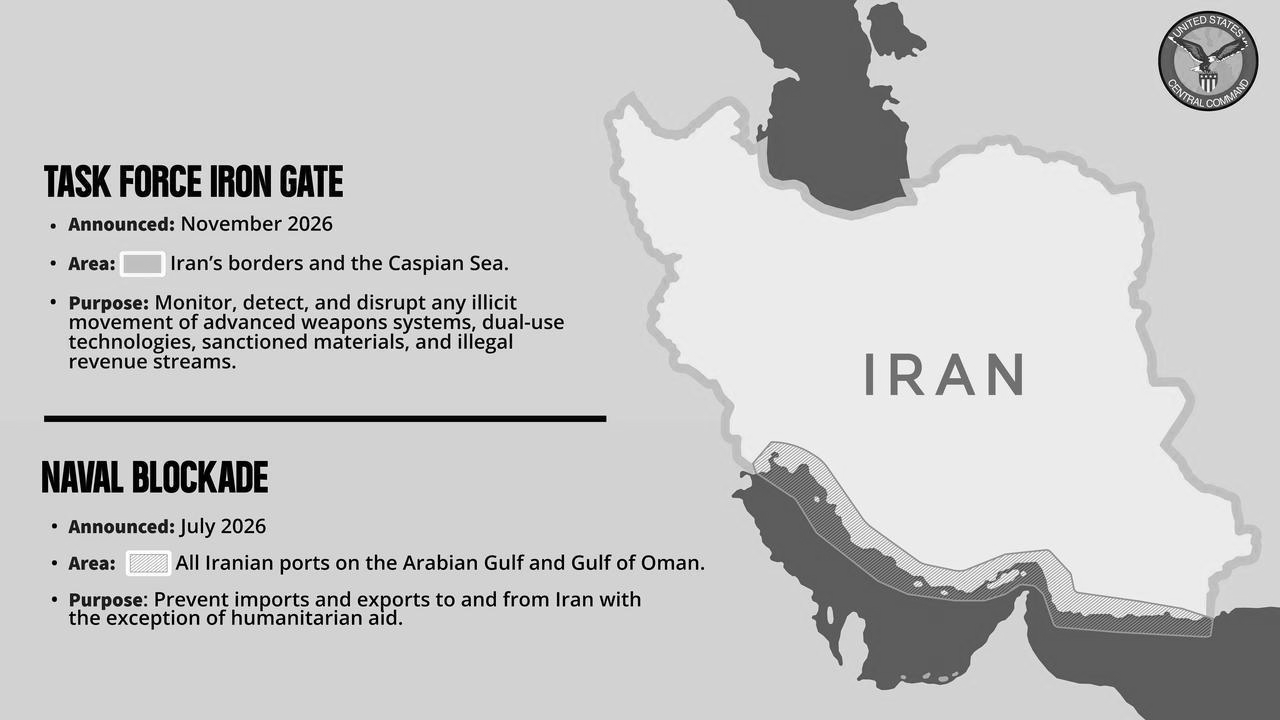
US Central Command (CENTCOM) said its commander, Admiral Brad Cooper, had ordered the formation of the task force on November 7. It will comprise around 20 civilian and military personnel based in Tampa, Florida, and coordinate with other US government agencies. Its objective is to monitor, detect and disrupt the movement of advanced weapons systems, dual-use technologies, sanctioned materials and illegal revenue streams across Iran's land borders and the Caspian Sea.
“The establishment of Task Force Iron Gate reinforces the success of our ironclad blockade against Iran at sea,” Cooper said. He added that closer coordination with US agencies would constrain Iran's ability to finance militant groups, rebuild weapons factories and replenish military supplies.
The initiative extends a naval blockade that has been in force for months and targets Iranian ports along the Arabian Gulf and Gulf of Oman. CENTCOM claims the restrictions have prevented Iran from exporting more than $25 billion worth of crude oil. Humanitarian aid is exempt from the blockade.
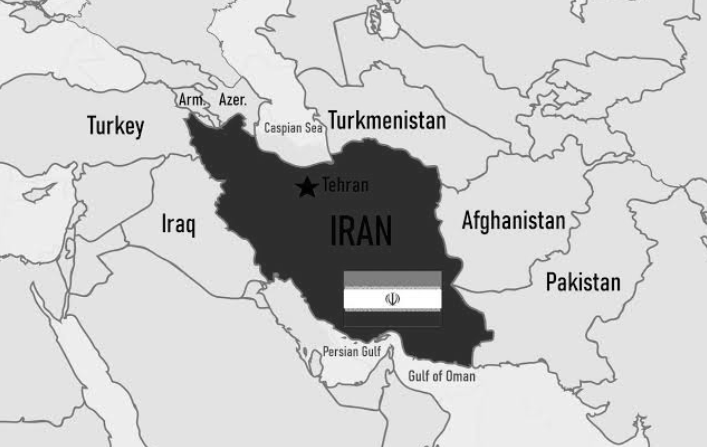
Iran shares land borders with Turkey, Iraq, Pakistan, Afghanistan, Armenia, Azerbaijan and Turkmenistan. Its northern coastline also provides access to the Caspian Sea and commercial connections with Russia. Overland railway links through Central Asia, including routes used for trade with China, offer alternative channels for goods that face restrictions at sea. The task force's focus on these networks suggests Washington wants to make it harder for Tehran to obtain military components and sensitive technology through neighbouring countries.
A Reuters investigation found that Iran had imported at least $2 billion in military-related equipment since January 2025 through a covert network involving ships from Russia, trucks from Central Asia and freight aircraft from China. Reuters reported that the new US effort would involve coordination with agencies including the Treasury, State and Justice departments, as well as intelligence services.
Washington has also offered a reward of up to $20 million, with possible relocation, for information about Iran's nuclear programme, including facilities, equipment, scientists, personnel and the movement of related materials. The offer comes amid concerns that the International Atomic Energy Agency has lost continuity of knowledge about parts of Iran's nuclear infrastructure, including centrifuge production and inventories.
Meanwhile, US President Donald Trump confirmed fresh limited US strikes on an Iranian air-defence system near Qeshm Island in the Strait of Hormuz. He described the operation as minor and claimed the system was destroyed within minutes. Iranian state media reported two missile strikes in the Suza area of Qeshm.
Concerns about further attacks have extended to possible radiation risks. The Times of London reported that Iran was distributing iodine tablets to people living close to nuclear facilities, including the underground Pickaxe Mountain complex near Natanz. However, Iran's Health Ministry denied the report and rejected the quotation attributed to an official. The alleged distribution remains unverified. Potassium iodide can protect the thyroid from radioactive iodine but does not prevent exposure to all forms of radiation.
Iran's Islamic Revolutionary Guard Corps has meanwhile said it would make the necessary preparations if the country's leadership decided to revise its nuclear doctrine. Iranian officials have also said the previously self-imposed 2,000-km limit on ballistic missile range has been lifted.